
Travel with Antee: Flavors of the Silk Road
Part Four | A Xinjiang Food Journey
From steaming bowls of noodles to sun-sweet grapes, Xinjiang is a place to explore one delicious tradition at a time.
Where: Throughout Xinjiang, from Altay and Turpan to Kashgar, Aksu and Kuqa
Suggested length: A food discovery throughout your trip
Best season: Year-round for favorite dishes; late summer and early autumn for many fruits
The story to follow: How geography, communities and the Silk Road shaped the flavors of the region
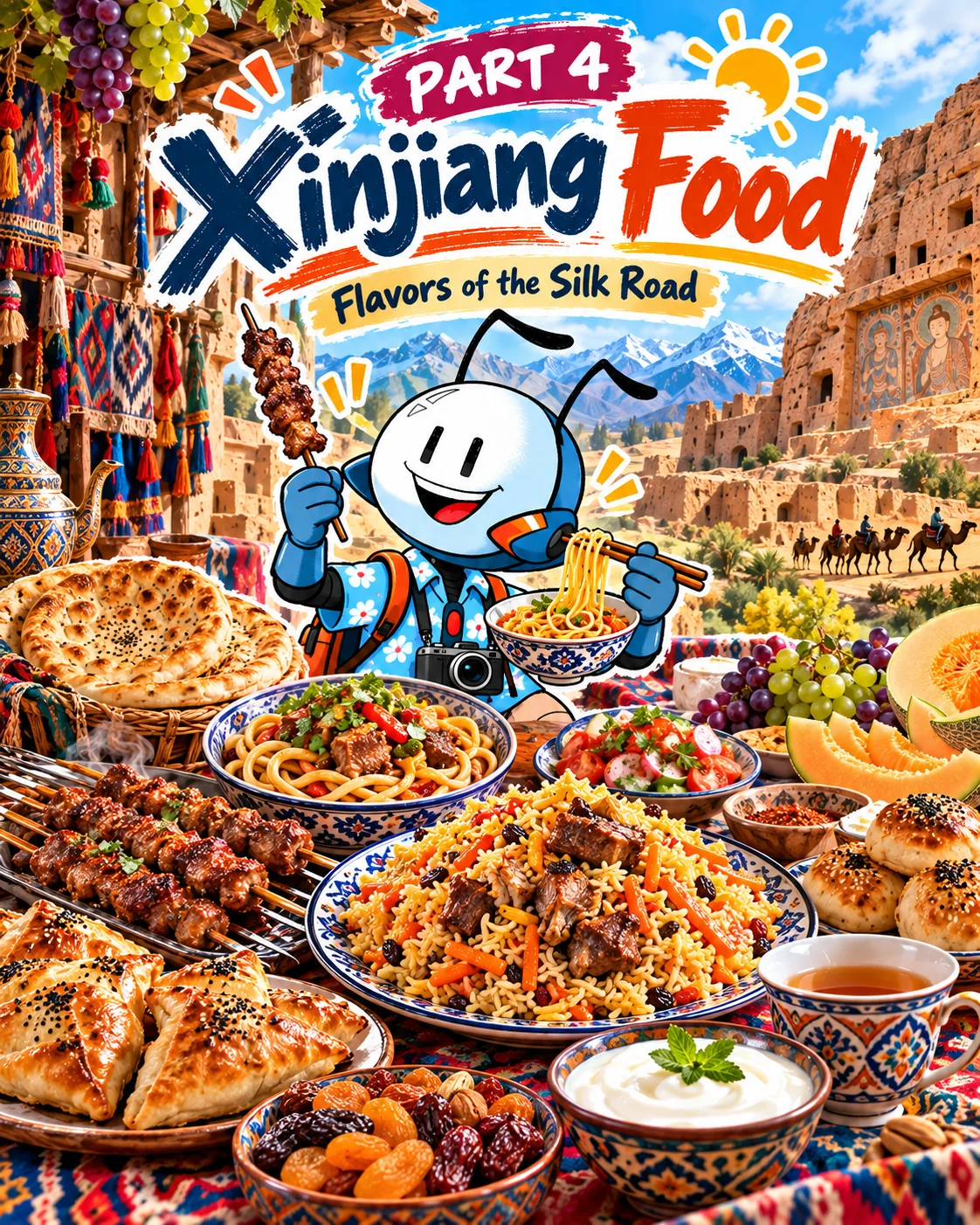
Antee follows a smell down a busy street. Bread is baking against the inside of a hot clay oven. A cook pulls a strand of dough into long noodles. Nearby, rice and carrots steam under a lid, and shoppers choose grapes from baskets in the shade. After three journeys across mountains, oases and deserts, it's time for an adventure you can taste.
Xinjiang is home to many peoples, including Uyghur, Kazakh, Hui, Kyrgyz and others. Their cuisines overlap and differ, shaped by family traditions, trade, seasonal produce and regional ingredients. There is no single menu that captures every Xinjiang table. The fun is asking cooks about their specialty.
The Bakery: Naan and Samsa
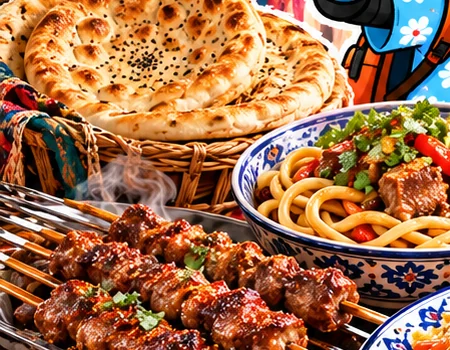
Naan | 馕
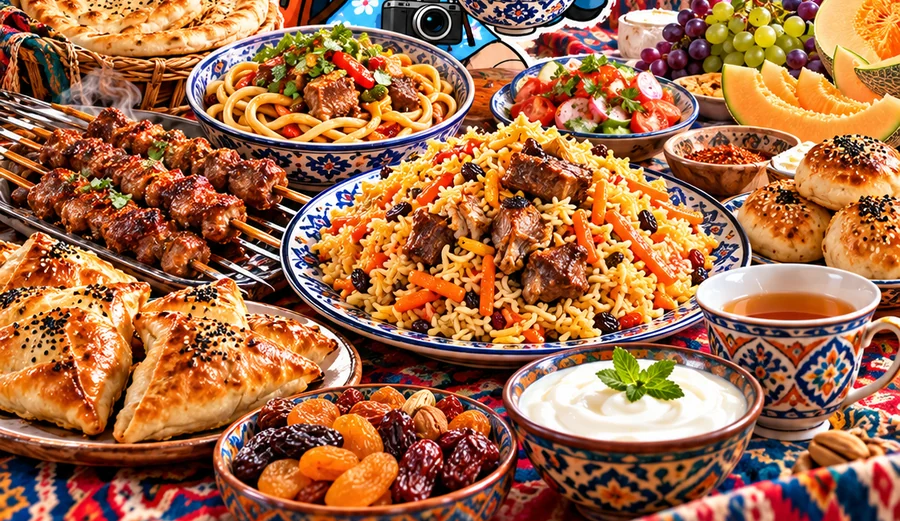
Round, golden and often stamped with decorative patterns, naan is a beloved everyday bread in many communities. Baked in a traditional oven, it can be crisp at the edges and pleasantly chewy within. Buy a warm piece and notice its sesame or nigella seeds, patterns and aroma.
Antee's discovery: Compare two naan designs. Why would a baker decorate bread that will soon be eaten?
Samsa | 烤包子
Samsa are savory pastries or buns, commonly filled with chopped meat, onions and spices, then baked in a very hot oven. The browned surface gives way to a juicy interior. Let them cool before you bite.
Photo moment: A hand holding a golden samsa, with the oven and baker in the background. Ask before photographing someone at work.
The Noodle Shop: Laghman and Hand-Cut Variations
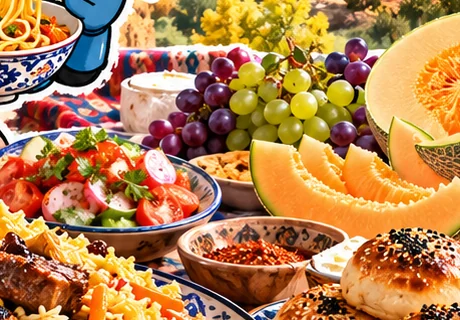
Laghman | 拉条子 / 拌面
Long, springy, hand-pulled noodles meet vegetables and a savory sauce, often with lamb or beef. Preparation varies across kitchens, and some bowls are saucier than others. Watch the chef's hands: dough becomes an edible ribbon with remarkable skill.
Antee's mission: Count the colors in your bowl. Which vegetables do you recognize?
Ding Ding Chao Mian | 丁丁炒面
For a playful variation, try ding ding chao mian, small chopped pieces of noodle dough stir-fried with meat and vegetables. Instead of a long slurp, every spoonful holds a mix of little chewy bites and bright flavors.
The Shared Table: Polu, Skewers and Big Plate Chicken
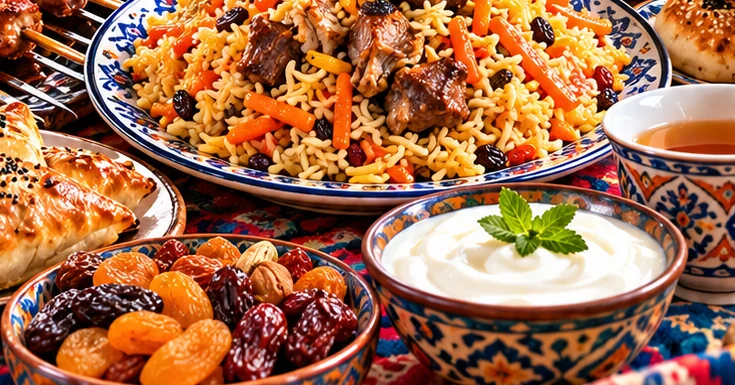
Polu / Pilaf | 抓饭
Golden rice, carrots and usually lamb cook together into a fragrant meal called polu, often known in English as pilaf. Every family and restaurant may have its own balance of rice, fat, meat and sweetness. Raisins or other additions appear in some variations.
Antee's food-science question: Why does cooking rice with carrots and meat produce a different taste than cooking them separately?
Grilled Lamb Skewers | 烤羊肉串
Skewers crackle over a grill, releasing smoky aromas often joined by cumin and chili. The best version is freshly cooked and served hot. The fun comes from watching the cook turn the skewers in practiced rhythm.
Big Plate Chicken | 大盘鸡
A generous platter of chicken, potatoes and peppers in a deeply seasoned sauce is built for sharing. Often served with wide noodles, big plate chicken shows how one dish can turn dinner into a group event. Its history is discussed in different ways; taste the dish rather than relying on a single origin story.
The Orchard and Market: Grapes, Melons, Apricots and Apples
Turpan Grapes and Raisins | 吐鲁番葡萄 / 葡萄干
Remember the grape trellises from Part Two? In Turpan, compare Seedless White (无核白), Mare's Milk (马奶子), fragrant grape varieties and the rich colors of raisins. A grape drying room, or liangfang (晾房), makes a wonderful geography lesson: warm, dry air becomes part of how fruit is preserved.
Antee's grape passport: Draw three different grapes and describe their shapes, colors and aromas. Cultivar names and availability vary by grower and season.
Hami Melon | 哈密瓜
One slice of fragrant melon can make a hot afternoon feel instantly cooler. Several cultivars are sold under familiar market names, so ask what is fresh rather than assuming all melons taste alike.
Aksu Apples | 阿克苏苹果
The oases around Aksu are known for apples. When they're in season, compare the snap of a fresh apple with the softer texture of a dried fruit from the market.
Other Seasonal Treasures | 杏、无花果、石榴
Depending on the place and time of year, look for apricots (杏), figs (无花果), pomegranates (石榴) and nuts. A fruit stall can be a colorful lesson in local agriculture, but ask before taking close-up portraits of vendors.
Something Cool: Yogurt and Tea
Yogurt (酸奶) is popular in many parts of the region, sometimes tangy enough that people add a little sweetness. Tea accompanies hospitality and conversation in many communities. Ask how a drink is traditionally served where you are visiting, rather than assuming the same custom is followed everywhere.
Antee's Xinjiang Food Passport
| Try or discover | Chinese | A little mission |
|---|---|---|
| Naan | 馕 | Spot the pattern stamped into the bread |
| Samsa | 烤包子 | Find a flaky or crisp golden edge |
| Laghman | 拉条子 / 拌面 | Watch how noodles are stretched |
| Ding ding noodles | 丁丁炒面 | Count the tiny noodle bites |
| Pilaf | 抓饭 | Identify carrot, rice and one spice |
| Lamb skewers | 烤羊肉串 | Notice the aroma of cumin |
| Big plate chicken | 大盘鸡 | Share one dish with the table |
| Grapes / raisins | 葡萄 / 葡萄干 | Compare fresh fruit with dried fruit |
| Hami melon | 哈密瓜 | Describe its aroma in three words |
| Aksu apple | 阿克苏苹果 | Listen for the first crisp bite |
| Yogurt | 酸奶 | Compare tangy and sweet flavors |
Food-friendly travel notes: Ask about allergies and ingredients; some dishes contain sesame, wheat, dairy or nuts. Choose thoroughly cooked meat, wash produce, and supervise children near hot ovens and grills. Respect local food customs and dietary practices, which differ from one household to another.
Closing scene: Antee rolls up the map, then carefully adds one last thing to the travel journal: a little sketch of a warm naan. Xinjiang may be famous for mountains and desert roads, but its meals are another way to understand the people who call these places home.
Travel with Antee | Cre8Travel · Xinjiang Series, Part Four