Illustrated editorial cover · Yangzhou, Jiangsu, China
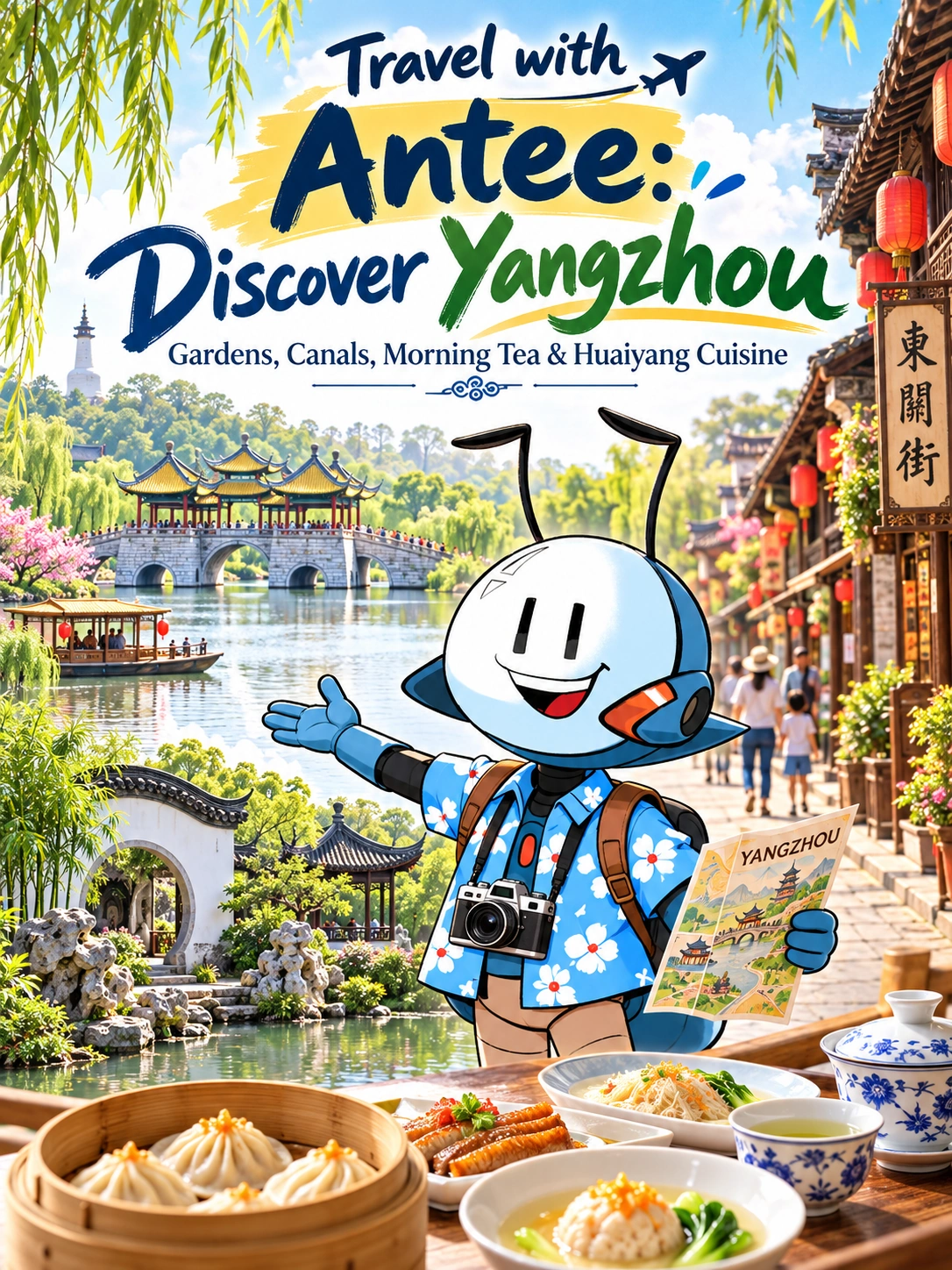
Travel with Antee: Discover Yangzhou
A delicious, image-rich family journey through poetic lakes, classical gardens, living canals and one of China's great breakfast traditions.
Jiangsu, China · Ideal stay: 3 days · Best for families, food lovers and culture explorers
There is a reason Yangzhou feels as if it belongs in a painting. A slim waterway curls beneath graceful pavilions; the rooflines of old houses emerge behind garden walls; a wooden boat moves slowly across a canal. But for Antee, the city's biggest surprise arrives at breakfast: an entire table of steaming buns, fine tofu shreds, tea and irresistible little pastries.
Welcome to Yangzhou (扬州), a city whose beauty is made for lingering. Here, travelers discover elegant gardens built by prosperous merchants, landscapes celebrated by poets, and a culinary tradition that treats breakfast as an occasion rather than a pit stop. This is not a race to collect landmarks. It is a journey best enjoyed slowly, with curiosity, conversation and room for one more bite.
Antee's question: Can a city tell its story through bridges, gardens and breakfast? Let's find out.
Part 1 · Slender West Lake: A Landscape Made for Poetry
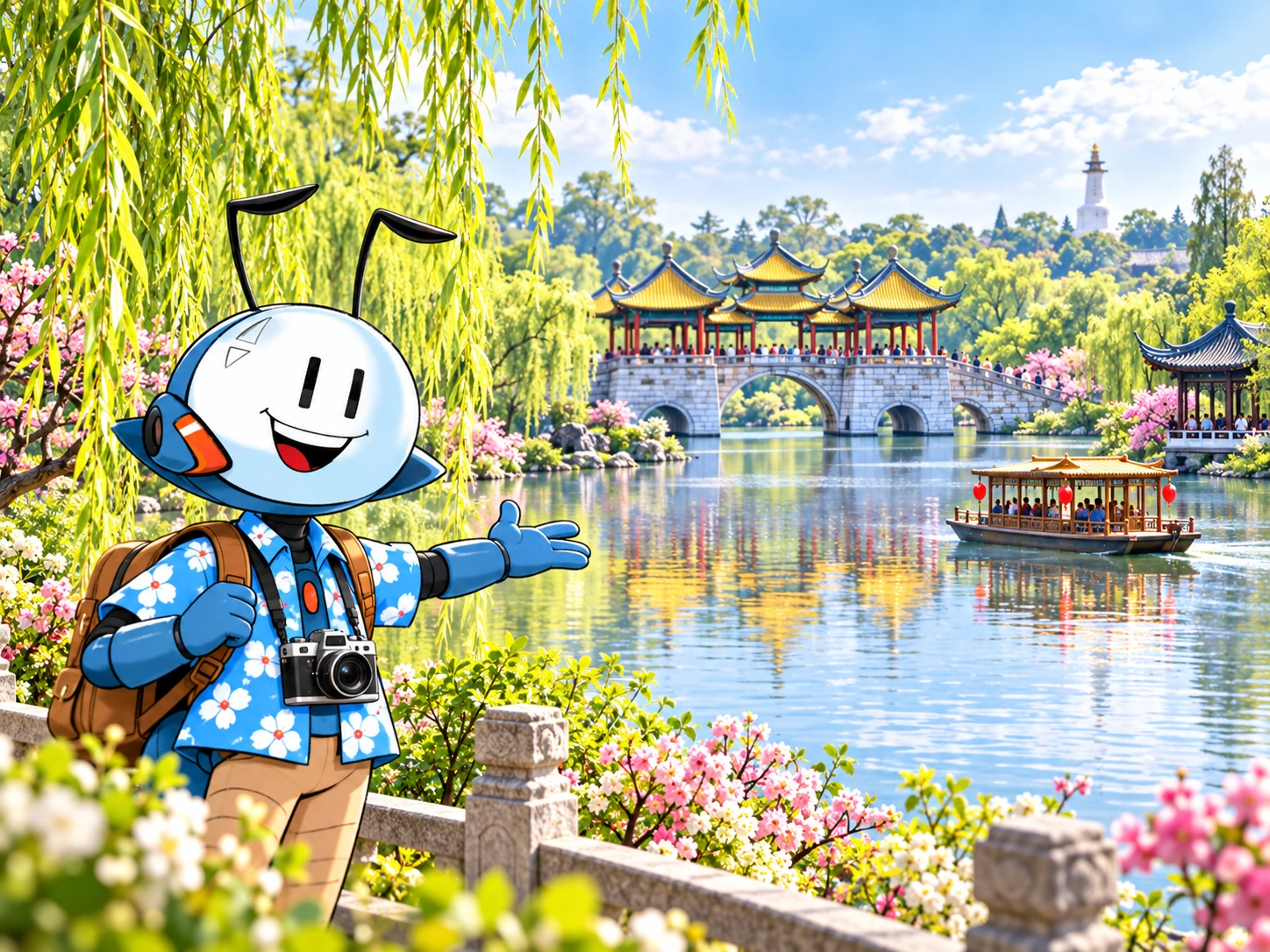
Start with Slender West Lake (瘦西湖), Yangzhou's most iconic landscape. It is less a vast open lake than a winding ribbon of water, lined with willow trees, flowers, elegant buildings and paths that turn each bend into another view. This carefully composed scenery grew out of a long history of gardens and waterways, especially during Yangzhou's prosperous salt-trading era.
The star is Five-Pavilion Bridge (五亭桥 / Wuting Bridge), where five roofed pavilions sit above graceful stone arches. Nearby, the White Pagoda (白塔) adds a completely different silhouette. Look for Twenty-Four Bridge (二十四桥), a name woven into Chinese poetry, and admire how the shore, bridges and pavilions frame one another.
Best experience: Arrive earlier in the day when the water is calm, then take a gentle stroll and, if operating, a lake boat ride. Spring brings blossoms and tender green leaves; summer offers lush greenery; autumn paints the water's edges in warm colors.
Photo story: Take one wide photograph with the Five-Pavilion Bridge, then make a close-up of a willow branch or a pavilion roof. Compare the grand scene with the tiny detail that gives it character.
Antee's mission: Find five pavilions on one bridge. Can you draw a bridge that looks different from every angle?
Part 2 · A City of Gardens, Temples and Hidden Courtyards
Yangzhou's classical gardens are not simply pretty places to walk. They are carefully designed worlds of stone, bamboo, water, architecture and seasonal change. Wealthy merchants once commissioned some of these spaces, leaving behind remarkable examples of how landscape design could express taste, learning and status.
Ge Garden: Four Seasons in One Walk
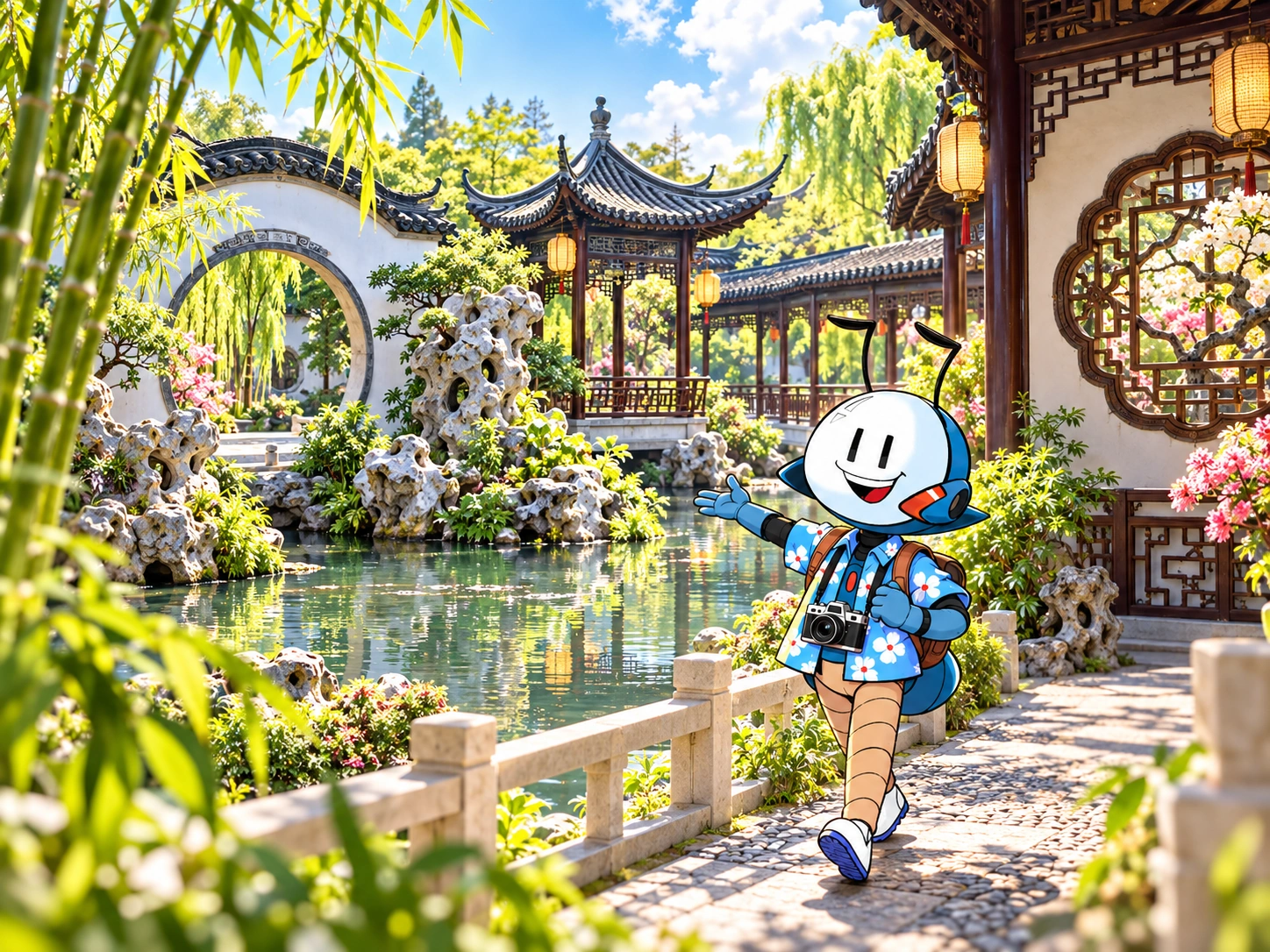
At Ge Garden (个园), bamboo and elaborate rockeries form a landscape inspired by the four seasons. Watch how different rocks suggest different moods: spring's freshness, summer's abundance, autumn's drama and winter's quiet. For children, the garden feels like a natural puzzle: how do rocks, shadows and plants create the feeling of a whole mountain?
Antee's mission: Choose a season and find one rock, one plant and one color that represent it.
He Garden: Corridors, Windows and Beautiful Surprises
He Garden (何园) is an elegant late-Qing garden famous for its architectural details and interconnected corridors. Windows, doors, covered walkways and small courtyards create ever-changing frames. One moment you look into a quiet room; the next, a garden appears as though it were a picture hanging on the wall.
Photo story: Frame a garden pavilion through a moon gate, window or covered corridor. Use the architecture to make your own natural picture frame.
Daming Temple: History on a Hill
Daming Temple (大明寺) introduces another strand of Yangzhou's story. The historic Buddhist complex is associated with the monk Jianzhen (鉴真), who traveled to Japan in the eighth century and helped transmit Buddhist teachings and culture. Visit respectfully, and allow time for the grounds and their calm atmosphere.
Family tip: Gardens and temples reward slow visits. Plan a snack break between stops and invite kids to photograph interesting roof tiles, stone textures or repeated patterns.
Part 3 · Dongguan Street, the Grand Canal and a City of Makers
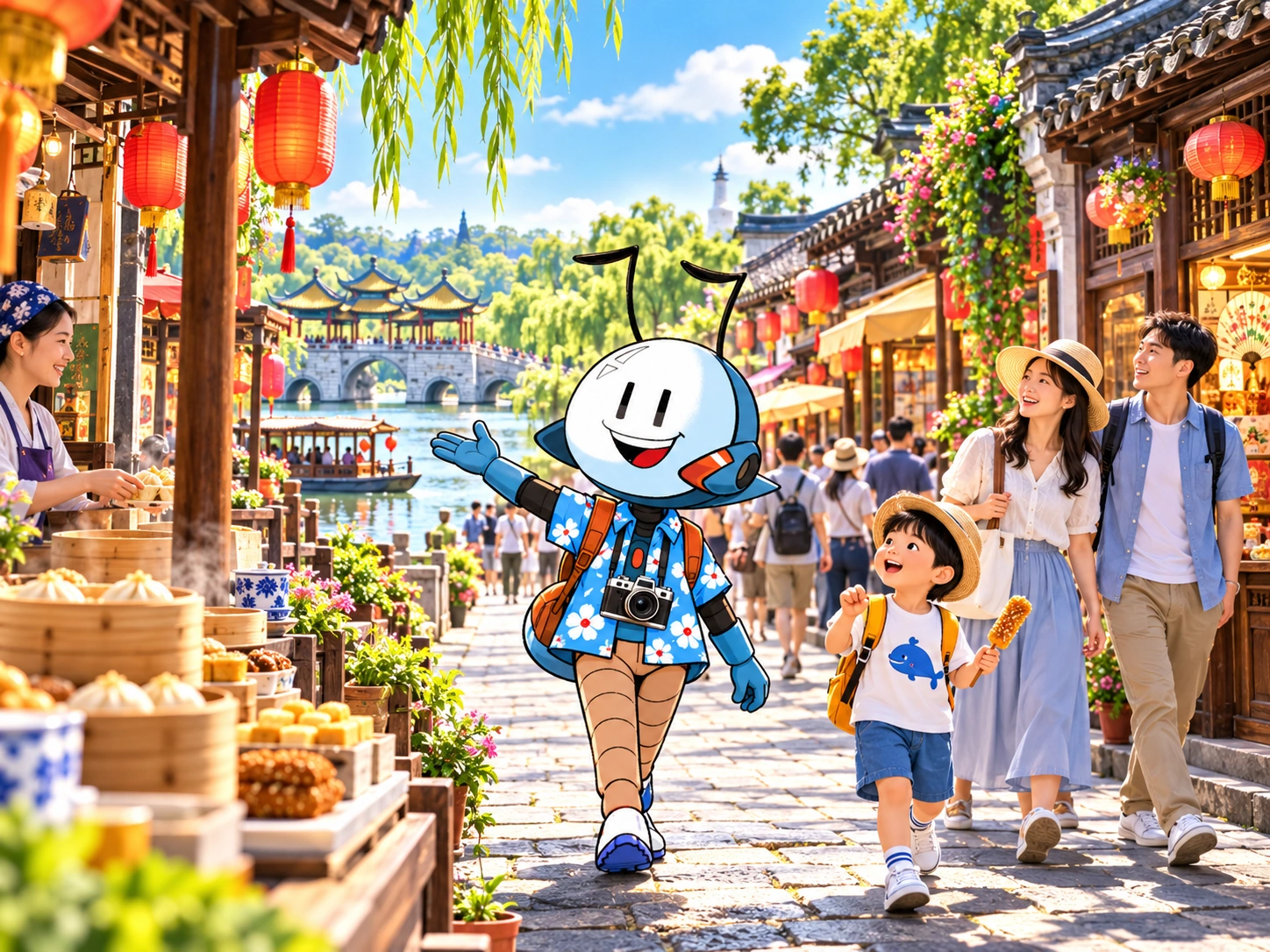
In the old town, Dongguan Street (东关街) is full of shopfronts, local snacks, crafts and stories. Walk beyond the busiest stretch when time allows: Yangzhou's smaller lanes are part of its charm, with older houses and local neighborhoods existing alongside visitor-oriented shops.
The Grand Canal: The Waterway That Connected China
Yangzhou grew important as a major canal and trading city. The Grand Canal connected regions, moved grain and merchandise, and helped shape the city's prosperity, architecture and distinctive tastes. Imagine boats arriving with goods, crafts and new ideas from far away.
To learn more, visit the Yangzhou China Grand Canal Museum (扬州中国大运河博物馆) near the Sanwan scenic area. Its displays bring canal technology, boats and historic city life into focus, including family-friendly exhibits. Check admission procedures and any temporary exhibition changes before visiting; regular opening is generally Tuesday through Sunday, with special holiday arrangements.
Antee's mission: Invent a cargo boat. What three things would you carry between cities, and why?
Crafts to Notice
Yangzhou is known for lacquerware, jade carving and traditional handicrafts, reflecting centuries of skilled artisanship. Some items are valuable works of art, while others are everyday keepsakes. Invite children to think about the time, patience and handwork behind a polished or carved object.
Photo story: Look for the contrast between the warm shop lights of Dongguan Street and the cool reflections of the canal after sunset.
Part 4 · Taste of Yangzhou: The City That Makes Breakfast an Event
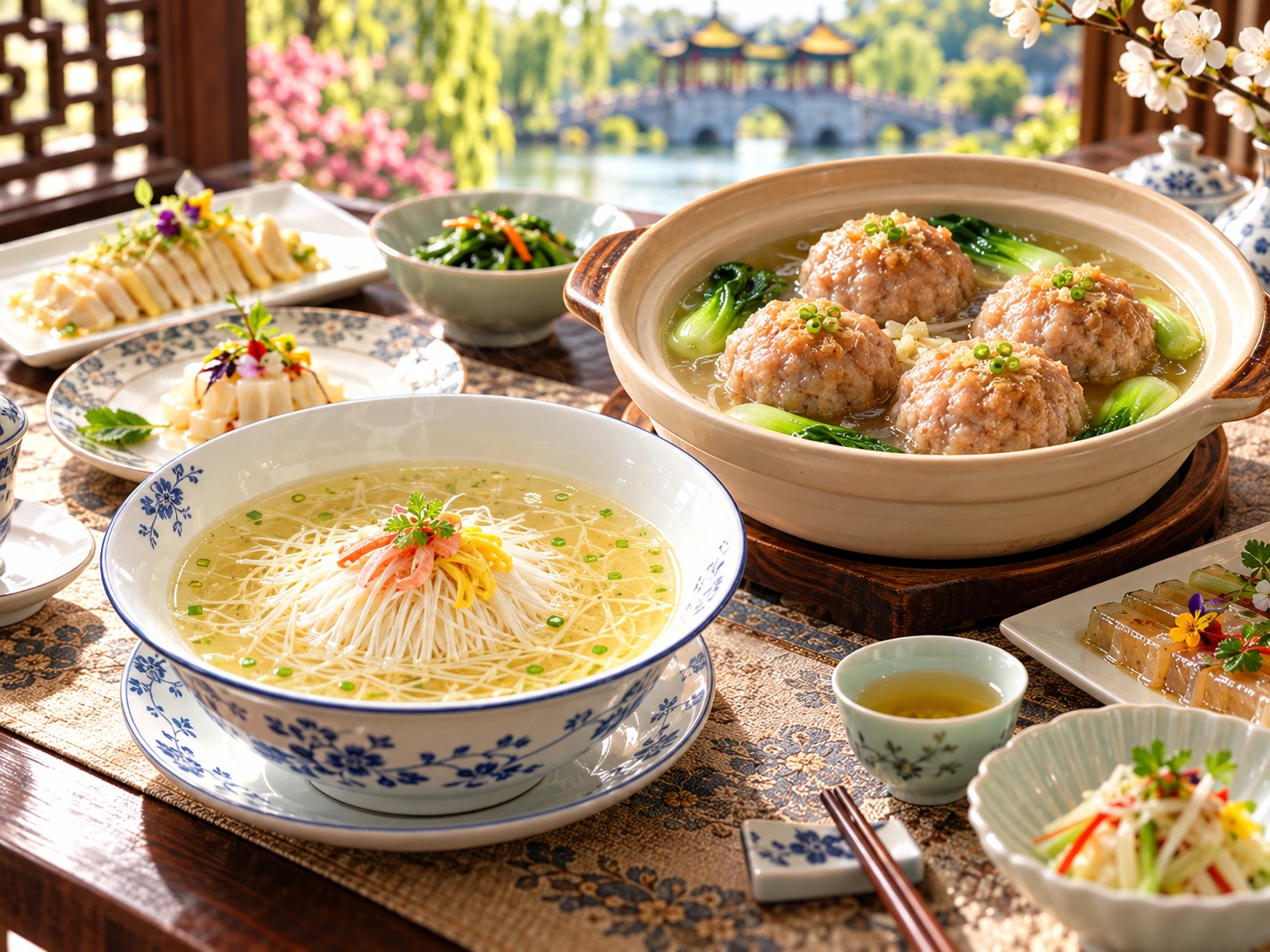
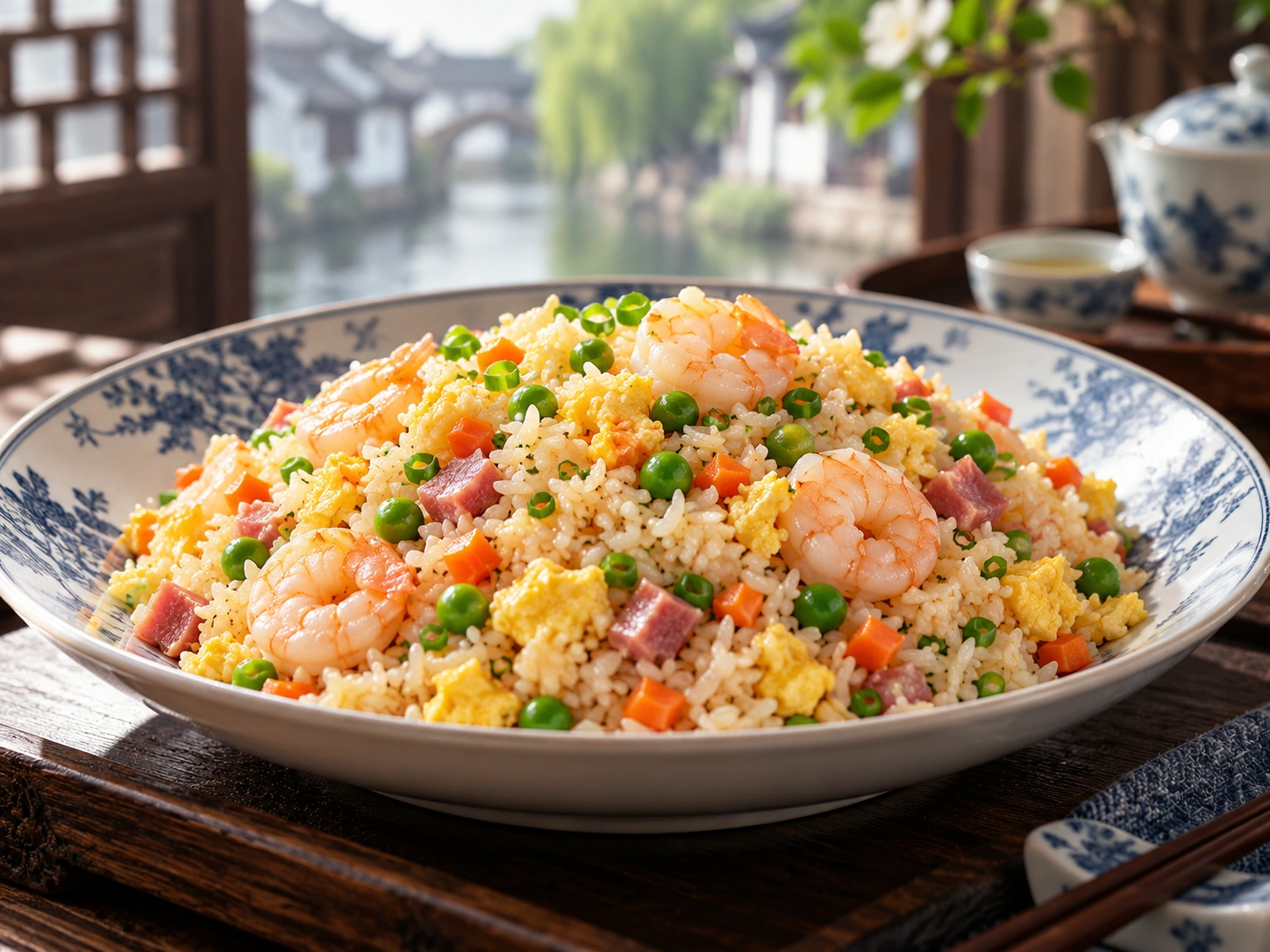
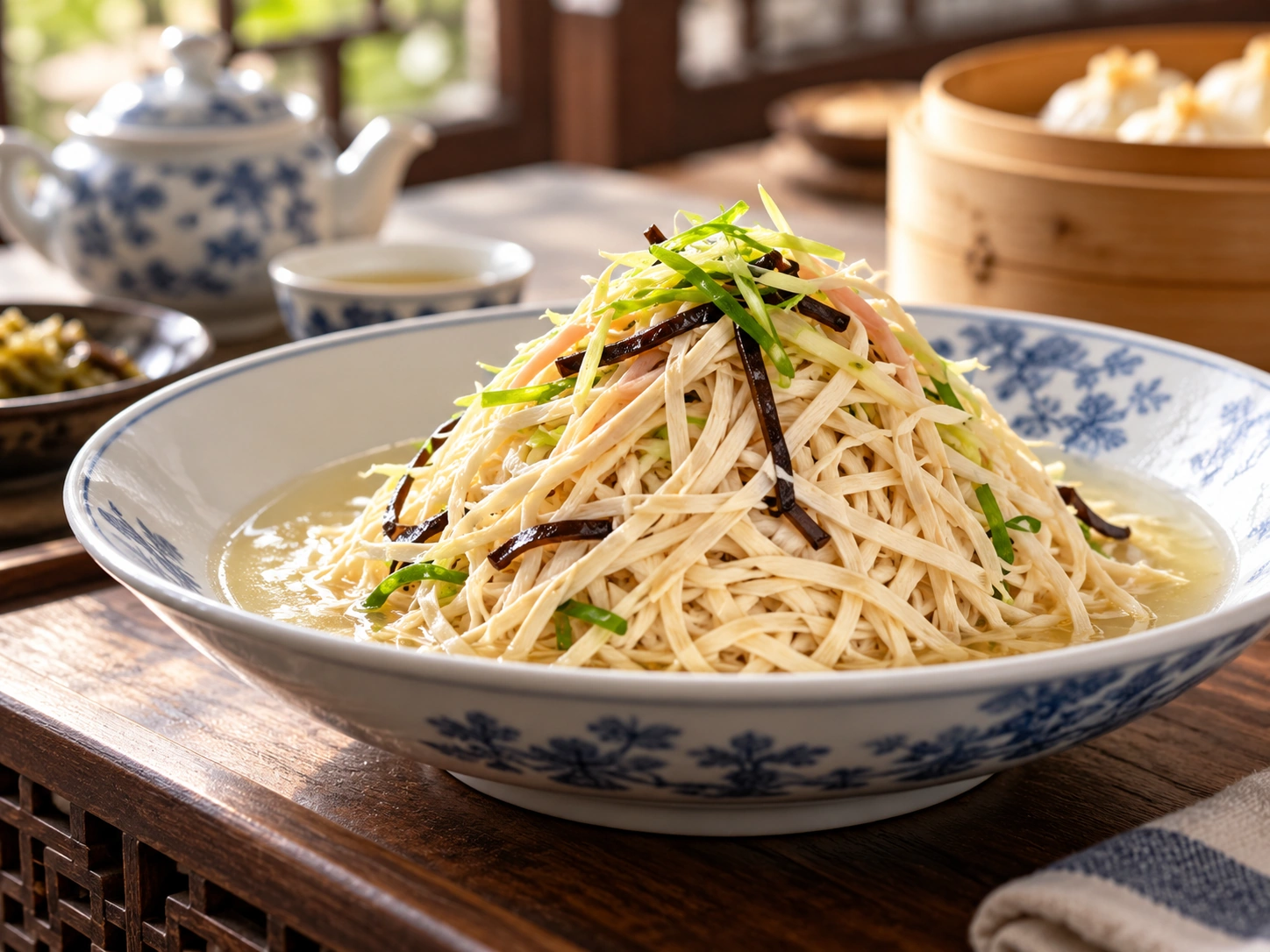
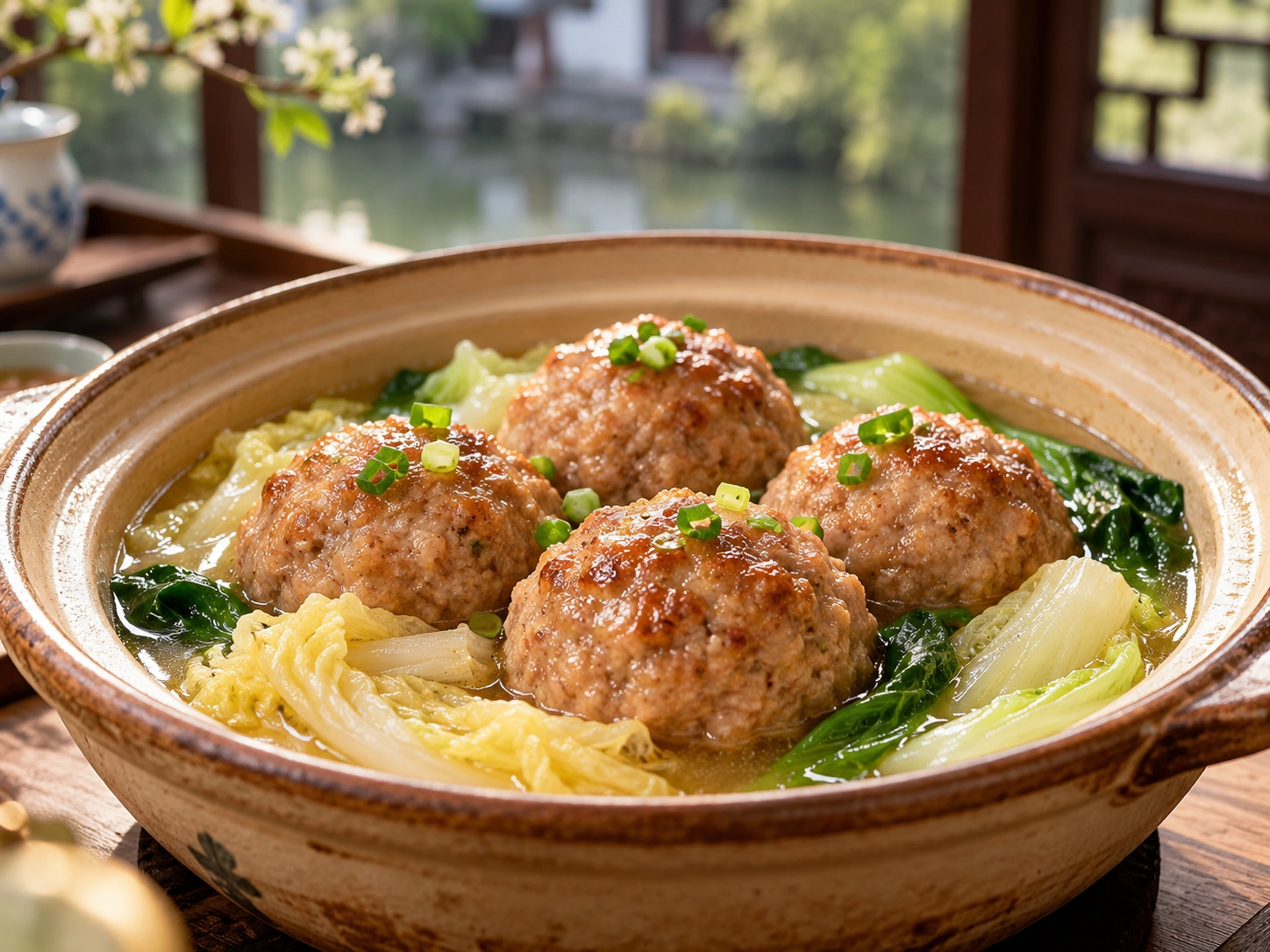
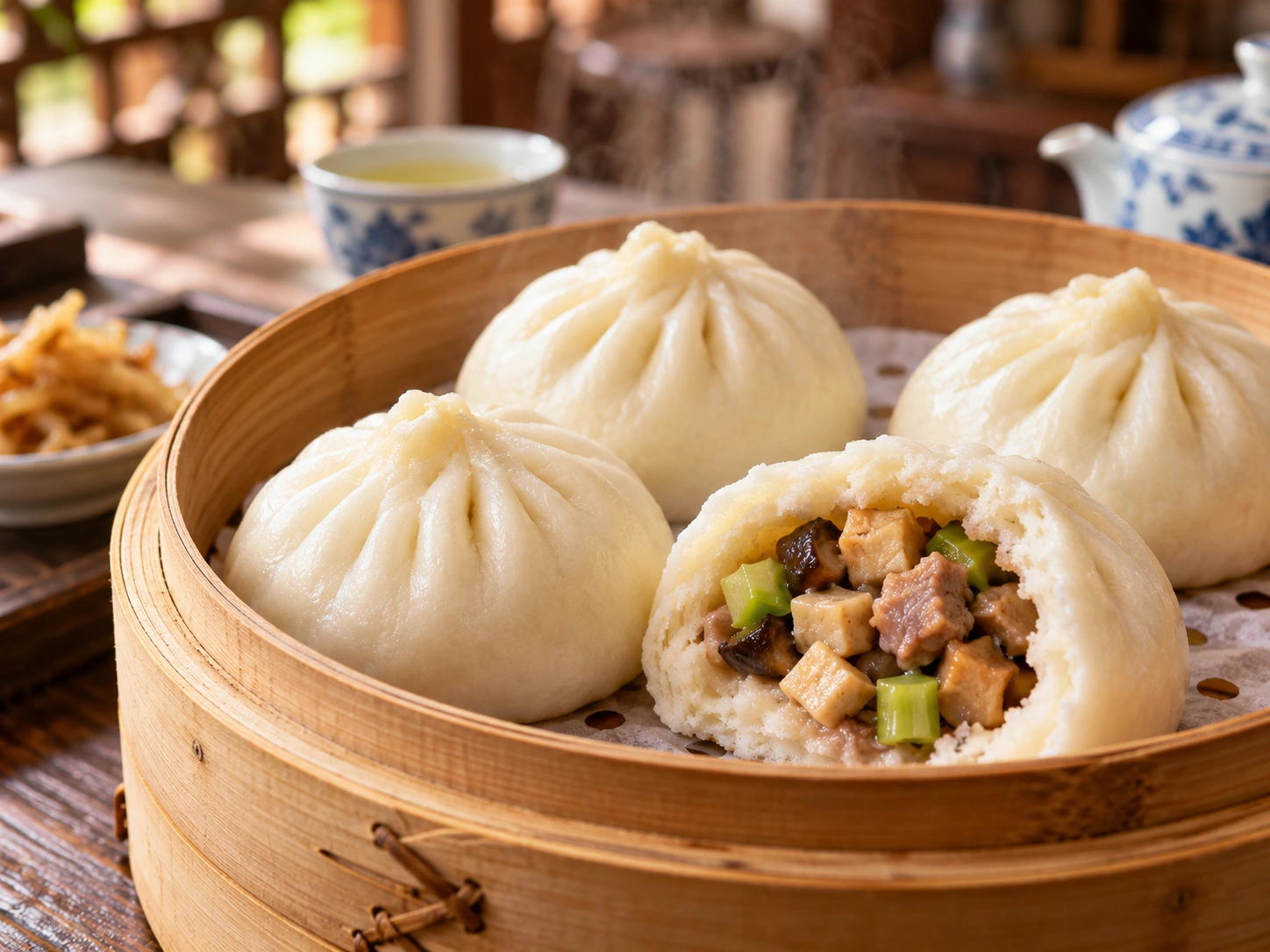
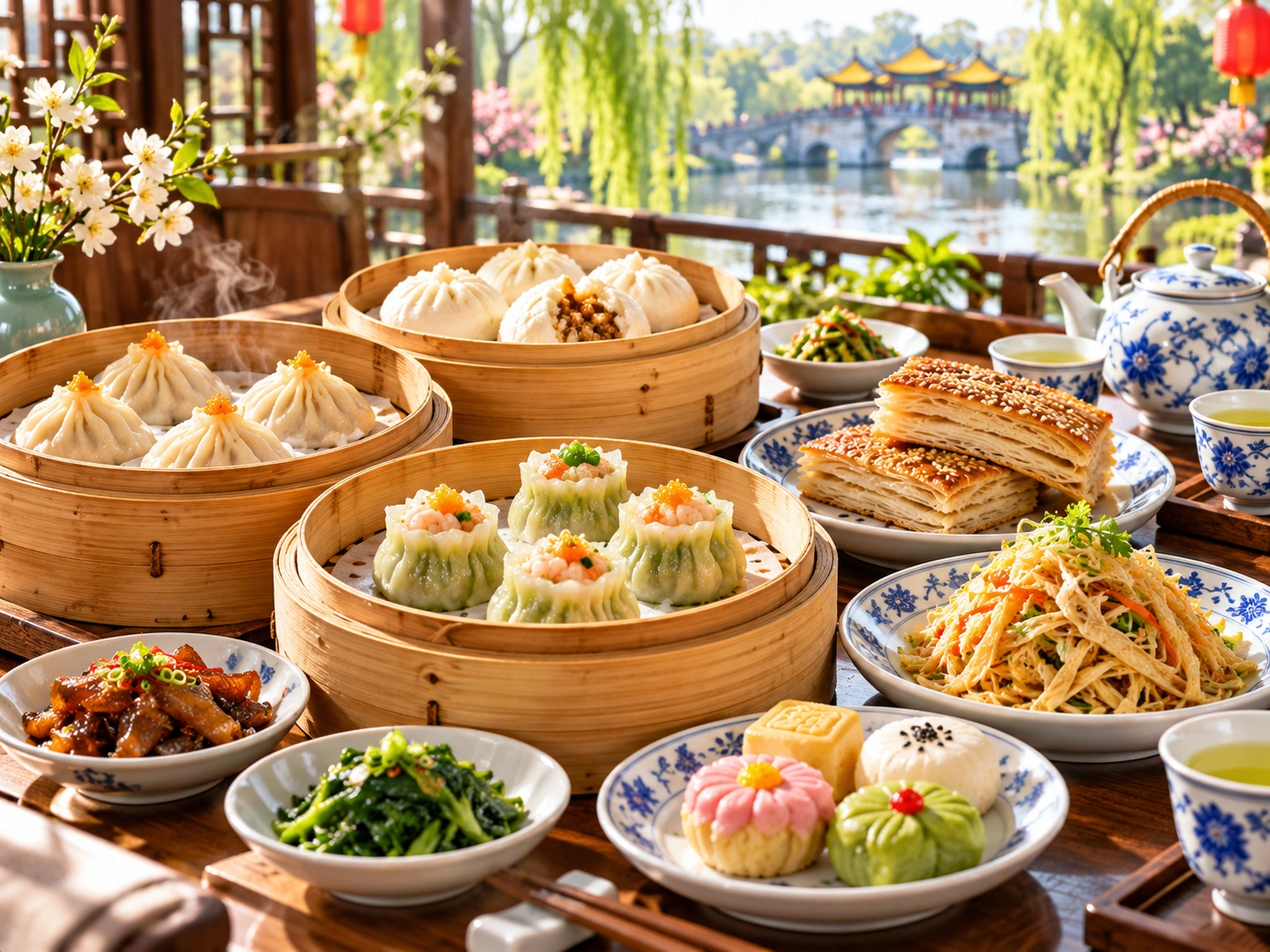
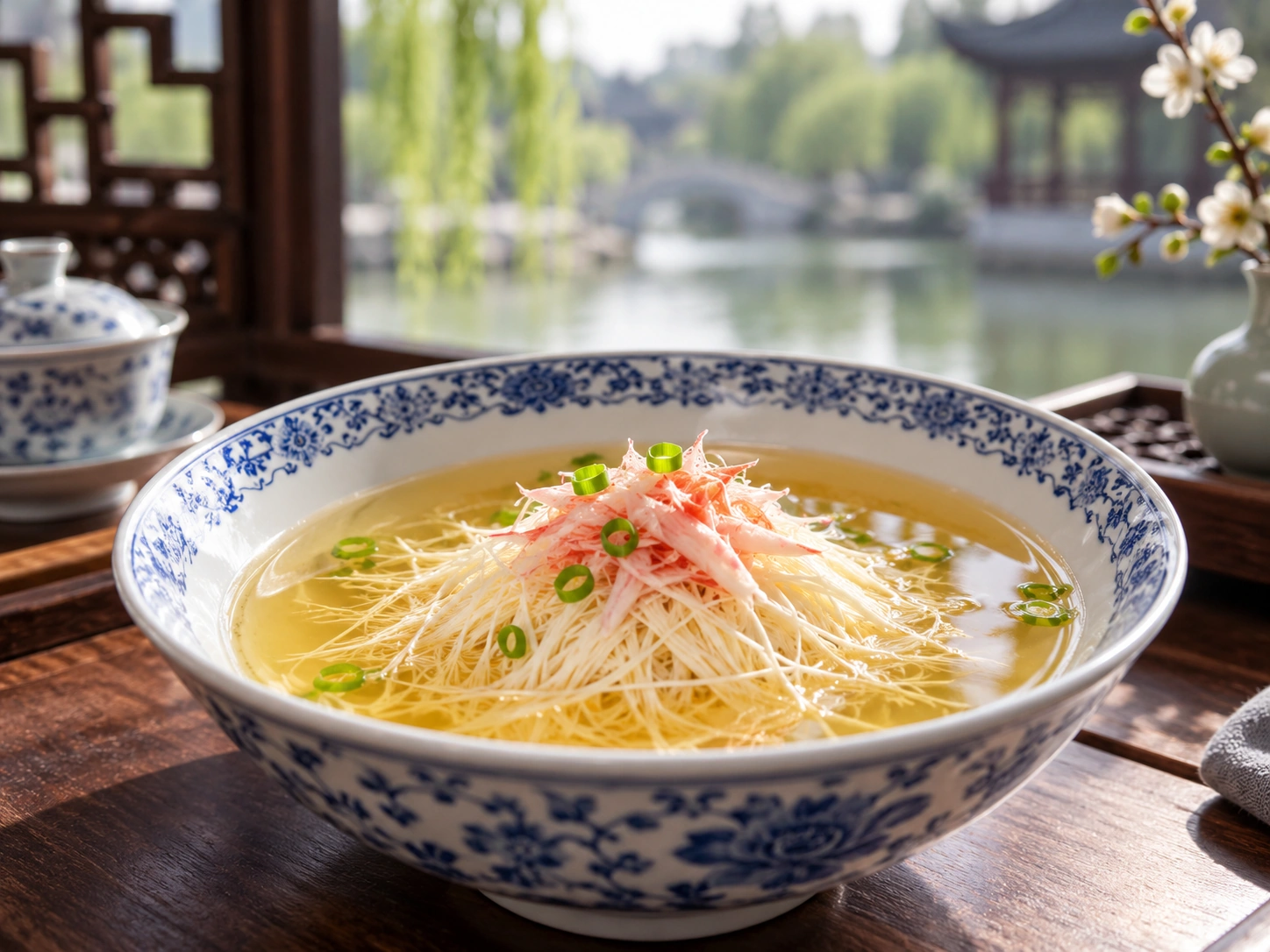
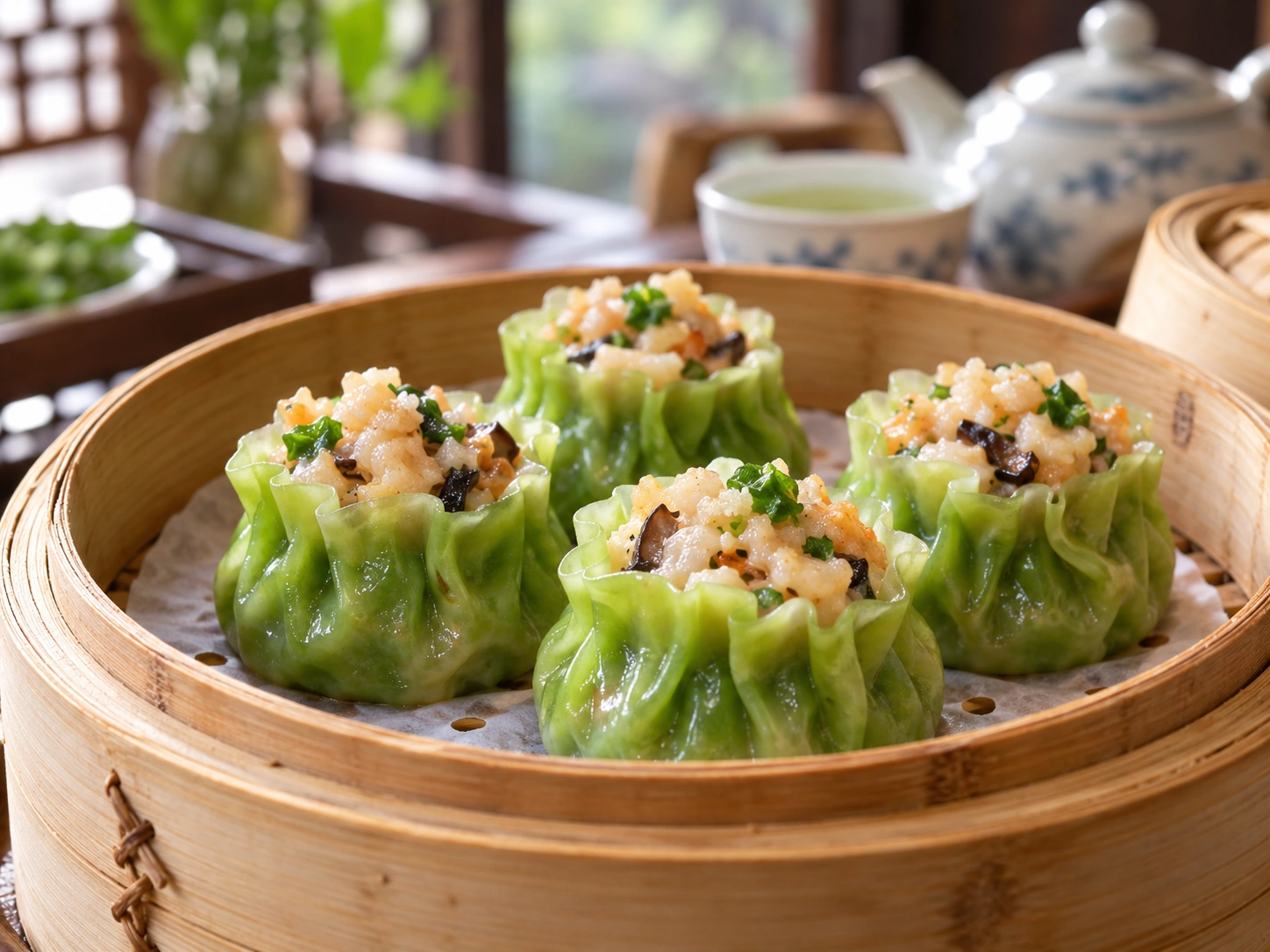
Photo note: the food images below are newly created, full-resolution AI editorial illustrations. They help tell the story but may not reproduce every traditional preparation exactly, especially thousand-layer oil cake and three-nested duck.
At breakfast, Yangzhou trades hurry for harmony. A teapot warms the table, a steamer releases a little cloud of fragrant steam, and friends lean forward to share another small bite. This is Yangzhou zaocha (扬州早茶), the city's celebrated morning-tea tradition. In Yangzhou, eating well is not reserved for special occasions. Sometimes, the occasion is simply breakfast.
The flavors belong to the larger world of Huaiyang cuisine (淮扬菜), rooted in the Yangzhou and Huai'an region. Huaiyang is one of China's celebrated culinary traditions, and Yangzhou joined the UNESCO Creative Cities Network as a City of Gastronomy in 2019. That recognition celebrates a living food culture, from neighborhood teahouses to highly skilled banquet kitchens.
What Makes Huaiyang Cuisine Special?
Huaiyang food is sometimes described as delicate, but that does not mean bland. Its secret is the way chefs build deep flavor while allowing the main ingredient to remain recognizable.
Precision in every cut. A cook may turn a block of firm tofu into a nest of thin, even strands, or slice soft tofu into almost hairlike threads. The technique affects how a dish feels in your mouth, not just how it looks.
Stocks that do the quiet work. Rather than relying on heavy chili or seasoning, soups and slow-cooked dishes often draw richness from poultry, pork, dried seafood and carefully chosen aromatics. Recipes vary by family and restaurant.
Freshwater ingredients and the seasons. Fish, shrimp, crab, bamboo shoots and greens feature prominently in the region's culinary imagination. A fresh ingredient may be steamed gently, while a humble block of tofu becomes the center of an elaborate dish.
An artist's sense of balance. A Huaiyang meal can be refined and richly satisfying at the same time: tender meatballs, delicate tofu, crisp greens, savory noodles and fluffy pastries play very different roles on one table.
Antee's chef challenge: When your order arrives, look at the textures first. Which food is cut into fine threads? Which has been steamed, and which has been simmered slowly?
How to Experience a Yangzhou Morning Tea
Yangzhou's traditional teahouses are places to talk and linger. You'll often find families sharing a pot of tea while attendants bring baskets of buns, noodles, tofu preparations and pastries. The experience resembles a leisurely dim-sum breakfast, but the local dishes and tea-house rhythm are unmistakably Yangzhou.
A tasty family-friendly order could unfold in three rounds:
Begin with tea and something refreshing. Try hot shredded tofu (烫干丝) dressed with ginger and aromatic sauce, or a small serving of shrimp-roe noodles (虾籽面).
Open the bamboo steamers. Share three-diced buns (三丁包), jade shaomai (翡翠烧卖) and a crab-roe soup bun (蟹黄汤包) where offered. Hot soup-filled buns should cool before anyone takes a bite.
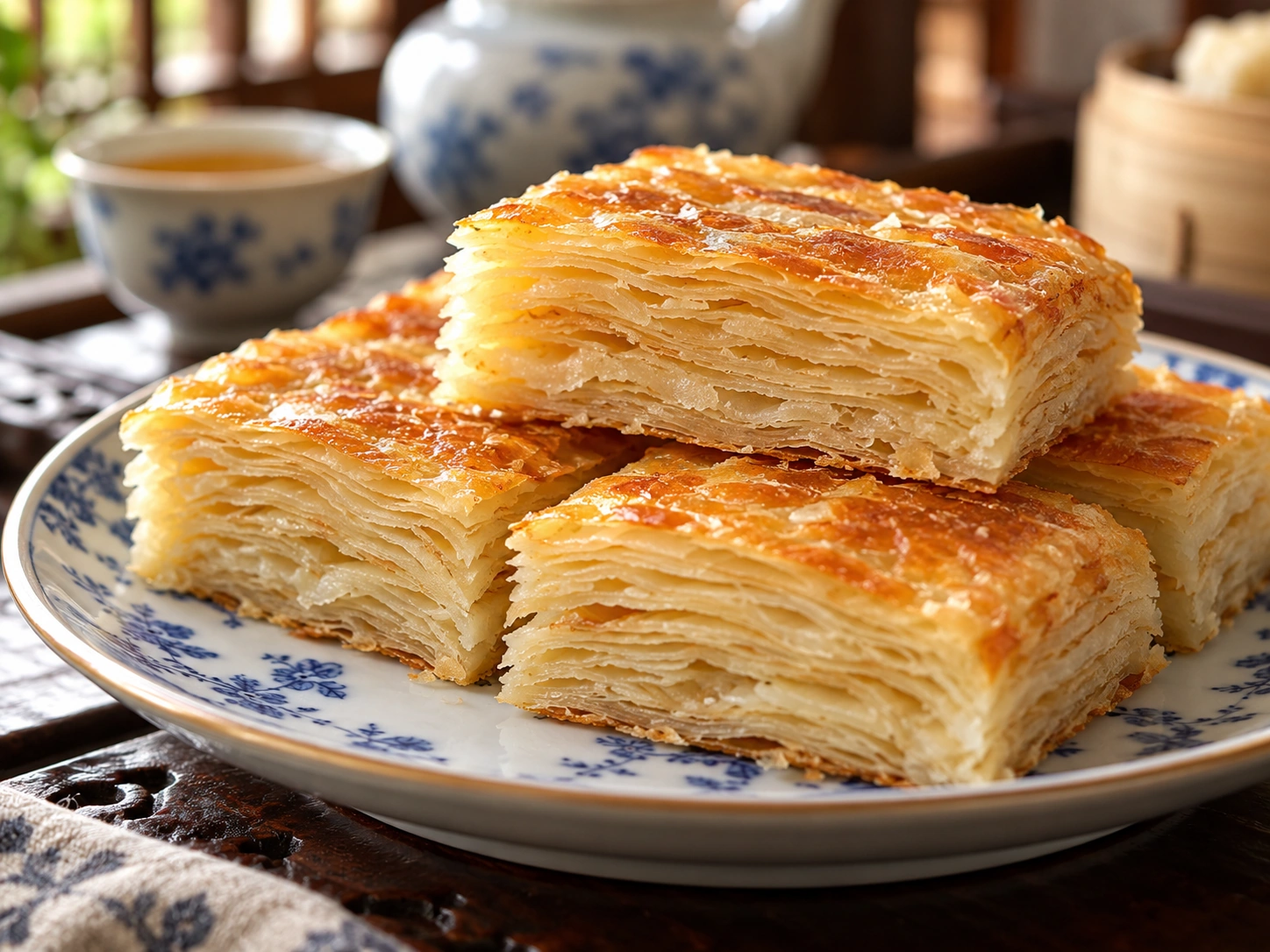
Finish with something sweet. Order thousand-layer oil cake (千层油糕), a soft steamed pastry made in delicate layers, and compare its texture with the savory buns.
Good to know: Don't expect every teahouse to carry every specialty, and don't mistake morning tea for a fixed set menu. Ordering a few dishes at a time makes the experience more relaxed, especially with children.
The art of Huaiyang cuisine is in small details: carefully prepared ingredients, varied textures and thoughtful presentation.
Antee's Yangzhou Food Passport
Collect five core tastes first, then turn the page for more Huaiyang classics. Every card includes a new flavor story and an observation mission for curious explorers.
Antee's Tasting Passport
Collect the five signature tastes, then explore eight more classic dishes below.
0 / 5 tasted
TASTE 01
Yangzhou Fried Rice
扬州炒饭
Golden · Savory
Separate, fragrant grains of rice take the lead in Yangzhou fried rice. A colorful mixture of eggs, shrimp, vegetables and sometimes ham or other small ingredients adds flavor without overpowering the rice. The real craft is in the preparation: ingredients are diced finely, the grains remain distinct, and the finished bowl tastes balanced rather than oily.
Antee’s mission: Count four colors in the bowl. Which ingredient has been cut almost as small as a grain of rice?
TASTE 02
Boiled Shredded Tofu
大煮干丝
Delicate · Umami
Dazhu gansi is a signature demonstration of Huaiyang knife work. Firm sheets of tofu are sliced into fine ribbons and gently cooked in a rich yet balanced broth. Chicken, ham, shrimp or other additions may appear depending on the kitchen. The tofu absorbs the stock while keeping its soft, springy identity. It looks like noodles, but the flavor and texture are entirely its own.
Antee’s mission: Watch the tofu strands sway in the broth. What is different about them compared with wheat noodles?
TASTE 03
Lion’s Head Meatballs
清炖蟹粉狮子头
Tender · Comforting
No lions are involved! These generously sized pork meatballs get their theatrical name from their rounded shape. In a classic Yangzhou preparation, finely hand-chopped pork is formed gently and slowly simmered in a flavorful, often clear broth; some versions feature crab meat or roe. The result should feel delicate and tender rather than dense. It is a wonderful example of how patience can be tasted.
Antee’s mission: Compare this meatball with an ordinary one: is it springier, softer or more delicate?
TASTE 04
Three-Diced Steamed Buns
三丁包
Fluffy · Savory
Under the soft dough of a classic sanding bao hide three small ingredients: usually diced pork, chicken and bamboo shoots. They are cut to bring different textures into one bite: savory meat and a fresh, slightly crunchy contrast. These buns are a favorite part of the morning-tea table and an accessible way for children to discover how the same filling can taste different when ingredients are chopped rather than minced.
Antee’s mission: Can you find all three ingredients in the center? Which one has the crunchiest bite?
TASTE 05
Yangzhou Morning Tea
扬州早茶
Tea · Sweet & Savory
Morning tea is not a single dish but a social ritual. In a Yangzhou teahouse, a pot of fragrant tea might accompany shredded tofu, shrimp-roe noodles, steamed buns, vegetable-filled shaomai and a sweet layered cake. Every family can create its own combination. The point is the pleasure of sharing, slowing down and experiencing the city through its everyday flavors.
Antee’s mission: Make a tiny three-course menu: one savory dish, one sweet bite and one kind of tea.
Beyond the Passport: Eight More Huaiyang Classics
The first five tastes are only the opening chapter. The dishes below show the full range of Yangzhou's cooking, from almost impossible-looking knife cuts to comforting noodles and elaborate celebration meals.
06. Wensi Tofu Soup | 文思豆腐
Wensi tofu: ultra-fine tofu threads suspended in broth. AI-created editorial illustration, not a documentary food photograph.
Taste: Silky · Light · Delicate
One of the loveliest spectacles in Huaiyang cooking begins with a block of soft tofu. A master cook cuts it into exceptionally fine, even threads that float through a clear or lightly thickened broth like white silk. The dish is traditionally associated with a monk named Wensi, though its story has been told in different ways. The challenge is to keep each fragile thread intact, a feat of control and patience.
Where to try: A restaurant specializing in traditional Huaiyang dishes. Antee's mission: Look for the threads before you take a spoonful. Could you draw one without lifting your pencil?
07. Hot Shredded Tofu | 烫干丝
Taste: Fragrant · Light · Savory
Don't confuse this breakfast favorite with dazhu gansi. Both begin with pressed tofu cut into very fine strands, but tang gansi is typically briefly scalded and served with fragrant dressing, often featuring soy sauce, sesame oil, ginger and sometimes shrimp. It is especially associated with the tea table, and its modest appearance makes the knife skills even more impressive.
Where to try: Morning-tea houses. Antee's mission: Compare a bite of hot shredded tofu with boiled shredded tofu. How does sauce versus broth change the experience?
08. Jade Shaomai | 翡翠烧卖
Jade-green vegetable shaomai in a bamboo steamer. AI-created editorial illustration, not a documentary food photograph.
Taste: Fresh · Soft · Green
These pretty open-topped steamed dumplings earn their name from their jewel-green vegetable filling. Finely chopped leafy greens, often blended with a little seasoning, sit inside a delicate wrapper. Their bright color makes a striking contrast to richer meat-filled buns, and they bring another texture to a morning-tea spread.
Where to try: Traditional teahouses and dim-sum kitchens. Antee's mission: Why do you think cooks named this dumpling after jade?
09. Thousand-Layer Oil Cake | 千层油糕
Illustrative layered pastry; traditional Yangzhou oil cake has a softer steamed texture. AI-created editorial illustration, not a documentary food photograph.
Taste: Soft · Sweet · Layered
A stack of whisper-thin layers becomes a fluffy, lightly sweet steamed cake. The word thousand celebrates the painstaking layered structure rather than promising a precise number in every serving. Each piece separates gently as you pull it apart, making it a favorite ending to a savory morning-tea breakfast.
Where to try: Teahouses with traditional pastry selections. Antee's mission: Look at the side of a slice. Can you spot how one layer becomes many?
10. Yangzhou Salted Goose | 扬州盐水鹅
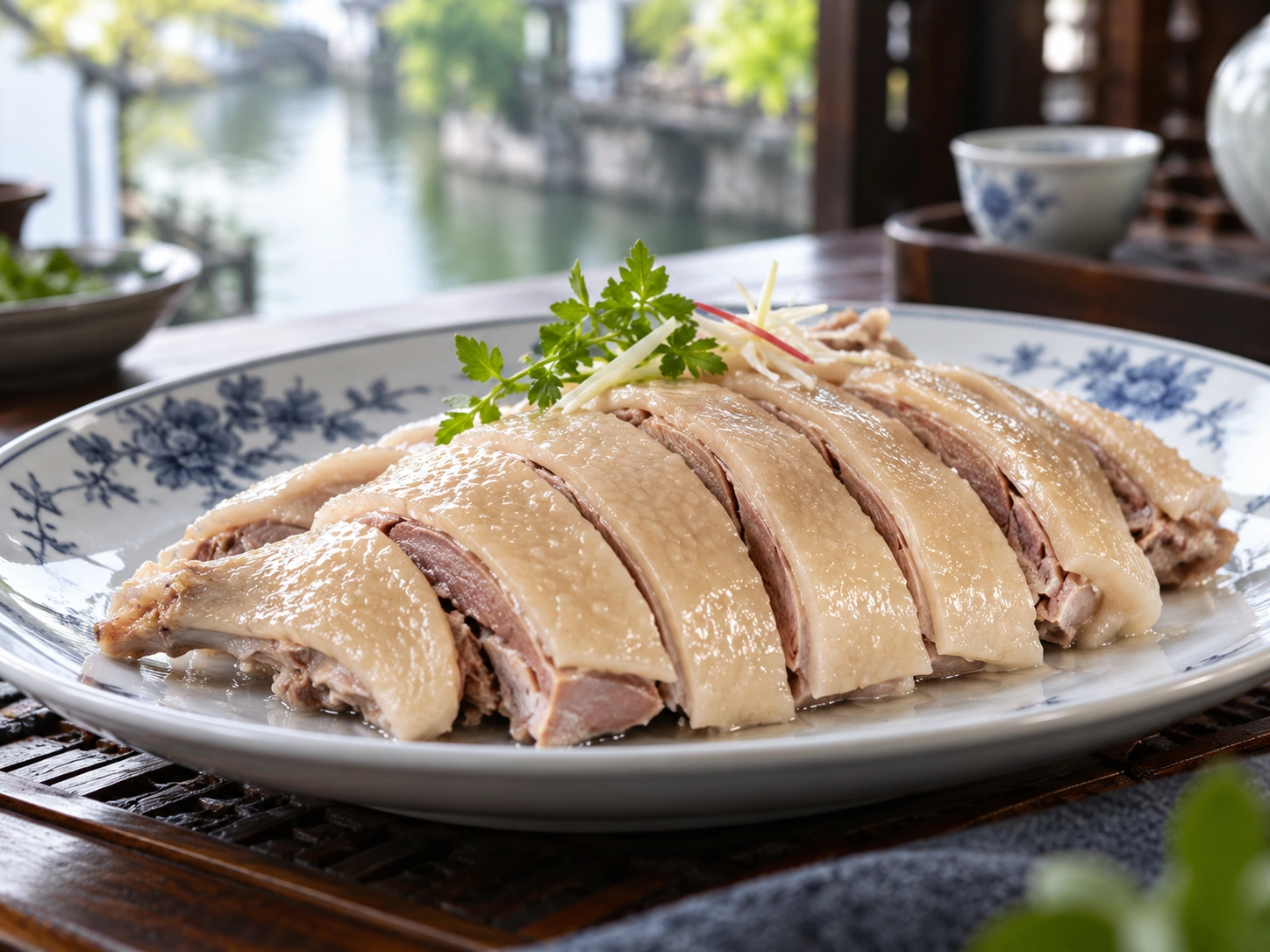
Tender slices of Yangzhou salted goose. AI-created editorial illustration, not a documentary food photograph.
Taste: Aromatic · Tender · Savory
A well-loved local specialty, salted goose is commonly served sliced, with tender meat and an aromatic seasoning that varies among shops. It has a different personality from the intricate banquet dishes: everyday, hearty and full of local character. Ask for a small portion to share alongside vegetables and rice.
Where to try: Neighborhood cooked-meat shops or local restaurants. Antee's mission: Compare the seasoning with a soup dish. Which uses spices more boldly?
11. Shrimp-Roe Noodles | 虾籽面 / 虾籽拌面
Taste: Deeply Savory · Noodle Comfort
Tiny dried shrimp roe adds a burst of umami to fine noodles, whether the noodles are served in broth or tossed with a glossy sauce. The flavor is surprisingly powerful for such a small ingredient. The dish reminds us that Huaiyang cooking can be wonderfully simple as well as ceremonial.
Where to try: Teahouses and local noodle shops. Antee's mission: Can you discover which part of the bowl delivers the extra savory taste?
12. Five-Diced Steamed Buns | 五丁包
Taste: Rich · Fluffy · Festive
An elaborate cousin of the three-diced bun, the five-diced version may combine pork, chicken, bamboo shoots, shrimp and sea cucumber. Traditionally associated with refined Yangzhou breakfast service, it turns one fluffy bun into a miniature banquet, with each carefully cut ingredient contributing its own texture.
Where to try: Established Yangzhou morning-tea houses. Antee's mission: Compare the three-diced bun with this more complex version. Can you taste the difference?
13. Three-Nested Duck | 三套鸭
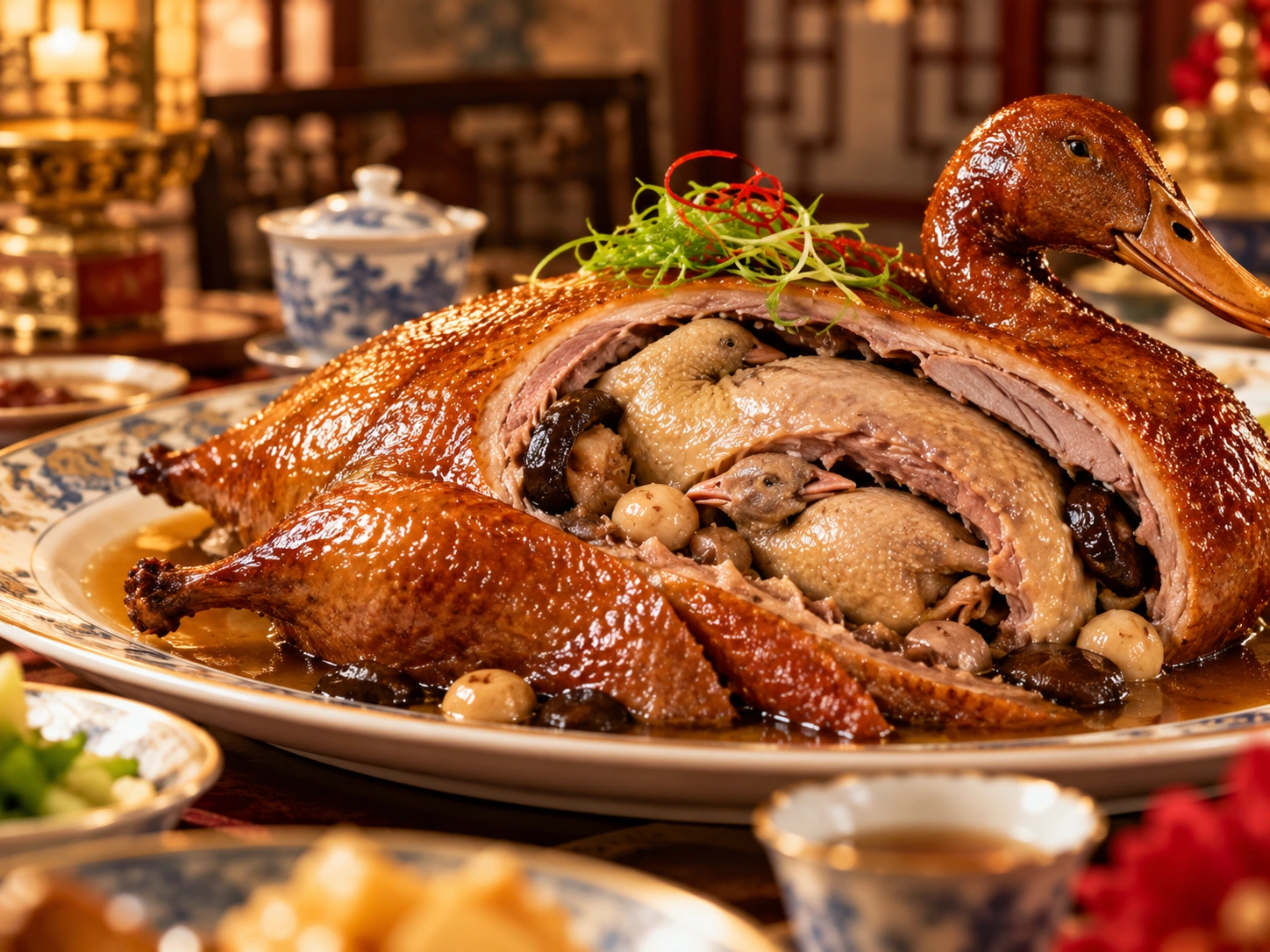
An artistic interpretation of a three-nested duck banquet preparation. AI-created editorial illustration, not a documentary food photograph.
Taste: Rich · Slow-Cooked · Celebratory
Some Huaiyang dishes are impressive simply because of the work behind them. In traditional san tao ya, a small bird is stuffed inside a larger duck, which is then placed inside another duck. The birds are boned and carefully prepared before long, gentle cooking. It is a classic example of banquet craftsmanship, not a casual street snack. Preparations and ingredients vary, and specialty restaurants may require advance ordering.
Where to try: Restaurants offering classic Huaiyang banquet cuisine. Antee's mission: Ask the chef or server why slow cooking matters for this dish.
Plan a Huaiyang Food Day
Breakfast: the leisurely beginning. Book a table at a traditional teahouse if your schedule is tight. Share a pot of tea, tang gansi, one or two buns, jade shaomai and a sweet layered cake. Avoid ordering everything at once: choosing a few dishes in rounds makes the meal more fun.
Lunch: the knife-skills lesson. Look for dazhu gansi and Wensi tofu soup on a Huaiyang menu. They showcase two different tofu textures. Pair them with seasonal vegetables or a freshwater fish dish if available.
Dinner: the banquet side of Yangzhou. Share clear-broth lion's head meatballs, a seasonal seafood dish and Yangzhou fried rice. If your party wants a longer meal, ask about seasonal specialties or advance-order banquet dishes such as three-nested duck.
Food photography notes: Photograph the layered pastry from the side, lift a few strands of gansi above a plain bowl, and take a close-up of steam rising from a bamboo basket. Soft window light is especially flattering to the subtle colors of Huaiyang cuisine.
Family-friendly tip: Crab, shrimp, pork, wheat and soy appear in many classics. Tell the kitchen about allergies, choose fully cooked preparations, and be especially careful with the scalding broth inside soup buns. Not all dishes or dining rooms are suitable for every age, so check ahead.
Antee's final food mission: Create a tiny menu with one crisp, one soft, one soupy and one sweet item. Which taste would you come back to Yangzhou for?
Antee's 3-Day Yangzhou Family Itinerary
Day
Morning
Afternoon
Evening
1 · Water & Poetry
Slender West Lake, Wuting Bridge and the White Pagoda
Daming Temple and a relaxed garden walk
A Huaiyang dinner and an evening stroll
2 · Garden Secrets
Traditional morning tea and Ge Garden
Dongguan Street and He Garden
Old-town snacks and canal views
3 · Canal Discoveries
Yangzhou China Grand Canal Museum
Sanwan area or additional craft stops
Repeat your favorite dish before departure
Before You Go
Best seasons: Spring is especially lovely for blossoms and gardens; autumn is often pleasant for walking. Expect summer heat and humidity and colder winter days.
Getting around: Combine walking with taxis or ride-hailing between sights. The museum area is not a short walk from every old-town attraction.
Museum check: The Grand Canal Museum generally opens Tuesday–Sunday, 9:00 a.m.–5:00 p.m., with last admission at 4:00 p.m.; check its official site for reservation requirements and holiday exceptions.
Family pace: Leave plenty of space between sights. A boat ride, a garden puzzle and a food break are better than trying to see everything at once.
Photo tip: Early mornings and blue hour bring beautiful color to waterways. Ask before photographing craftspeople or other visitors closely.
Four Treasures of Yangzhou: Antee's Final Challenge
Before leaving, collect four memories: one bridge, one garden detail, one canal story and one new flavor. Sketch them, photograph them or write down something surprising you learned.
At the end of the trip, Antee discovers something important: Yangzhou is not just a city of famous sites. It is a city of little pleasures. A reflection beneath a bridge. A framed view through a garden window. A delicate bite that took a skilled cook years to master.
Ready for the next adventure? Pack your curiosity and leave room for breakfast.
Photography note: all artwork in this edition is AI-generated editorial illustration inspired by Yangzhou, not a record of exact present-day appearances. Please verify visiting arrangements independently.
Source notes for editors
UNESCO World Heritage Centre, Slender West Lake and Historic Urban Area in Yangzhou (Tentative List): https://whc.unesco.org/en/tentativelists/5327
Yangzhou China Grand Canal Museum, About Us: https://www.grandcanalmuseum.cn/AboutUs.html
Yangzhou China Grand Canal Museum, Visit: https://www.grandcanalmuseum.cn/visit/
Yangzhou tourism, Relish a Morning Feast in Yangzhou: https://www.seeyangzhou.com/2024-11/26/c_1048091.htm
UNESCO Creative Cities Network, Yangzhou designation (2019): https://www.unesco.org/en/articles/unesco-designates-66-new-creative-cities-including-valparaiso-chile
UNESCO, Yangzhou's 2023 City of Gastronomy Monitoring Report: https://www.unesco.org/sites/default/files/medias/fichiers/2025/01/Yangzhou_Monitoring_Report_2023.pdf
Yangzhou tourism, Wensi tofu and fine knife work: https://www.seeyangzhou.com/2020-12/24/c_577208.htm