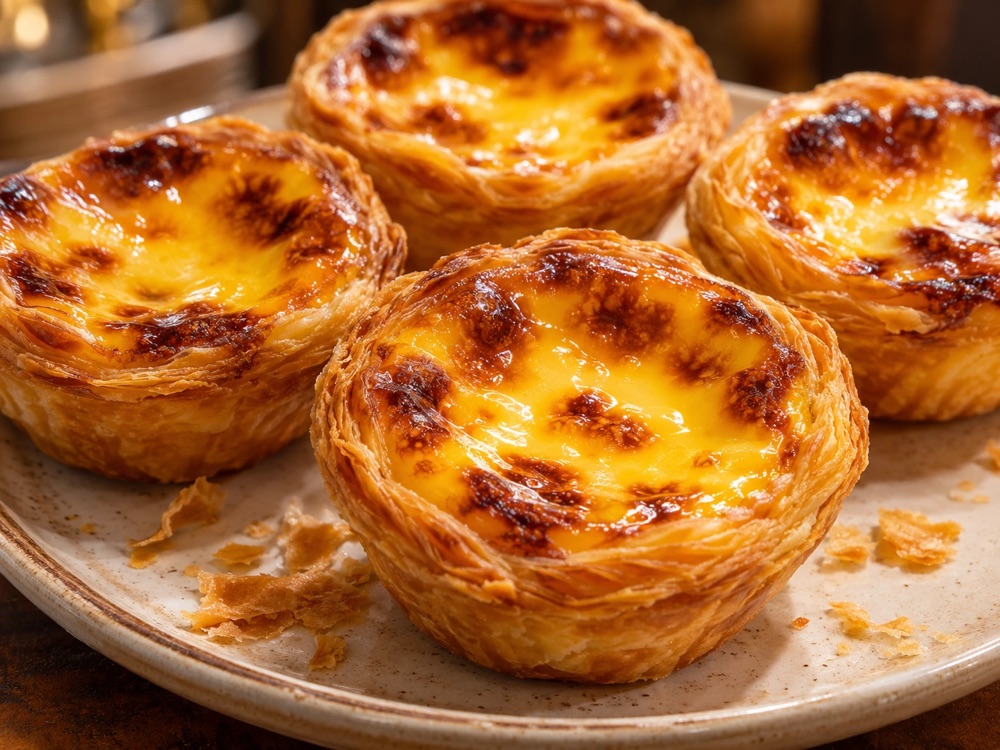
Portuguese Egg Tart 葡式蛋挞
Flaky pastry surrounds a soft custard with caramelized dark spots on top. Best tried warm, when the crust crackles.
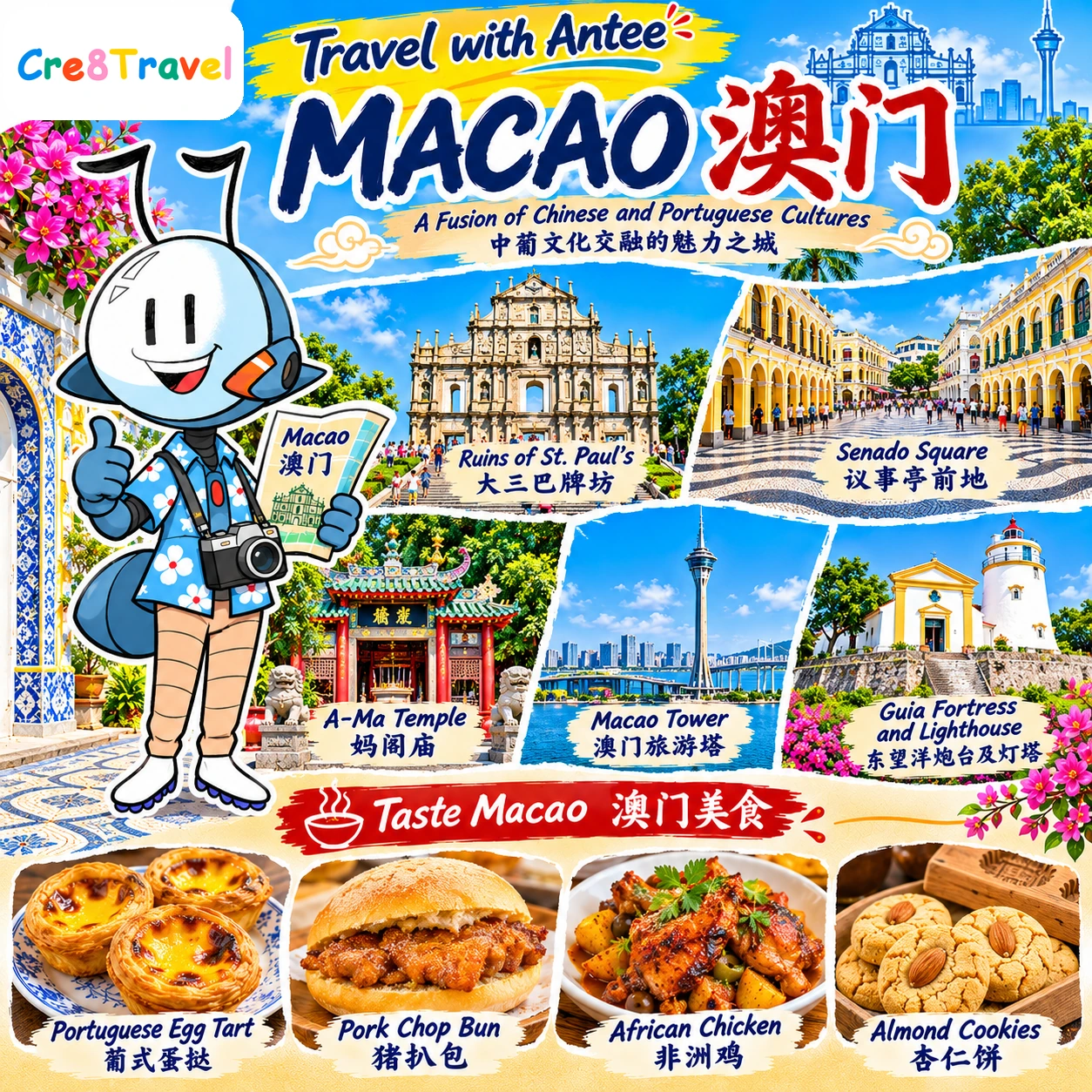
A family journey through UNESCO streets, Chinese temples, maritime history and unforgettable Macanese food.
Walk through Macao and two histories speak at once. Incense curls beneath temple roofs; a few streets away, Portuguese-style arcades frame mosaic pavements, and bakery windows are filled with blistered custard tarts. This small city on the Pearl River Delta has a surprisingly expansive story, shaped by maritime exchange, Chinese communities, Portuguese influence and contemporary life.
The Historic Centre of Macao (澳门历史城区), inscribed by UNESCO in 2005, links historic buildings, squares and streets that show centuries of exchange between Chinese and Western traditions. Here, a square of patterned stone, a church façade and a hillside shrine belong to one connected urban story.
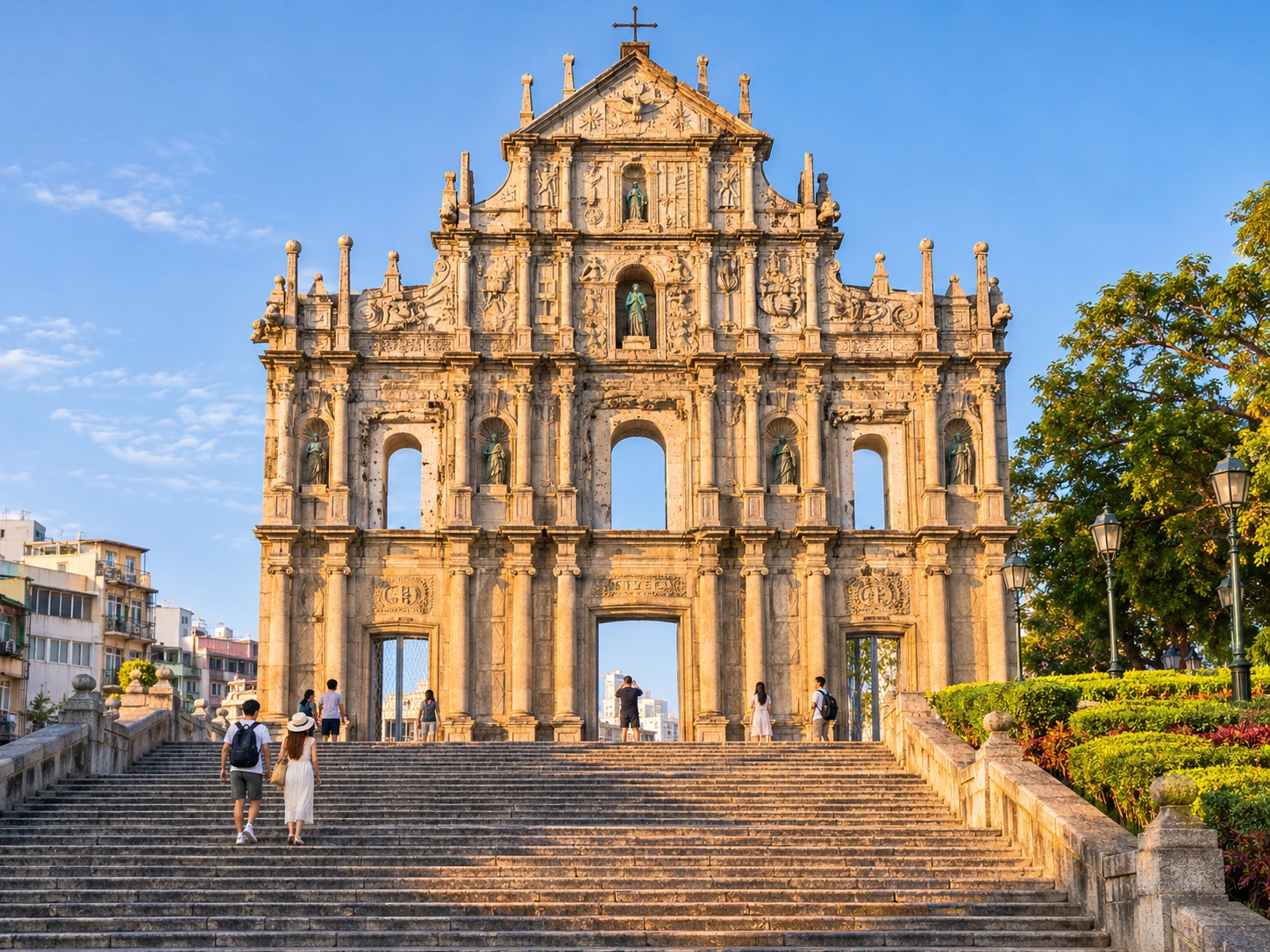
Standalone editorial illustration of the landmark, prepared for this guide.
The celebrated stone façade is the remaining front wall of the seventeenth-century Church of Mater Dei, part of a once-important religious and educational complex. Today, carved details and open windows stand above a monumental staircase. Look closely: European church architecture shares the frame with motifs that reflect Macao’s encounter between cultures. The surviving wall is a historical ruin, not a complete standing cathedral.
Photography: Photo idea: arrive early for a low-angle view of the steps, then photograph a single carved detail.
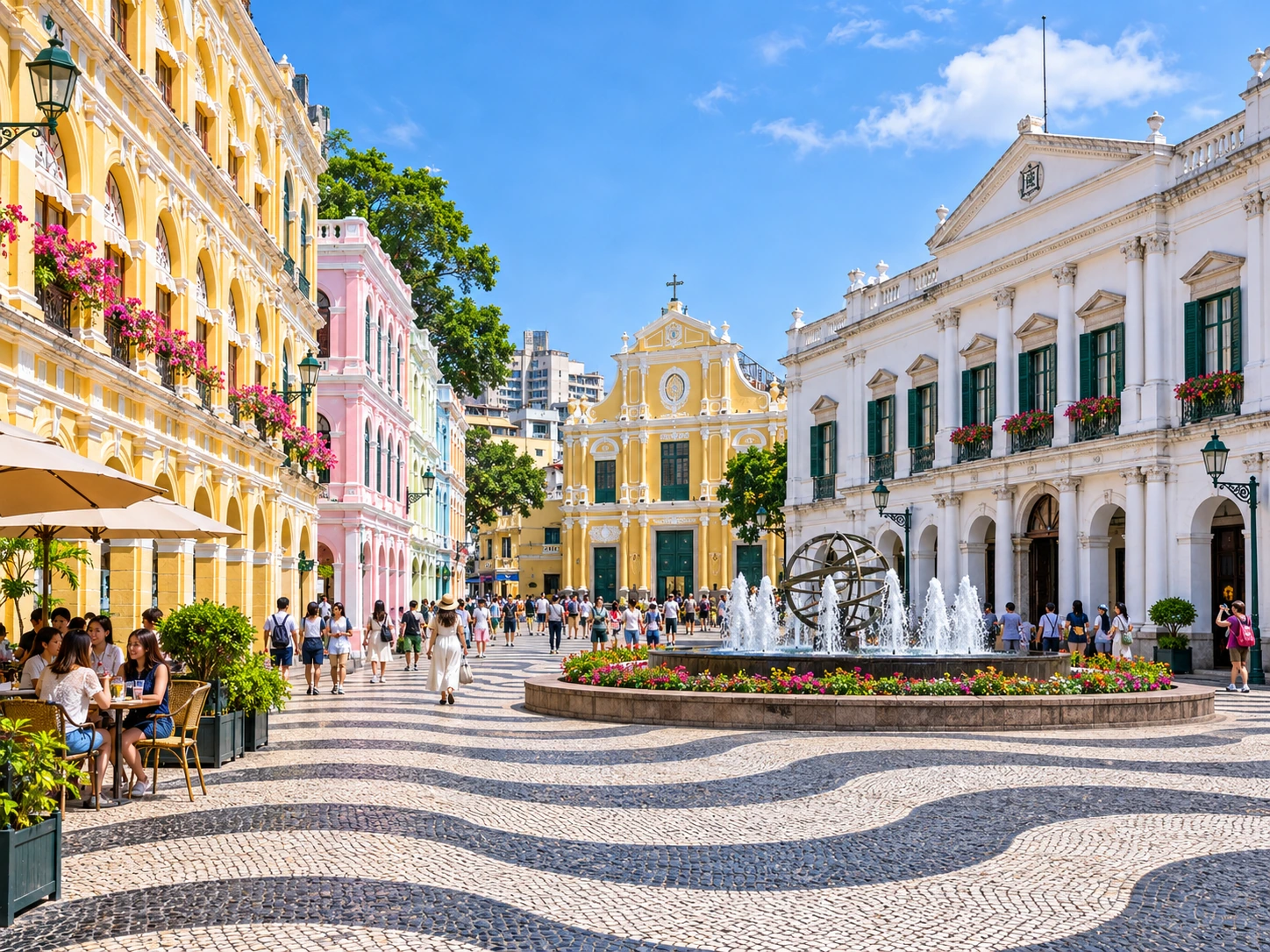
The old civic heart of Macao is famous for black-and-white patterned paving, pastel façades and pedestrian energy. Pause at the fountain, then walk toward St. Dominic’s Church (玫瑰圣母堂) with its distinctive yellow exterior. The square shows how an everyday public place can also be a living heritage site, full of people, music, storefronts and small rituals.
Photography: Photo idea: let the pavement’s curving pattern lead the eye toward the historic façades.
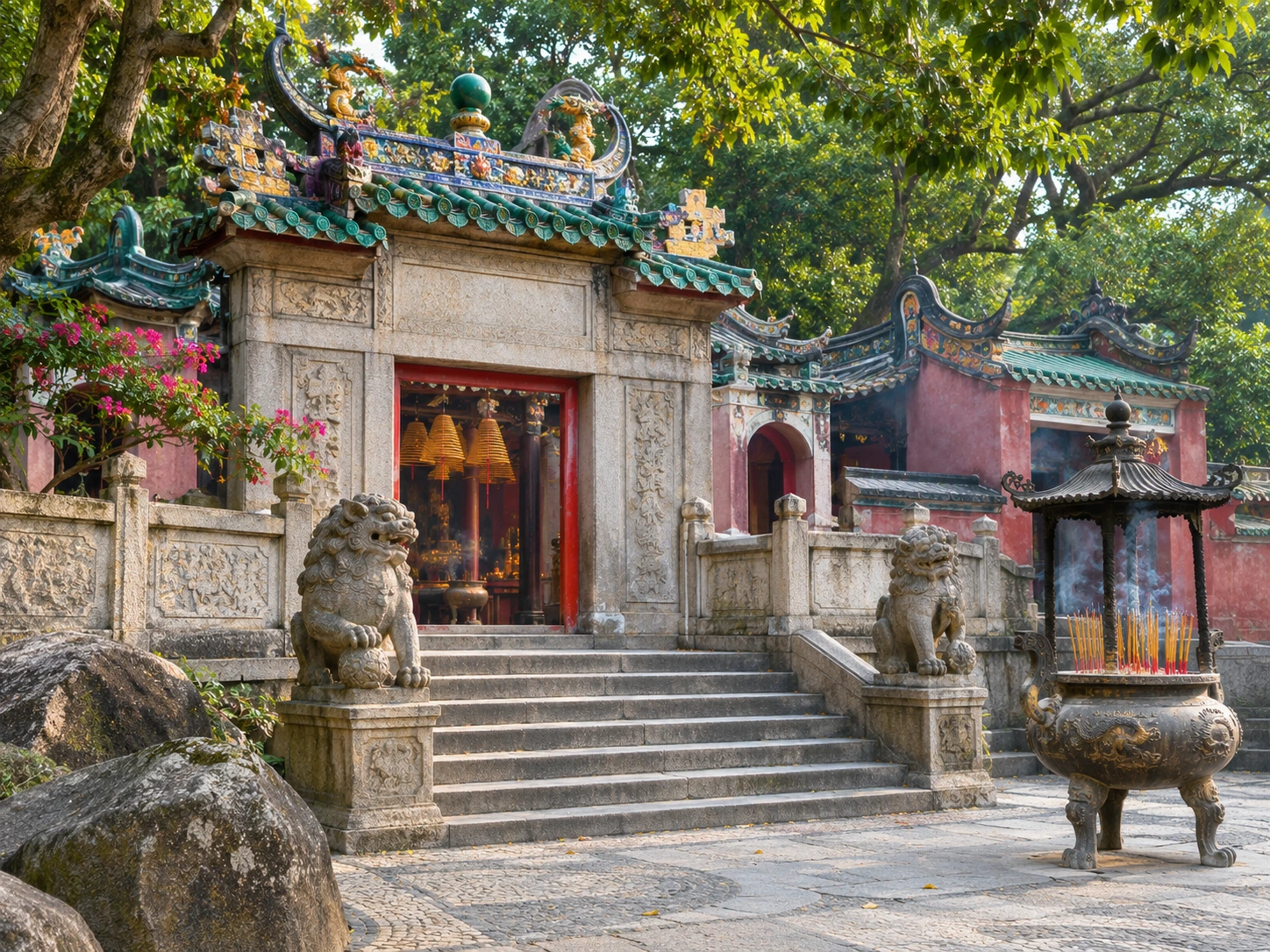
At the southern end of the historic peninsula, A-Ma Temple honors Mazu, a deity traditionally associated with seafarers. Its courtyards, gates, incense and hillside setting reveal Macao’s deep Chinese maritime roots. The temple offers a counterpoint to the European-style streets nearby: both belong to the same city’s history, and both help explain its identity.
Photography: Photo idea: frame a temple gate with its roof details; be respectful of worshippers.
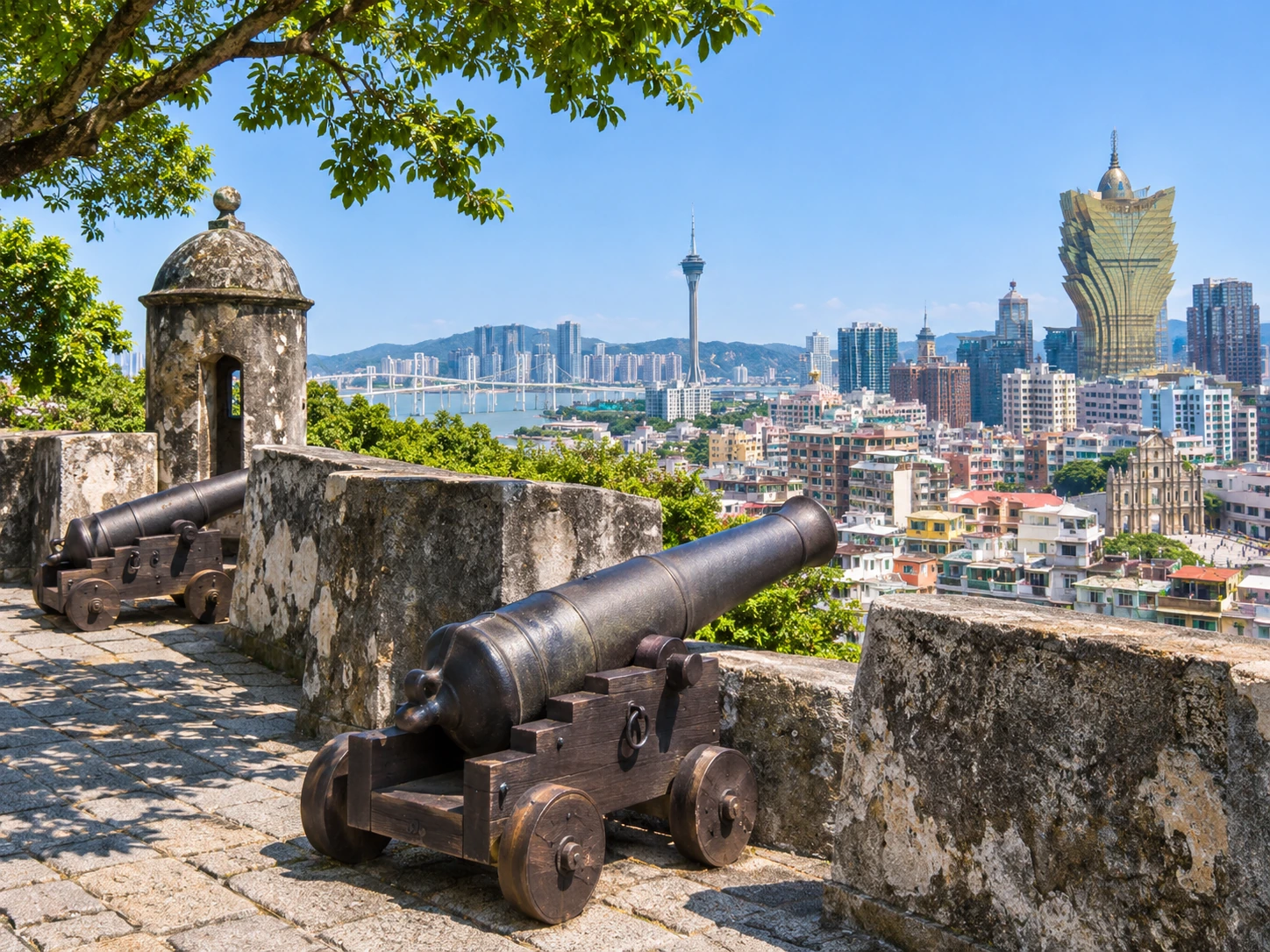
Mount Fortress sits on the hill near St. Paul’s. Its surviving walls and cannons recall the era when Macao was a maritime trading port that needed defenses. From the elevated gardens, visitors can compare historic rooftops with a much newer skyline. The museum facilities and access arrangements can change, so treat the exterior paths and viewpoints as the dependable focus of a flexible visit.
Photography: Photo idea: put a cannon or weathered stone in the foreground and the skyline behind.
A lighthouse, chapel and fortress occupy Guia Hill, linking maritime navigation, defense and religious history. The hilltop setting rewards those who enjoy a slower walk and layered city views. Look at the white lighthouse beside the historic chapel, then imagine how a beacon once helped vessels approach a busy port before satellite navigation.
Photography: Photo idea: use the white lighthouse against blue sky, with foliage as a frame.
After the heritage streets, the waterfront introduces another Macao. Modern bridges, broad water and the Macao Tower create a striking horizon. The tower area can be a useful stop for skyline photography and a conversation about how the city grew beyond its historic core. Observation and activity options may have separate tickets and height restrictions.
Photography: Photo idea: try blue hour when the skyline and reflections brighten together.
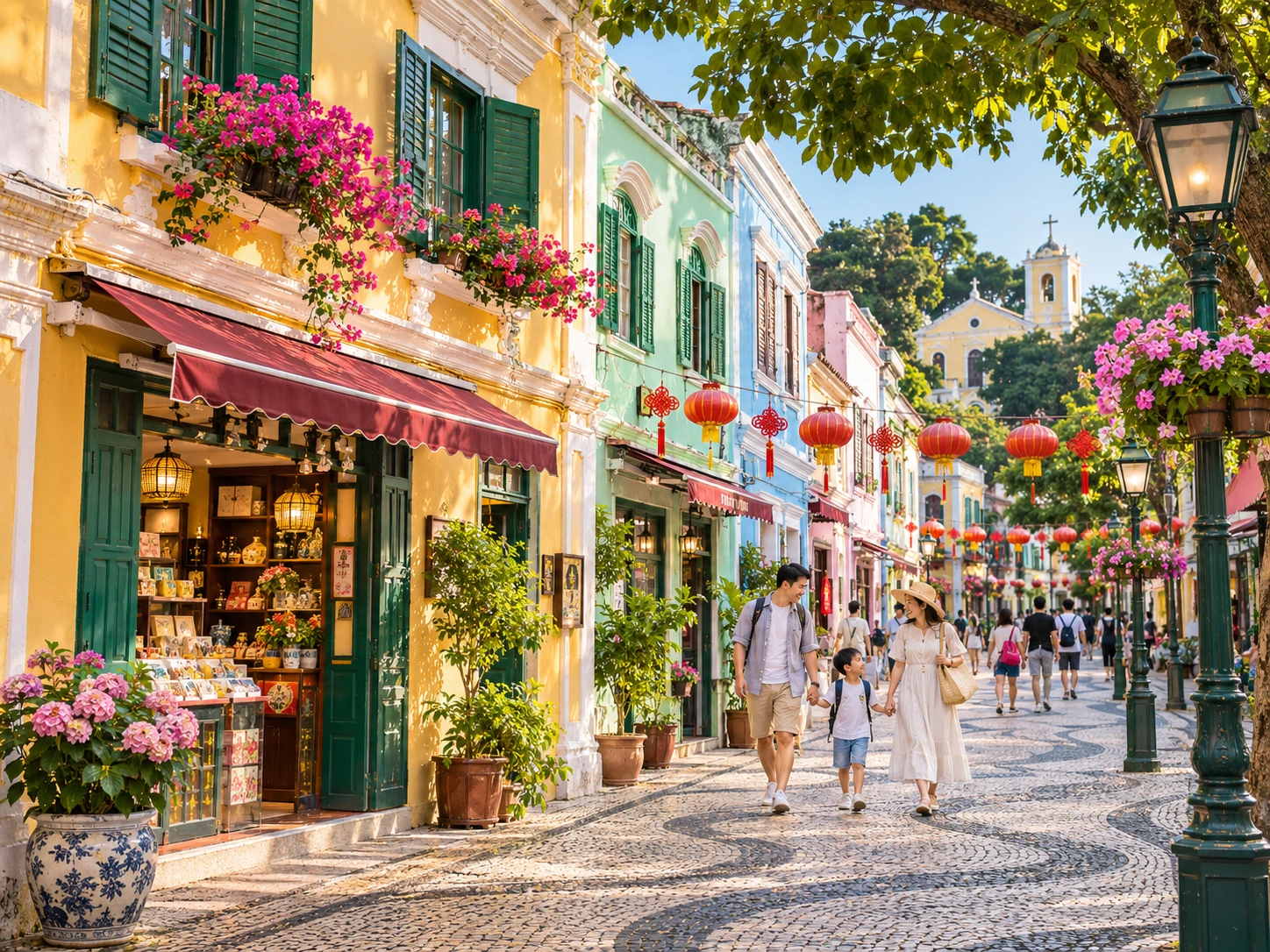
Take a slower walk along Rua do Cunha (官也街) and its neighboring lanes. Taipa brings together pastel buildings, cafés, snack shops and the easy pleasure of tasting something new. Look for tiled details, familiar Cantonese flavors and Portuguese-style pastries.
Family tip: visit earlier in the day if you prefer a quieter stroll.
Coloane trades the urban buzz for a village atmosphere, waterfront corners and a gentler pace. Its Chapel of St. Francis Xavier (圣方济各圣堂), narrow lanes and nearby seaside scenery make a pleasing final chapter. Stop for a tart and let the day unfold without a checklist.
Family tip: the Taipa–Coloane day works best with unhurried travel time.
One of Macao’s greatest surprises is its table. Cantonese street snacks, Portuguese pastries and distinctly Macanese recipes make eating here a journey of its own. Tick off the flavors as you go.
Flaky pastry surrounds a soft custard with caramelized dark spots on top. Best tried warm, when the crust crackles.
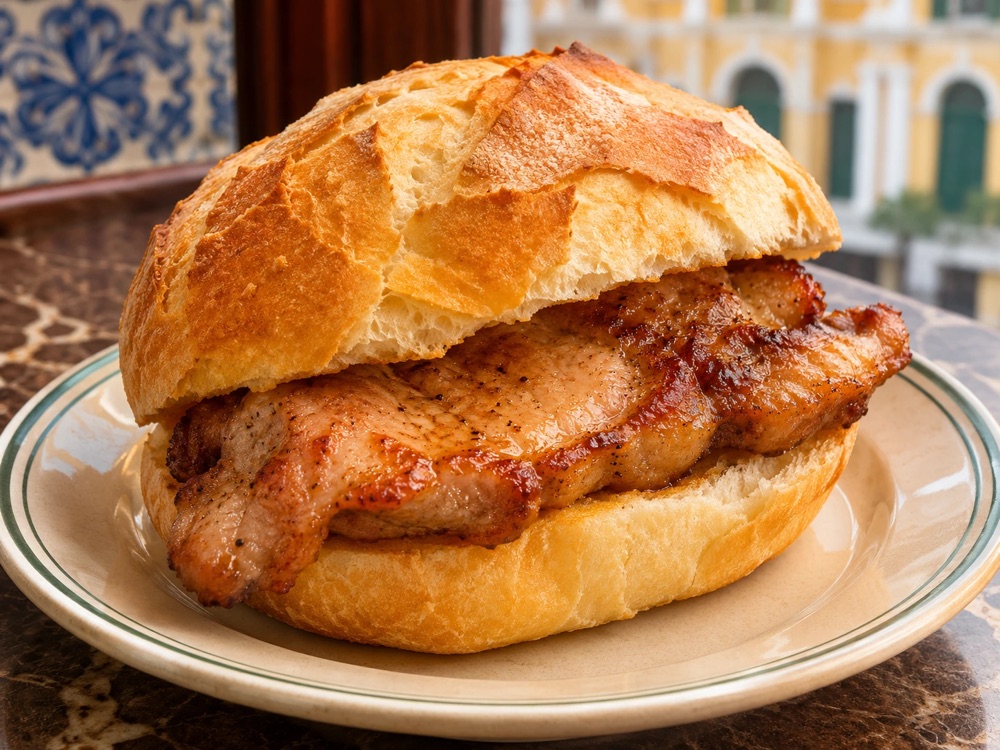
A crisp bread roll enclosing a seasoned pork chop. Simple, substantial, and easy to spot around Taipa.
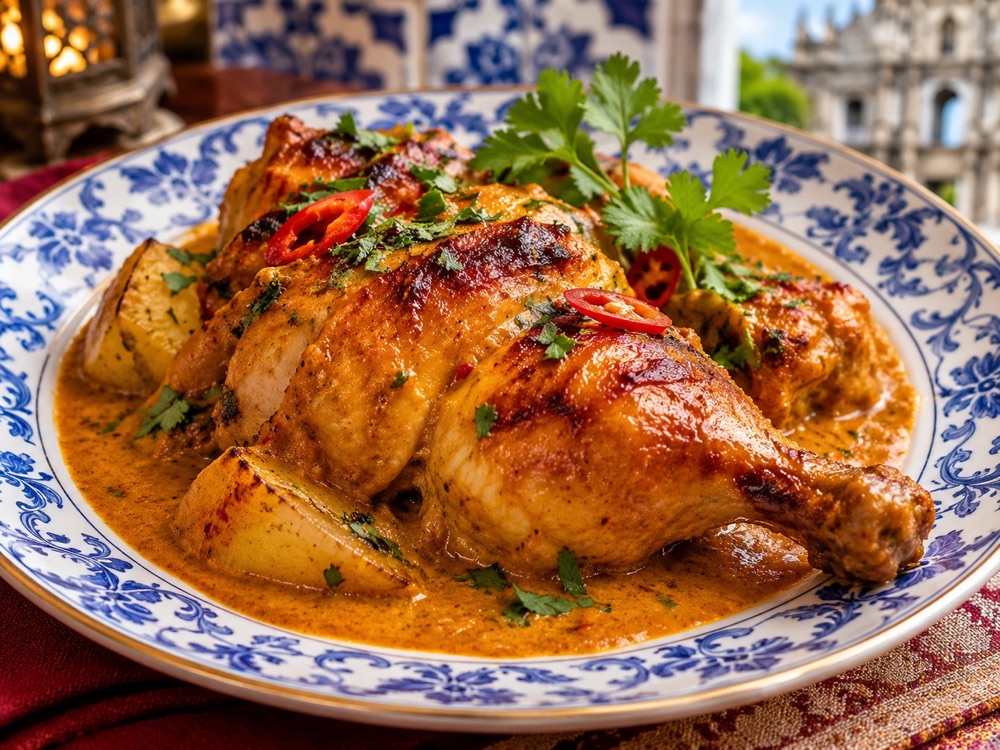
A Macanese signature with a richly seasoned sauce, often involving chili, coconut and spices. Recipes vary widely.
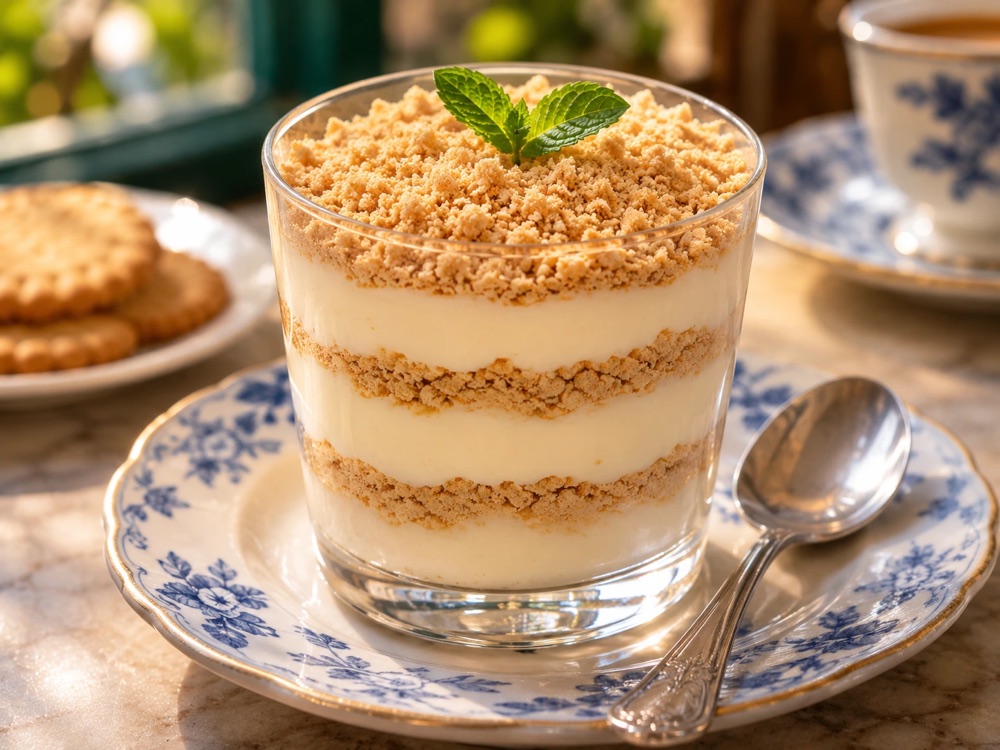
A chilled layered dessert of sweet cream and fine biscuit crumbs, delicate rather than heavy.
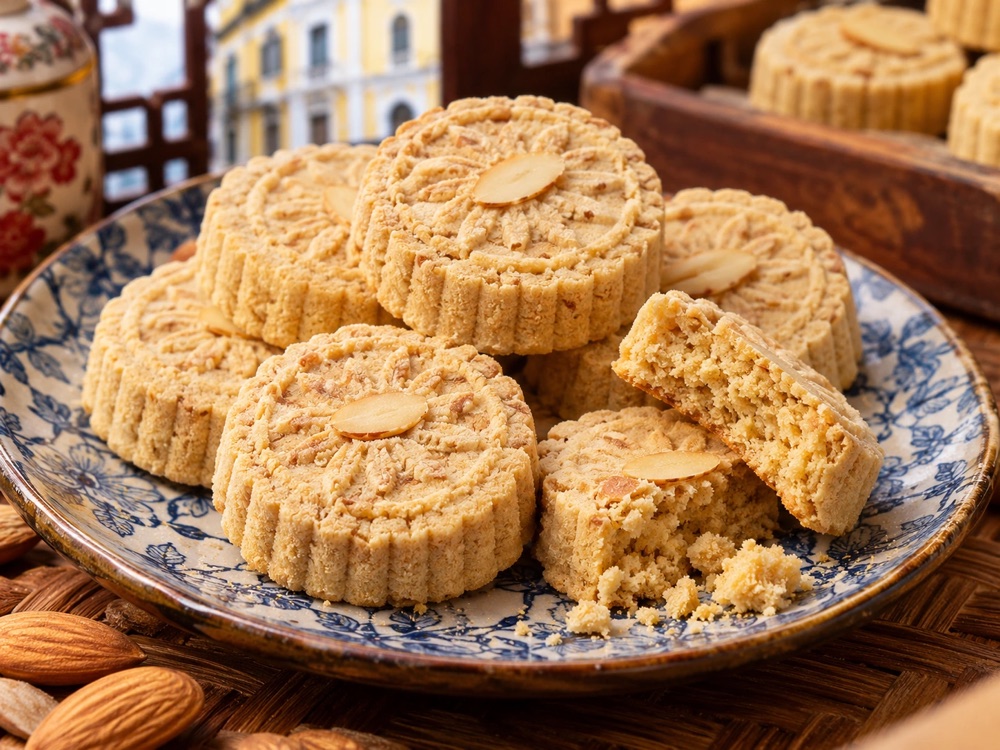
Crumbly, fragrant little cookies sold in traditional snack shops and often carried home as souvenirs.
Illustrations are for editorial inspiration; recipes and presentations differ between shops. Other Macanese dishes worth seeking out include Minchi (免治), a home-style minced-meat and potato dish, and codfish fritters (马介休球).
Keep nearby places together, save time for food breaks and leave space for discovery.
Start at the Ruins of St. Paul’s (大三巴牌坊). Continue to Mount Fortress (大炮台), then walk to St. Dominic’s Church (玫瑰圣母堂) and Senado Square (议事亭前地). End with an egg tart or almond cookies.
Family note: For photos, try the cathedral steps early and the mosaic square late.Visit A-Ma Temple (妈阁庙) and nearby historic streets. Add Mandarin’s House (郑家大屋) if open and suitable for your schedule. Spend the later afternoon at the Macao Tower waterfront (澳门旅游塔及海滨).
Family note: Compare spiritual sites, maritime trading history and the new skyline.Explore Taipa Village (氹仔旧城区), browse Rua do Cunha (官也街), sample a pork chop bun, and continue to Coloane Village (路环村) for a relaxed stroll and dessert.
Family note: Choose taxis or public transport for longer transfers; plan around the weather.