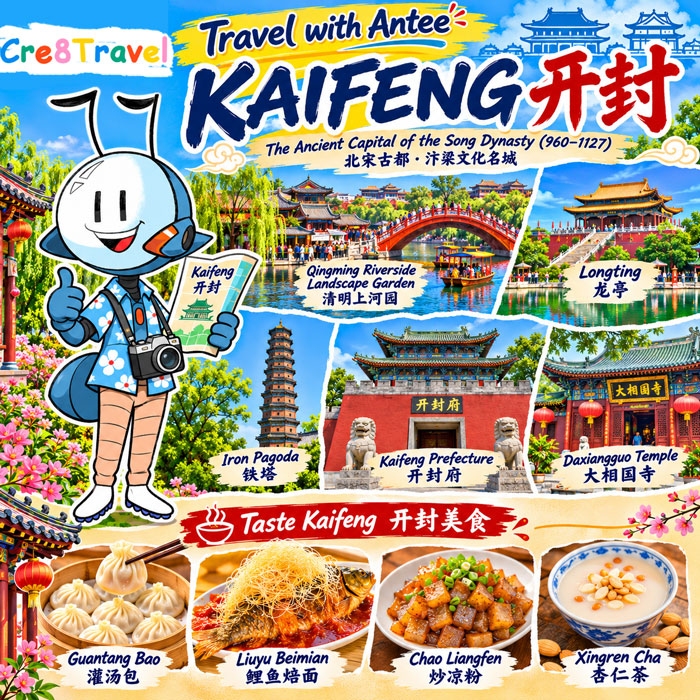
Travel with Antee Kaifeng collage featuring landmarks and local foods
China City Editorial Series

Discover Kaifeng
开封

A Northern Song capital brought to life through riverside markets, soaring pagodas, centuries of stories and an unforgettable food culture.

Henan, China3-day family guideBilingual destinations
The city behind the scroll

Welcome to Bianjing, the old capital

During the Northern Song dynasty (960–1127), Kaifeng, known as Bianjing or Dongjing, became one of the great cities of its time. Famous streets were filled with merchants, entertainers, scholars and travelers. The city’s remarkable story lives on through its pagoda, temples, archaeological layers, traditional snacks and the famous painting Along the River During the Qingming Festival (清明上河图).

Kaifeng is a wonderful place to show children that history is not only about emperors. It is also about shopkeepers, cooks, bridges, waterways and everyday families. With Antee as our guide, every stop adds one new piece to the story.

Explore Kaifeng

History you can walk through

Some attractions contain genuine old structures; others are thoughtfully rebuilt visitor experiences. This guide distinguishes them, because understanding what is original makes the past even more interesting.

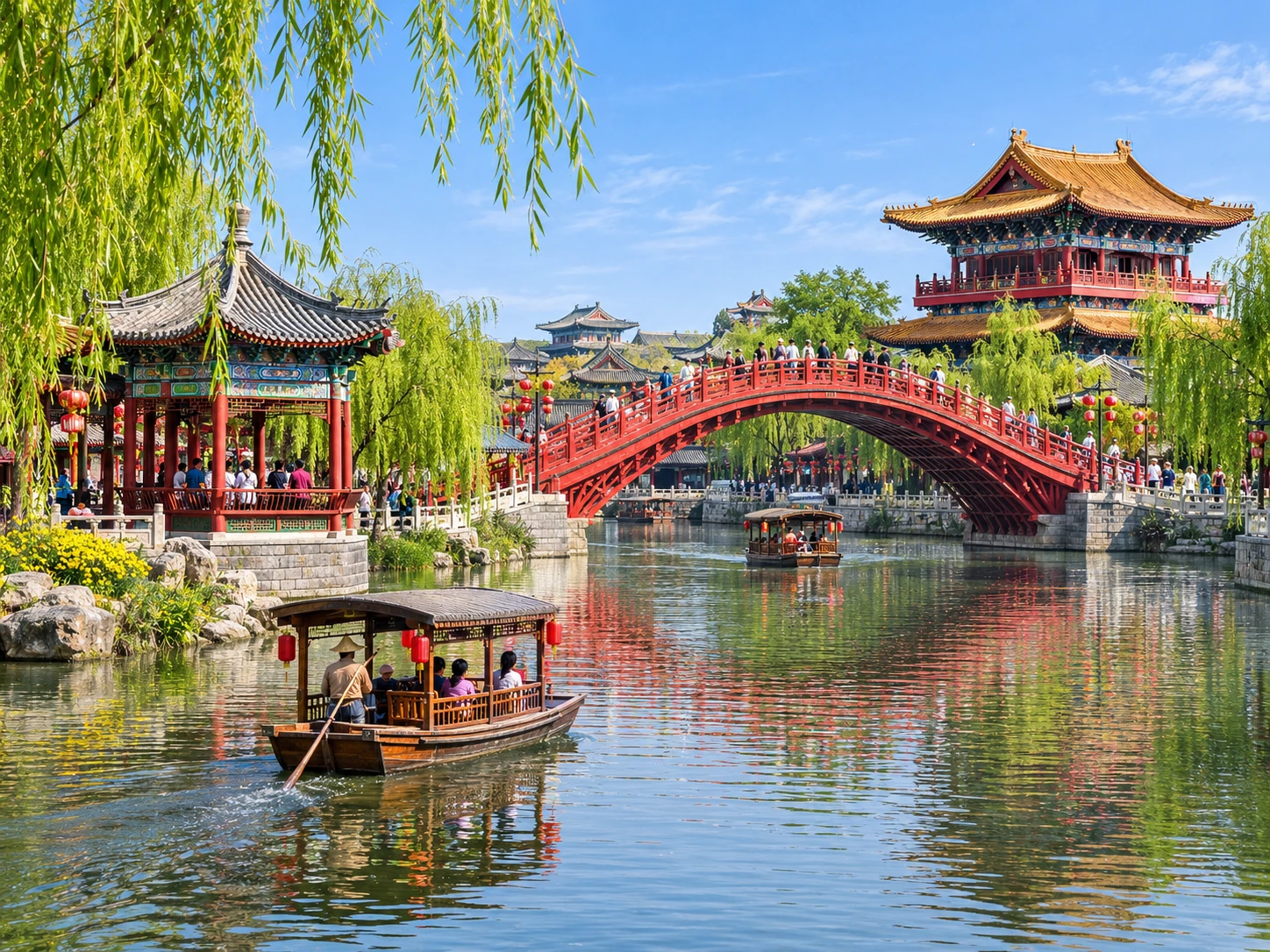
AI editorial illustration of Qingming Riverside Landscape Garden
New high-resolution AI editorial illustration of the scenic area; not a documentary photograph.
Chapter 01 · The living Song city

Qingming Riverside Landscape Garden (清明上河园)

Walk through the gates of Qingming Riverside Landscape Garden and Kaifeng’s Northern Song past becomes wonderfully tangible. This contemporary historical theme park takes inspiration from Zhang Zeduan’s painting Along the River During the Qingming Festival (清明上河图), with markets, arching bridges, workshops, tea houses and costumed performances staged around waterways.

Give this landmark a generous half-day or full day. Instead of rushing from show to show, pick a few experiences: watch traditional crafts, enjoy the lively street scenes and notice how boats and merchants made an inland capital feel connected to the wider world. The evening program, when offered, adds lanterns and dramatic theater.

Antee explorer challenge: Find three details that could have appeared in a Song-dynasty city: a shop sign, a water crossing and a street performer.
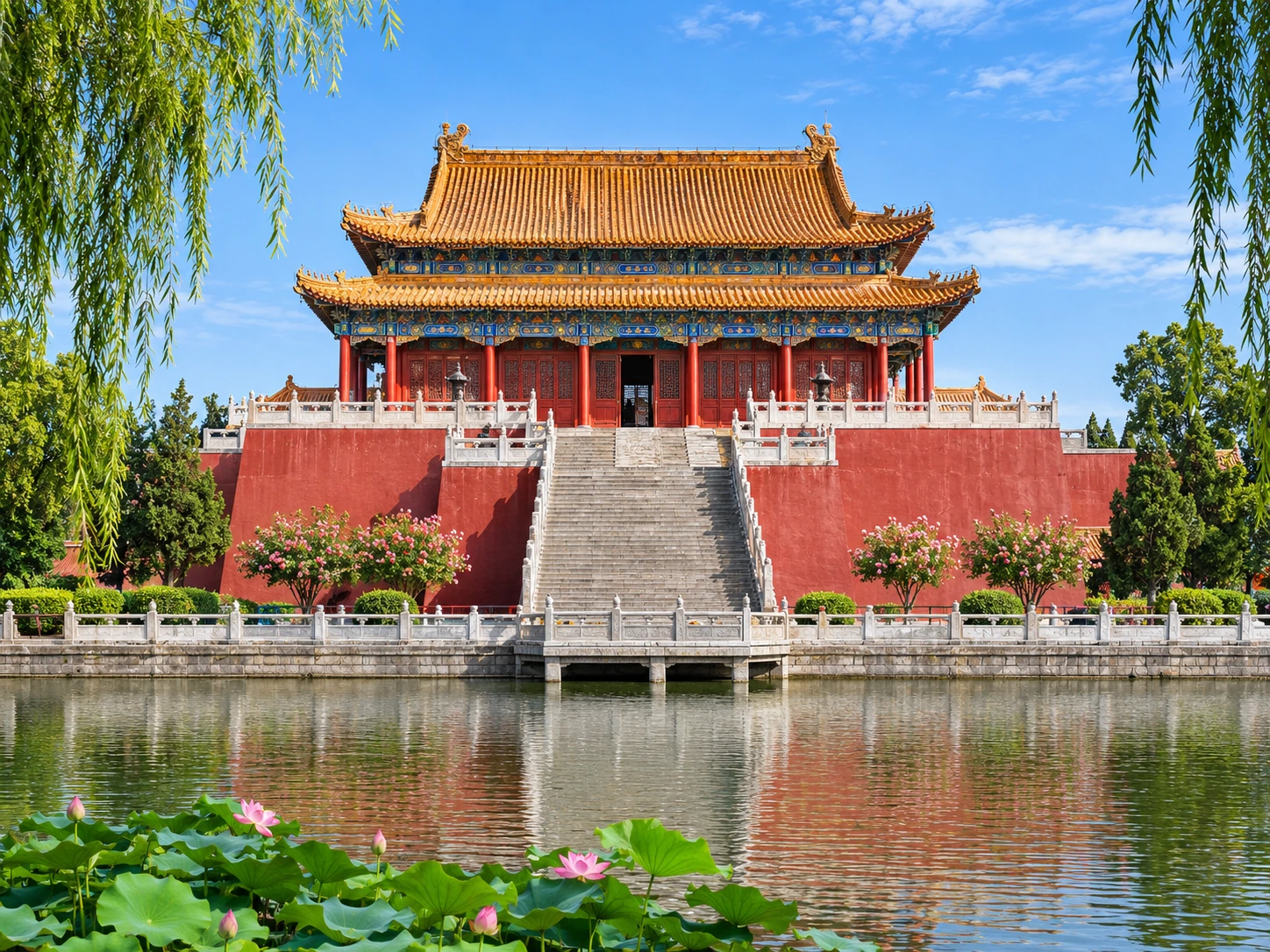
AI editorial illustration of Dragon Pavilion Park
AI-generated illustration of Kaifeng’s Dragon Pavilion; architectural details are stylized.
Chapter 02 · Imperial echoes beside the water

Dragon Pavilion Park (龙亭公园)

Dragon Pavilion rises above a long, ceremonial approach, overlooking water and the surrounding old-city district. The present pavilion is associated with later architectural rebuilding, while the park tells stories connected to the ancient imperial center of Kaifeng.

It makes a rewarding stop for families who want to imagine court life, admire symmetry and take photographs framed by red walls, golden roofs and seasonal gardens. In autumn, Kaifeng’s chrysanthemum culture adds another color to the city.

Antee explorer challenge: Look for symmetry. Why did architects place the grand building at the end of a long, straight approach?
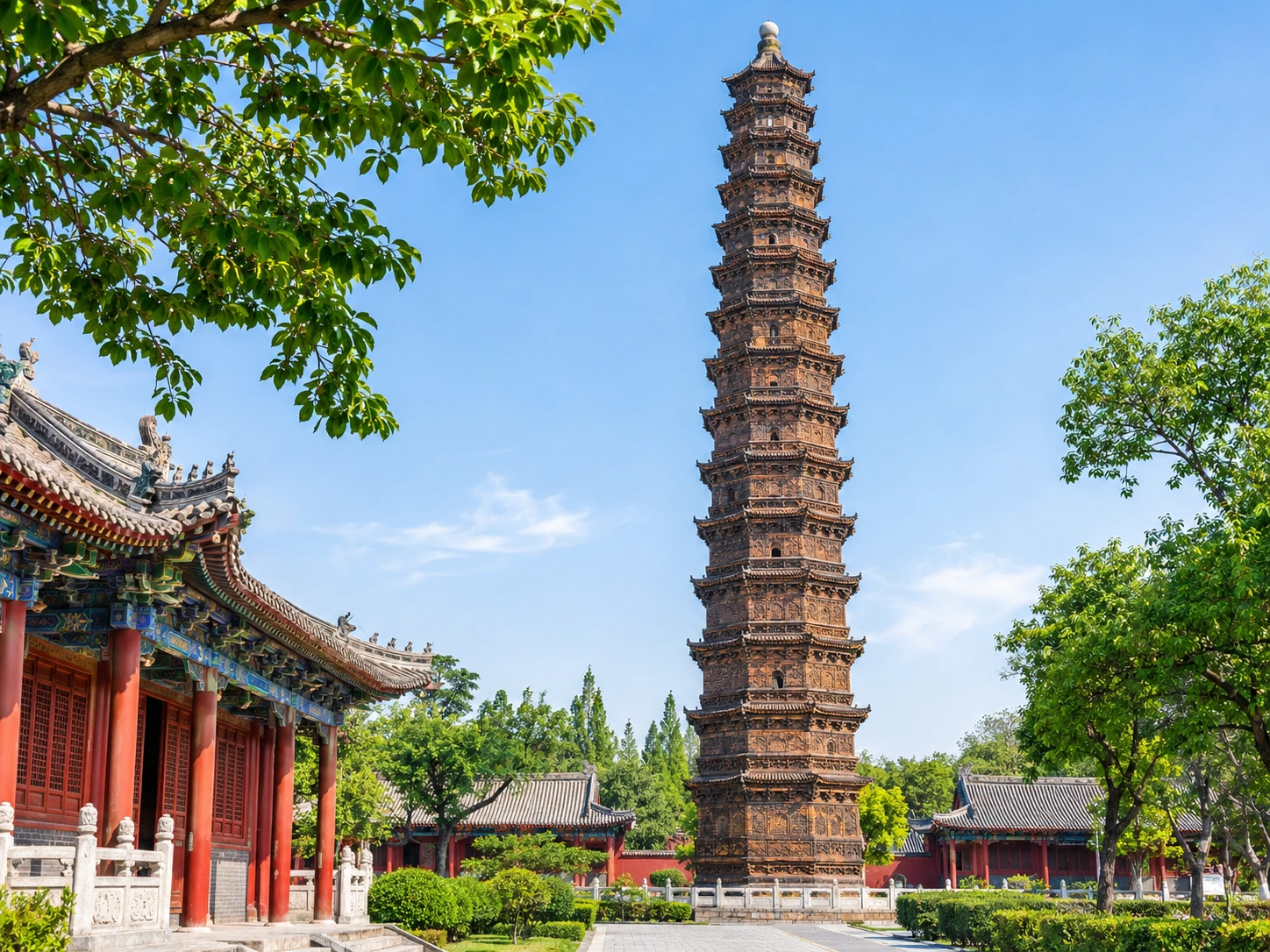
AI editorial illustration of the Iron Pagoda
AI-generated illustration; not a verified photograph of the tower.
Chapter 03 · The real Northern Song survivor

Iron Pagoda (铁塔)

The Iron Pagoda is one of Kaifeng’s most remarkable genuine historical monuments. Built in 1049 during the Northern Song, this tall Buddhist pagoda is made from glazed bricks whose dark brown color gives the appearance of iron. It is not built from metal.

Look closely at the repeating tiers and the patterned brickwork. It survived centuries of change in a city where flooding, rebuilding and the Yellow River repeatedly reshaped the urban landscape. Check current site access before planning, as conservation arrangements can affect visiting routes.

Antee explorer challenge: Compare the real glazed-brick technology of the Iron Pagoda with the wooden-looking pavilions in the rest of Kaifeng.
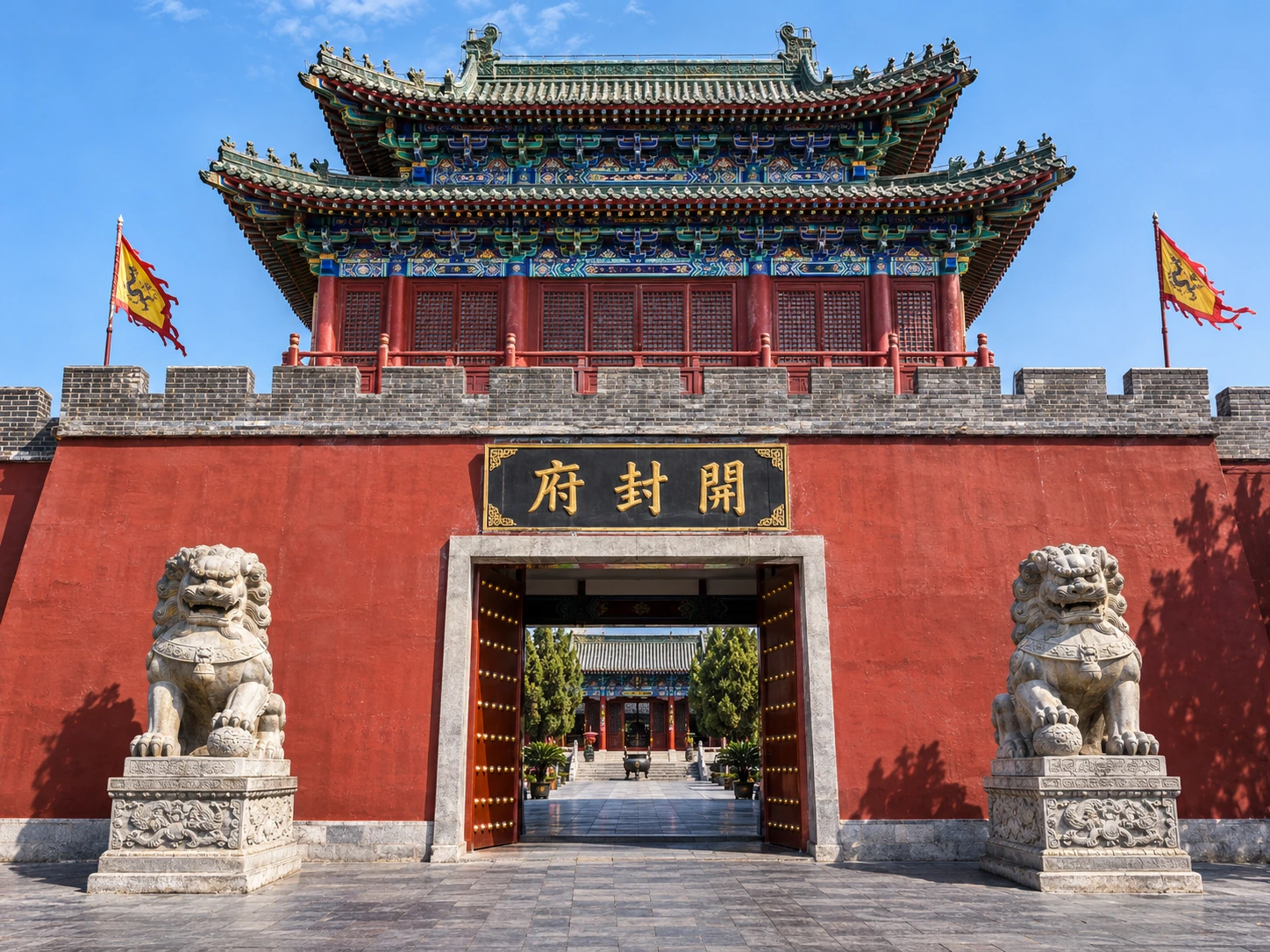
AI editorial illustration of Kaifeng Prefecture
AI editorial illustration of the modern Kaifeng Prefecture scenic complex.
Chapter 04 · The stories of Judge Bao

Kaifeng Prefecture (开封府)

Kaifeng Prefecture celebrates the city’s reputation as a major seat of government during the Northern Song. The present visitor complex is reconstructed, but the stories it tells have deep roots in Chinese history and popular culture.

The best-known figure here is Bao Zheng (包拯), widely remembered as an upright official. Children can learn about fairness, public service and the difference between historical records and dramatic legends through themed exhibits and reenactments.

Antee explorer challenge: Ask: What makes a judge fair? Which parts of Bao Zheng’s story are documented history, and which grew through theater and storytelling?
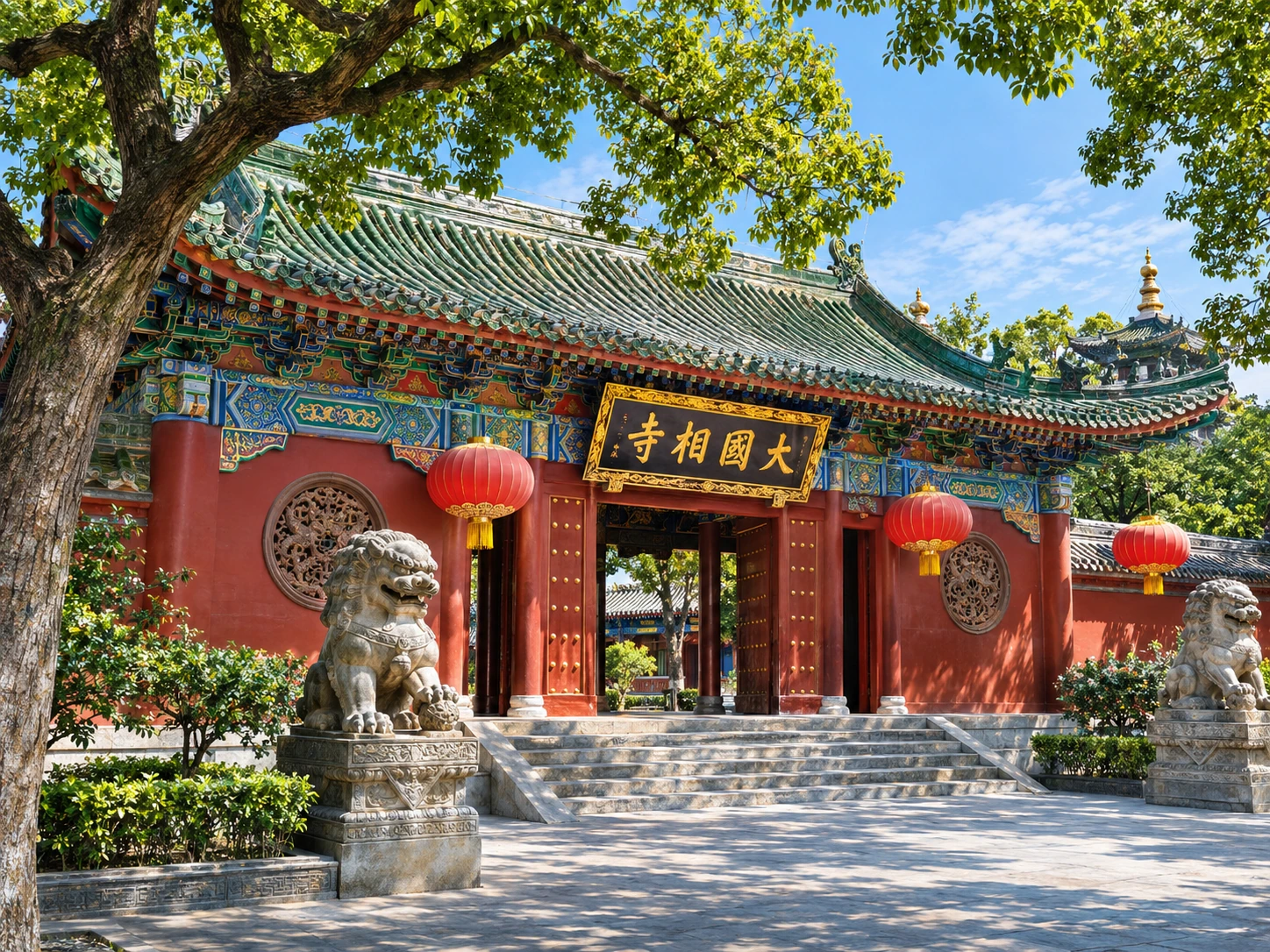
AI editorial illustration of Daxiangguo Temple
AI editorial illustration of Kaifeng temple architecture.
Chapter 05 · Temple courtyards and Buddhist heritage

Daxiangguo Temple (大相国寺)

A place of religious life for many centuries, Daxiangguo Temple links present-day Kaifeng with the spiritual and artistic traditions of historic China. Large halls, incense-filled courtyards and Buddhist sculpture create a change of pace after the busy streets of the old capital.

Explore quietly, respect worshippers and notice the difference between a temple used for religious practice and a reconstructed theme park celebrating historic city life.

Antee explorer challenge: Look for roof ornament, carving and ritual objects. How is this space different from a market street?
Original-site photo reference

Shanshangan Guild Hall

This chapter intentionally does not reuse an unrelated temple image.

View an actual licensed photograph of the guild hall.

The external documentary image is not embedded in the offline package.
Chapter 06 · Merchants, craftsmanship and the Silk Road world

Shanshangan Guild Hall (山陕甘会馆)

Historic merchant guild halls were important social centers where traders met, worshipped and helped one another. Kaifeng’s Shanshangan Guild Hall is especially notable for its wood, brick and stone carving, expressing the wealth and cultural exchanges of merchant communities from Shanxi, Shaanxi and Gansu.

It is an excellent stop for curious travelers who enjoy decorative architecture and the small details that tell big stories about trade.

Antee explorer challenge: Find a carved animal or plant motif and imagine what message a merchant wanted it to convey.
Four local favorites · 四大特色美食

Taste Kaifeng (开封美食)

Kaifeng’s food traditions are a delicious bridge between old and new. Follow the aroma from steaming soup buns to griddled market snacks, and you will understand why eating here is part of exploring its history.

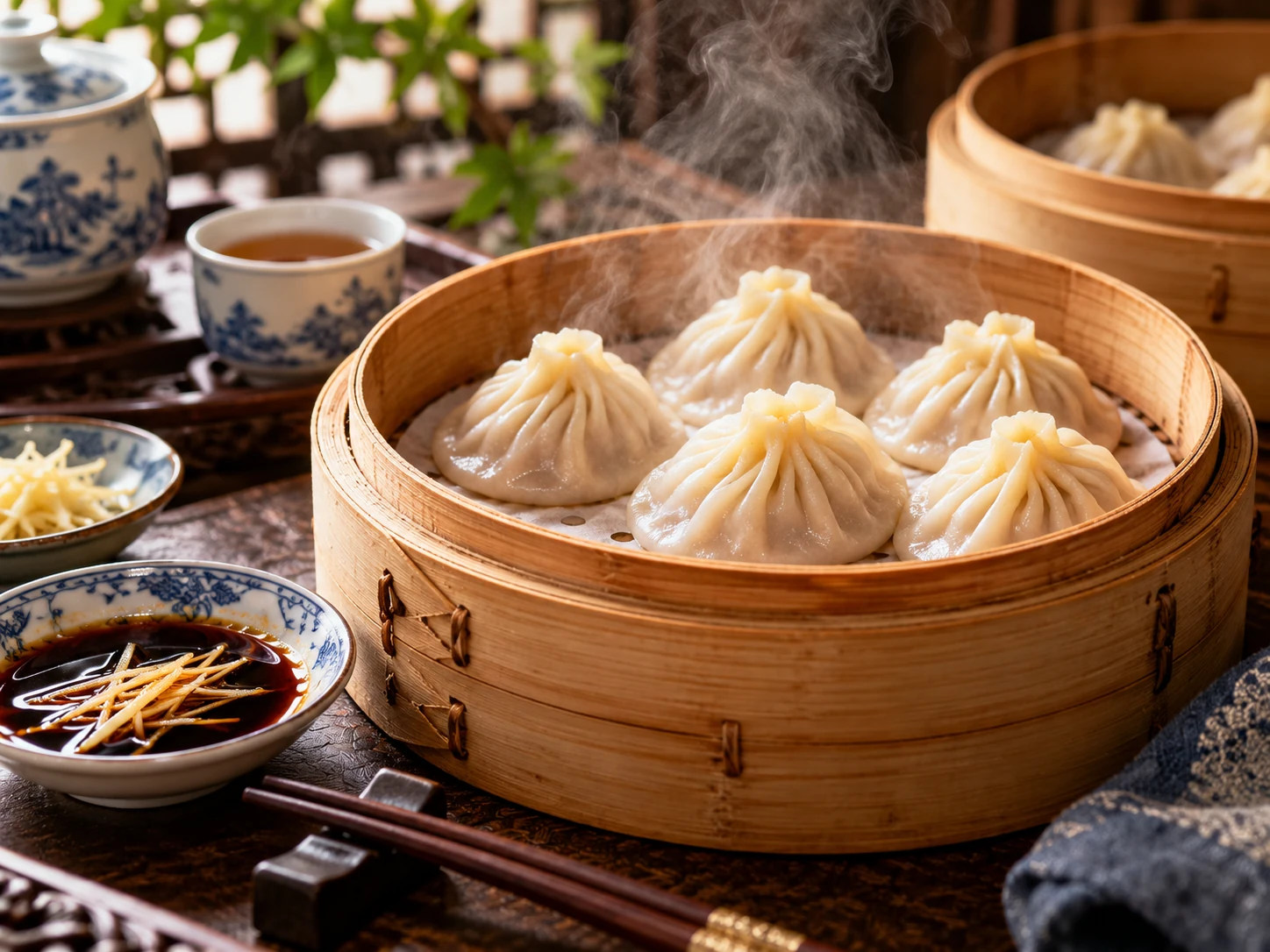
Kaifeng Soup Dumplings editorial food image
Food stop 01

Kaifeng Soup Dumplings (开封灌汤包)

Delicate pleated buns filled with savory pork and hot broth. Bite carefully or use a spoon because the soup inside can be scalding. This is one of the city’s signature specialties.

Independent high-resolution AI food illustration; styled as soup dumplings.
Carp with Crispy Noodles editorial food image
Food stop 02

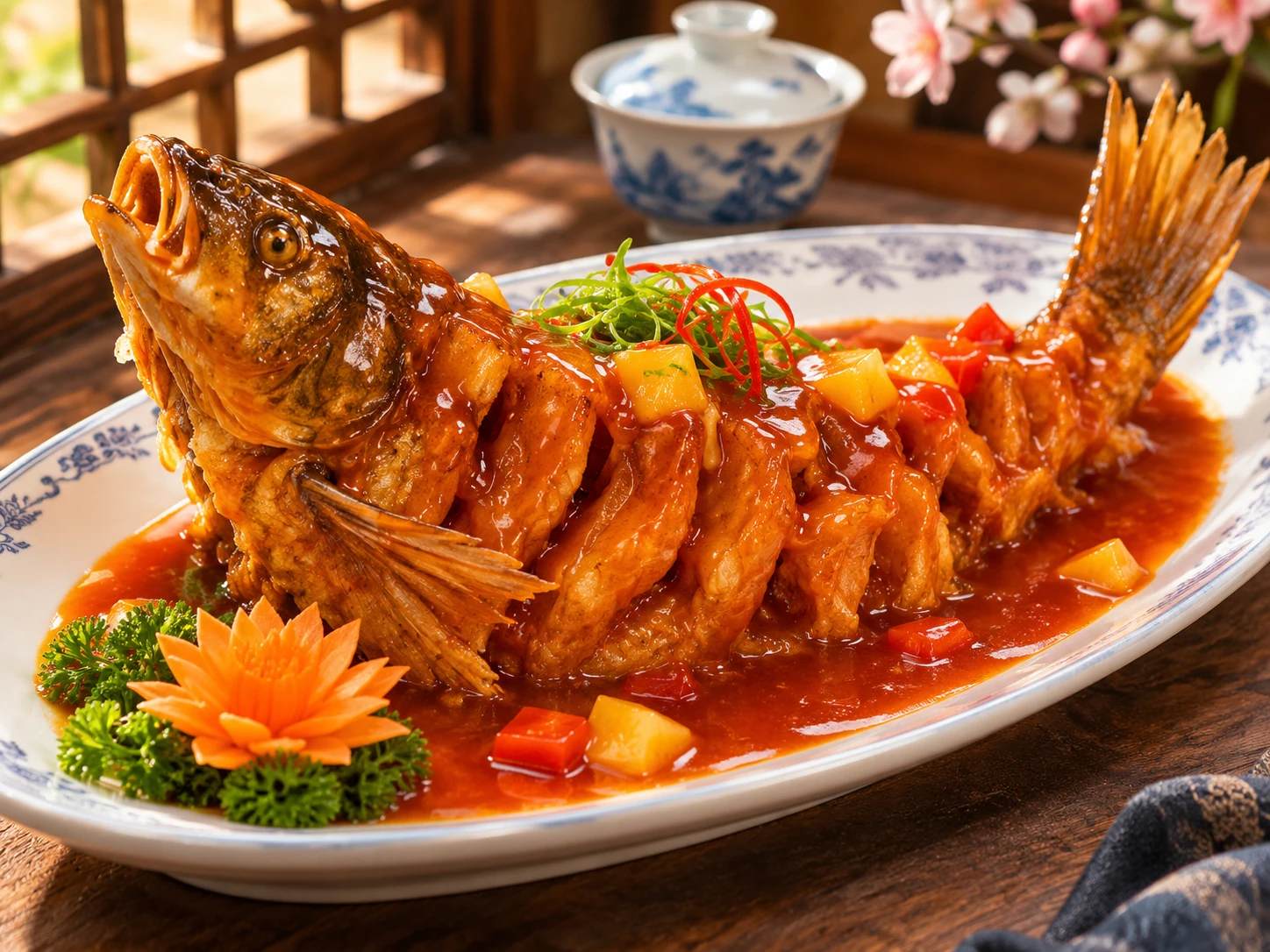
Carp with Crispy Noodles (鲤鱼焙面)

A celebrated Kaifeng dish pairs sweet-and-sour carp with a cloud of extra-thin fried noodles. The noodles absorb the sauce as you eat, providing a contrast of crisp texture and rich flavor.

High-resolution AI photograph illustrates sweet-and-sour carp, the fish component; noodles are not shown in this image.
Independent high-resolution AI food illustration of Kaifeng stir-fried liangfen
Food stop 03

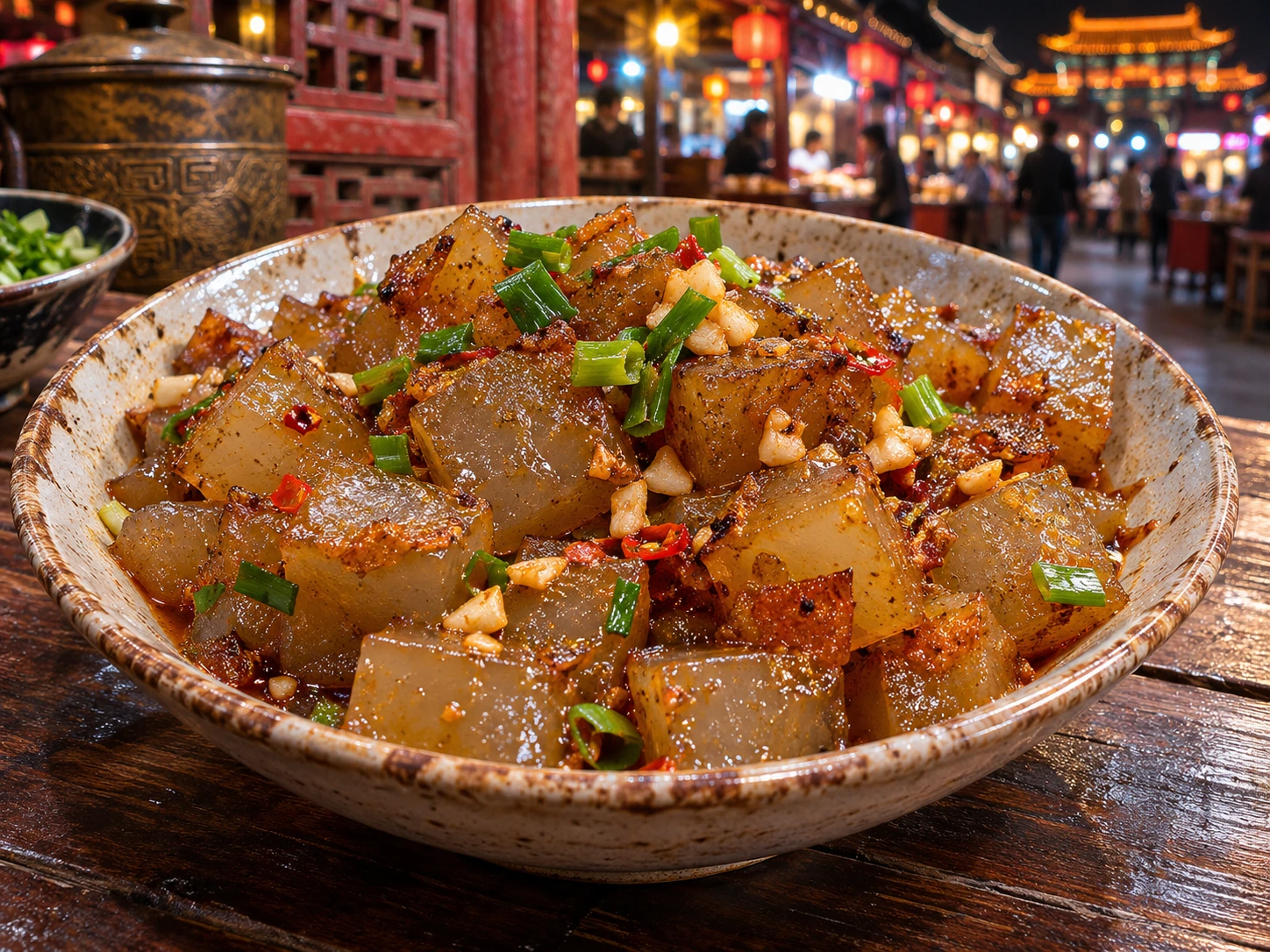
Stir-Fried Liangfen (炒凉粉)

Starch jelly is diced and griddled with savory seasoning, sometimes turning golden at the edges while remaining tender in the middle. A classic snack to seek out at Kaifeng night markets.

Independent high-resolution AI editorial image of Kaifeng stir-fried liangfen; not a verified restaurant photograph.
Almond Tea editorial food image
Food stop 04

Almond Tea (杏仁茶)

A warm, thick, sweet dessert drink, often served with nuts, sesame or dried fruit. The dramatic long-spouted kettle used by some vendors adds its own little performance.

AI editorial illustration cropped from the Kaifeng cover.

Also try: Lamb Flatbread (羊肉炕馍), Bucket Chicken (桶子鸡), Peanut Cake (花生糕) and other specialties at the Drum Tower Night Market (鼓楼夜市). Check spice levels and ingredients for children. Photos of historic streets and dishes are partly illustrative; food names and descriptions are shown outside the image area.

Three relaxed days

Family itinerary: Kaifeng, one story at a time

Day 1 · Enter the Song

Qingming Riverside Landscape Garden (清明上河园)

Choose craft demonstrations and performances, with lunch in the park. If available, stay for evening lights or a scheduled show.

Family tip: The park may require separate performance reservations. Check its current timetable.
Day 2 · Courts and temples

Kaifeng Prefecture (开封府) → Daxiangguo Temple (大相国寺) → Drum Tower Night Market (鼓楼夜市)

Learn about Bao Zheng and Buddhist heritage, then try soup buns and market snacks after dark.

Family tip: Respect worshippers and allow a gentler evening pace with young children.
Day 3 · Towers and merchants

Iron Pagoda (铁塔) → Dragon Pavilion (龙亭公园) → Shanshangan Guild Hall (山陕甘会馆)

Spend the day comparing genuine Song heritage, later imperial architecture and merchant craftsmanship.

Family tip: Review conservation-related opening rules and walking distances before travel.

When to visit and what to know

Spring and autumn are generally comfortable for city walks. Kaifeng is also well known for autumn chrysanthemums. Modern festivals, show schedules, entry tickets, opening hours and Iron Pagoda access can change, so confirm them before your trip. It is easy to pair Kaifeng with Zhengzhou or Luoyang as part of a longer Henan journey.

Research & image notes

Sources and publication transparency

This edition uses the original Antee illustration and provided Cre8Travel logo. The cover is a branded collage, while the scenic panels are AI-generated editorial illustrations. They are not authenticated on-site photographs; independent documentary photographs linked below can help with a later final-photo replacement.

Three food images are independently generated at high resolution, while the almond tea image is an editorial illustration adapted from a larger Kaifeng-themed composition. The separate captions describe those differences. Sources for historical context and food traditions:

  1. Kaifeng: official Henan overview
  2. Kaifeng cultural tourism and Bian River
  3. The Song culture theme park
  4. Drum Tower Night Market food
  5. Iron Pagoda documentary image and history
  6. Longting documentary photograph
  7. Kaifeng Prefecture documentary photograph
  8. Daxiangguo Temple documentary photograph