Local flavor 1
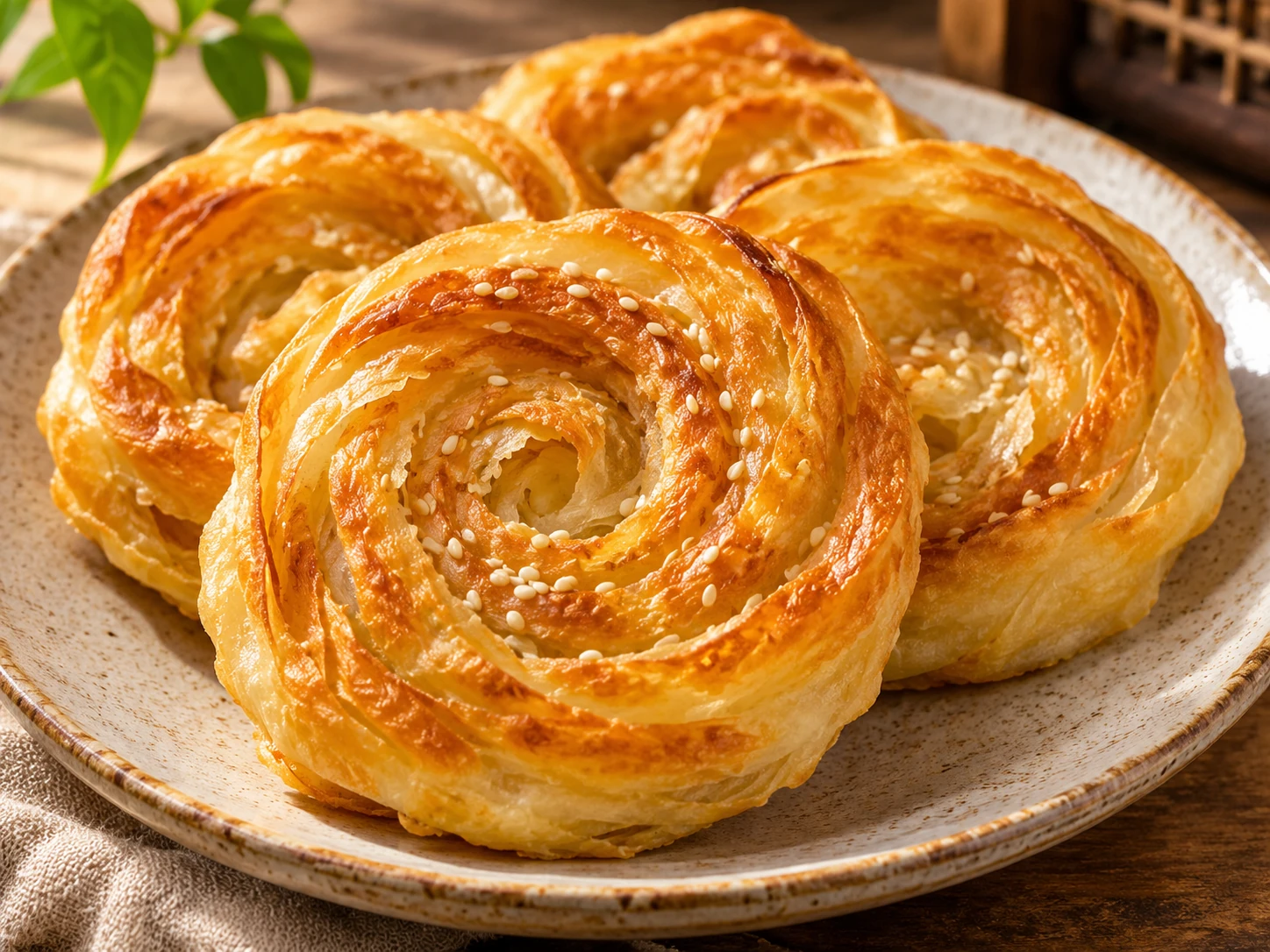
Youxuan (油旋)
A golden, spiral-shaped savory pastry with delicate layers and a crisp, flaky bite. Best eaten warm.
A spiral pastry makes a fun geometry lesson: count the visible rings.
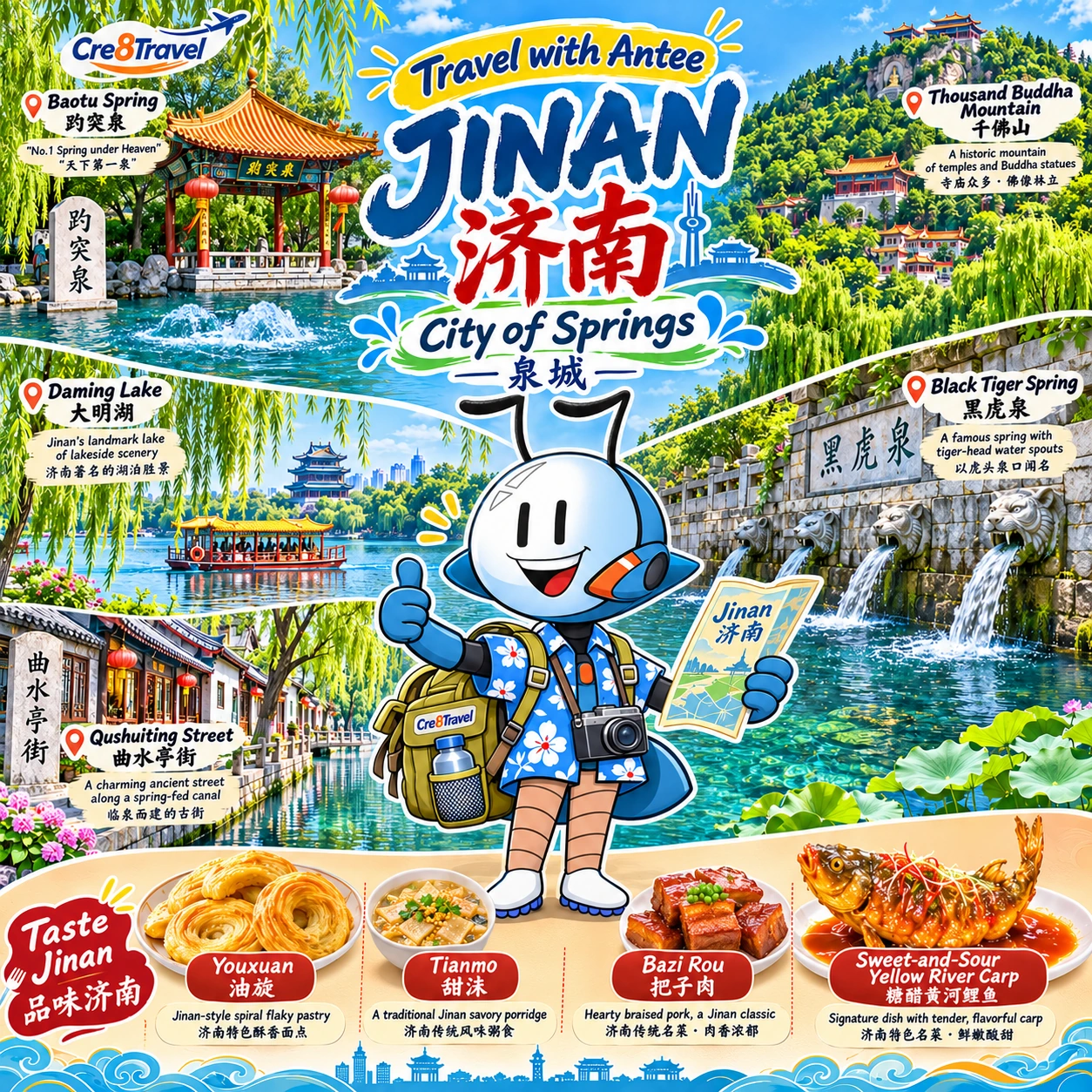
The City of Springs: where groundwater bubbles into gardens, willow-fringed lakes meet old lanes, and a bowl of local breakfast becomes a little adventure.
3-day family city guideJinan is not a city you need to rush through. Its best story unfolds on foot: a spring bubbling under a stone bridge, a shaded canal between old houses, lotus leaves moving in the breeze and a fragrant pastry from a neighborhood bakery.
Join Antee to discover the landscapes, culture and food of Shandong’s capital.
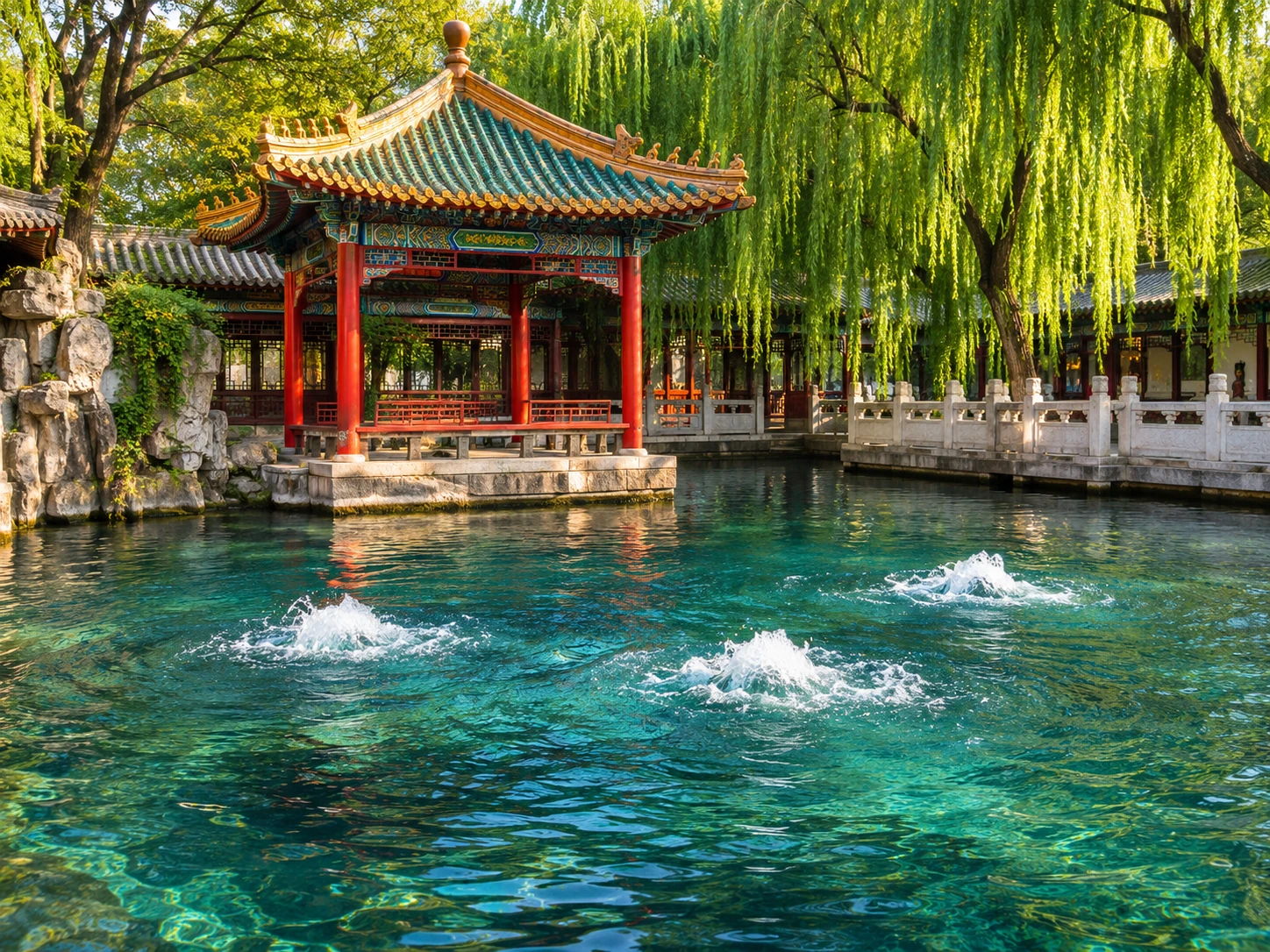
Editorial illustration inspired by Baotu Spring. Not documentary photography.
In the heart of the city, Baotu Spring reveals Jinan’s most astonishing everyday miracle: groundwater rising visibly from below into a clear pool. The traditional gardens are filled with stone paths, waterside pavilions and willow shade. Watch the famous bubbling outlets and then look for smaller springs around the park. Baotu is the city’s best introduction to the natural geology behind its nickname, the City of Springs.
Travel tip: Visit earlier in the day for calmer views; water-flow appearance varies with groundwater and season.
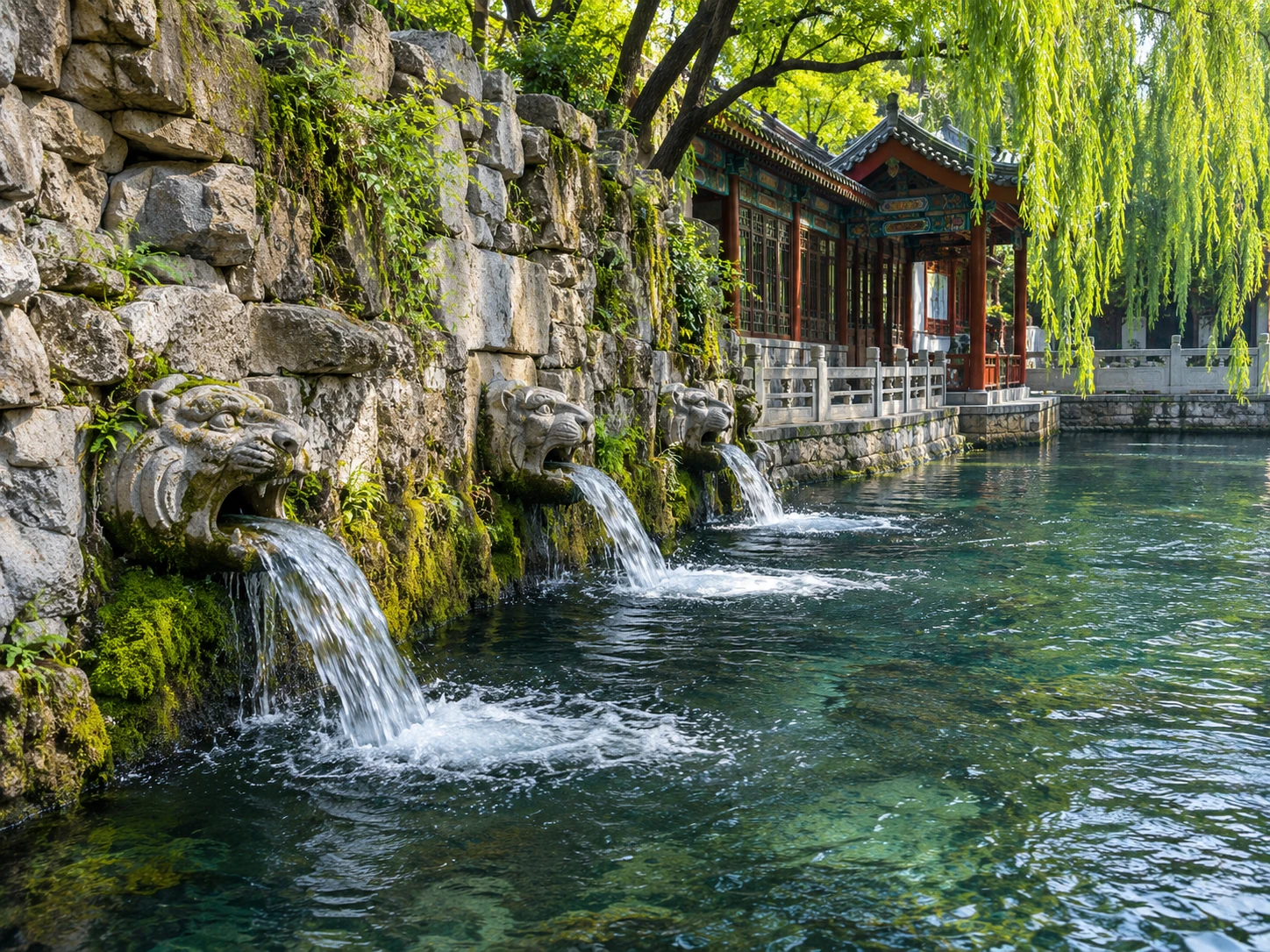
Editorial illustration inspired by Black Tiger Spring. Not documentary photography.
Near the old city moat, Black Tiger Spring pours from carved stone tiger mouths. This is a lively example of how Jinan’s springs are woven into local routines, rather than separated from the streets behind fences. Listen to the rushing sound, watch the ripples and compare the water with the quieter pools of Baotu Spring.
Travel tip: Stone steps can be slippery; keep children away from the water’s edge.

Editorial illustration inspired by Qushuiting Street. Not documentary photography.
Along Qushuiting Street, a narrow watercourse threads between old houses, stone crossings and willow branches. This is the kind of Jinan scene that belongs in a sketchbook: quiet reflections, shaded doorways and small moments of neighborhood life. Take your time, step into side lanes respectfully, and notice how the living water gives this district its character.
Travel tip: Best explored on foot with comfortable shoes; avoid blocking residents’ doorways for photos.
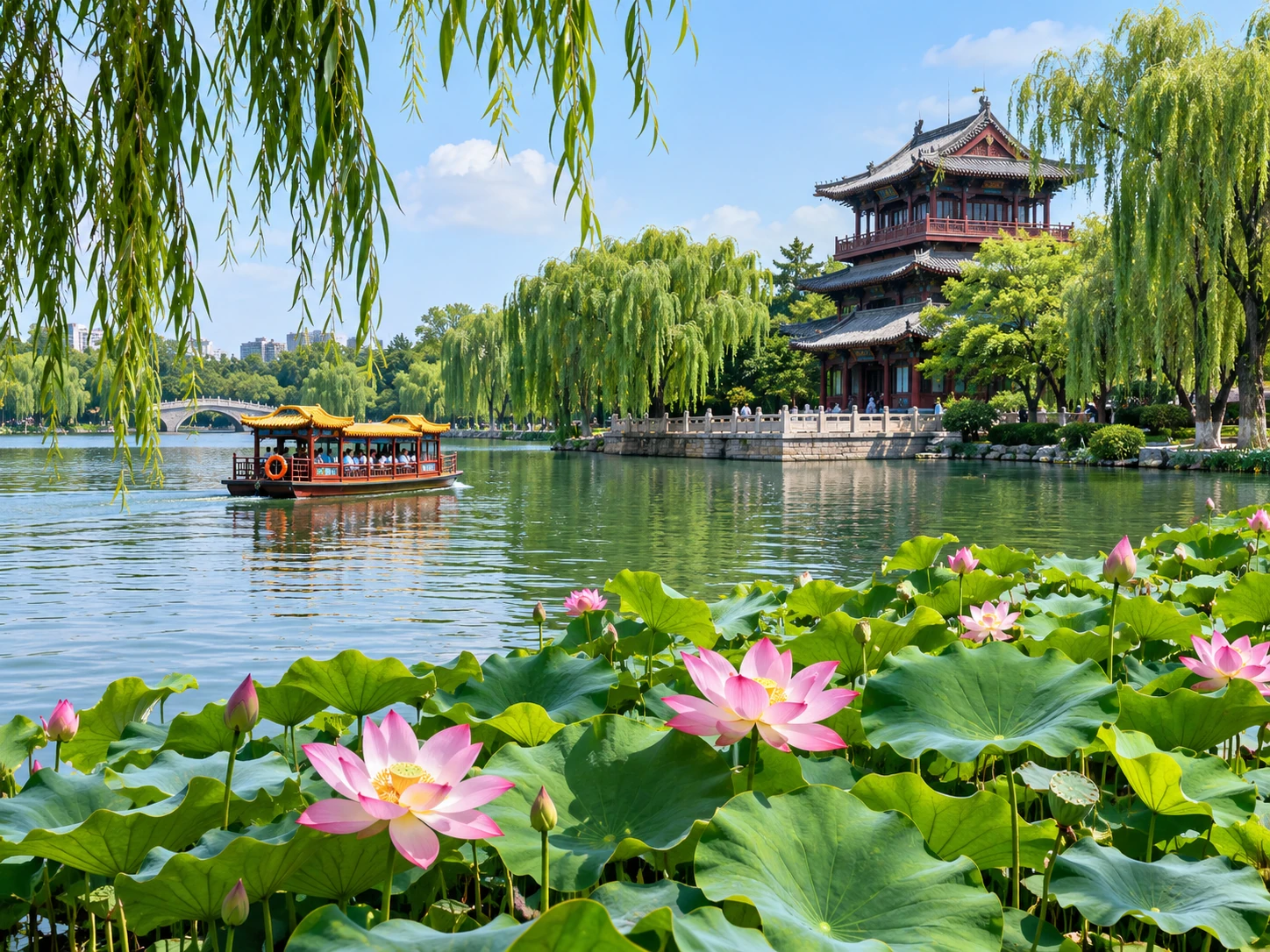
Editorial illustration inspired by Daming Lake. Not documentary photography.
Daming Lake opens into broad water, pavilions, gardens and long walking paths. In warm months, lotus leaves and blossoms bring color to the shores, while willow branches soften the skyline. The lake is also tied to the city’s literary heritage, including the poets Li Qingzhao and Xin Qiji. A gentle walk or permitted boat trip makes a relaxed counterpoint to spring-hopping.
Travel tip: The most comfortable light for photographs is morning or late afternoon.

Editorial illustration inspired by Thousand Buddha Mountain. Not documentary photography.
South of the old town, Thousand Buddha Mountain introduces another side of Jinan: wooded slopes, shrines, historic Buddhist sculpture and views across the modern city. The name points to the mountain’s religious and sculptural heritage. Families can choose a shorter lower-slope walk instead of committing to a longer climb.
Travel tip: Wear proper shoes, carry water, and choose routes appropriate for children.
Furong Street (芙蓉街) is a busy old-city snack lane. For a gentler experience, visit early and then wander nearby Baihuazhou (百花洲) for waterside views. At Five Dragon Pool (五龙潭), explore more of Jinan’s interconnected spring network.
On a rainy day, Shandong Museum (山东博物馆) can add depth to the trip through regional archaeology, bronze work, ceramics and historical collections. Jinan also has strong literary connections, including poet Li Qingzhao (李清照); seek out the memorial site in the Baotu Spring area.
The heart of Lu cuisine (鲁菜) is not only banquet cooking. Everyday food offers just as much character: warm millet porridge, flaky pastries, rich braised pork and dishes balanced between sweetness and acidity.
A golden, spiral-shaped savory pastry with delicate layers and a crisp, flaky bite. Best eaten warm.
A spiral pastry makes a fun geometry lesson: count the visible rings.
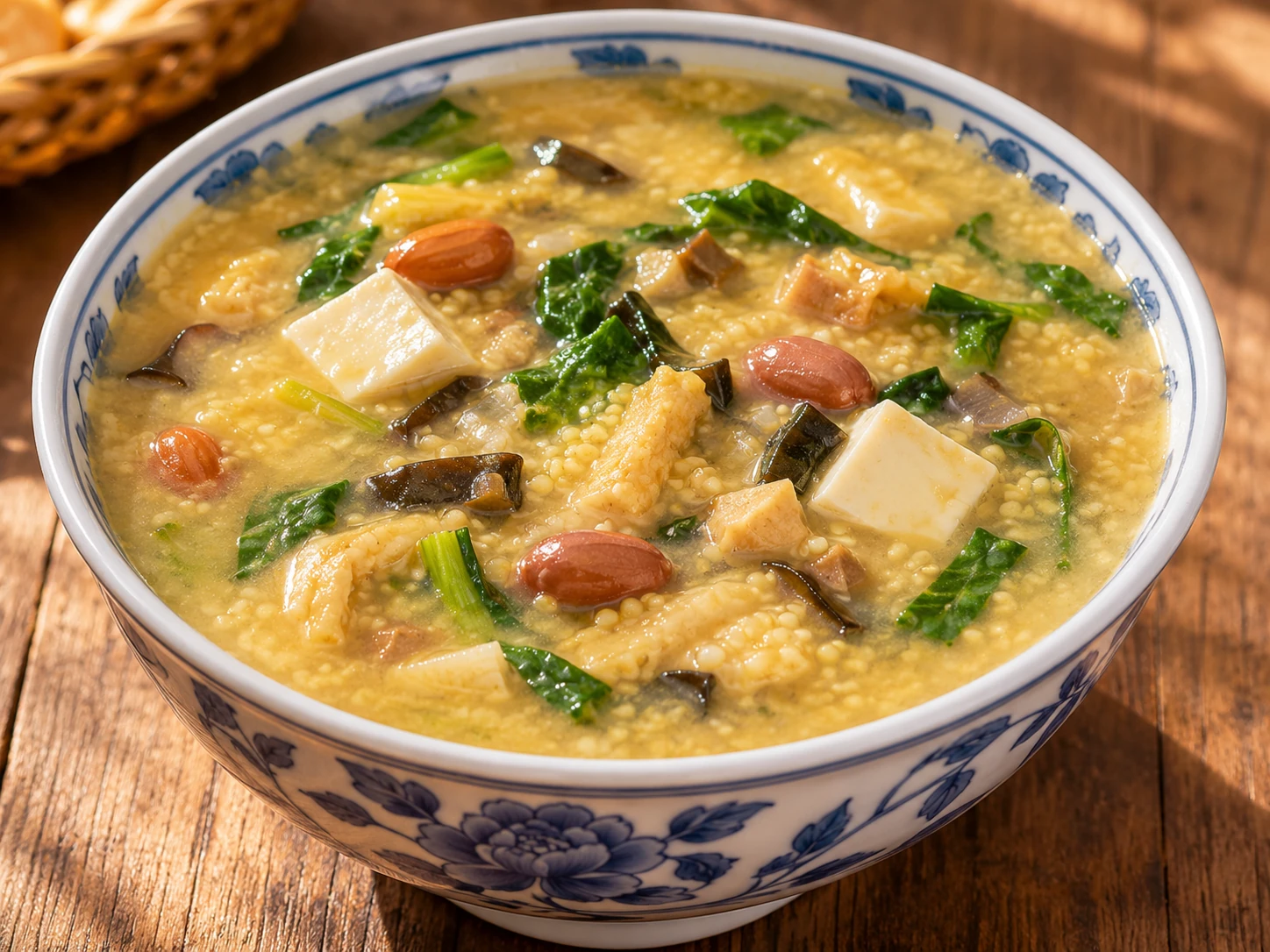
Despite the word “sweet” in its Chinese name, tianmo is a savory, peppery millet-based breakfast porridge with additions that vary by vendor.
Ask about spices and ingredients before ordering for young eaters.
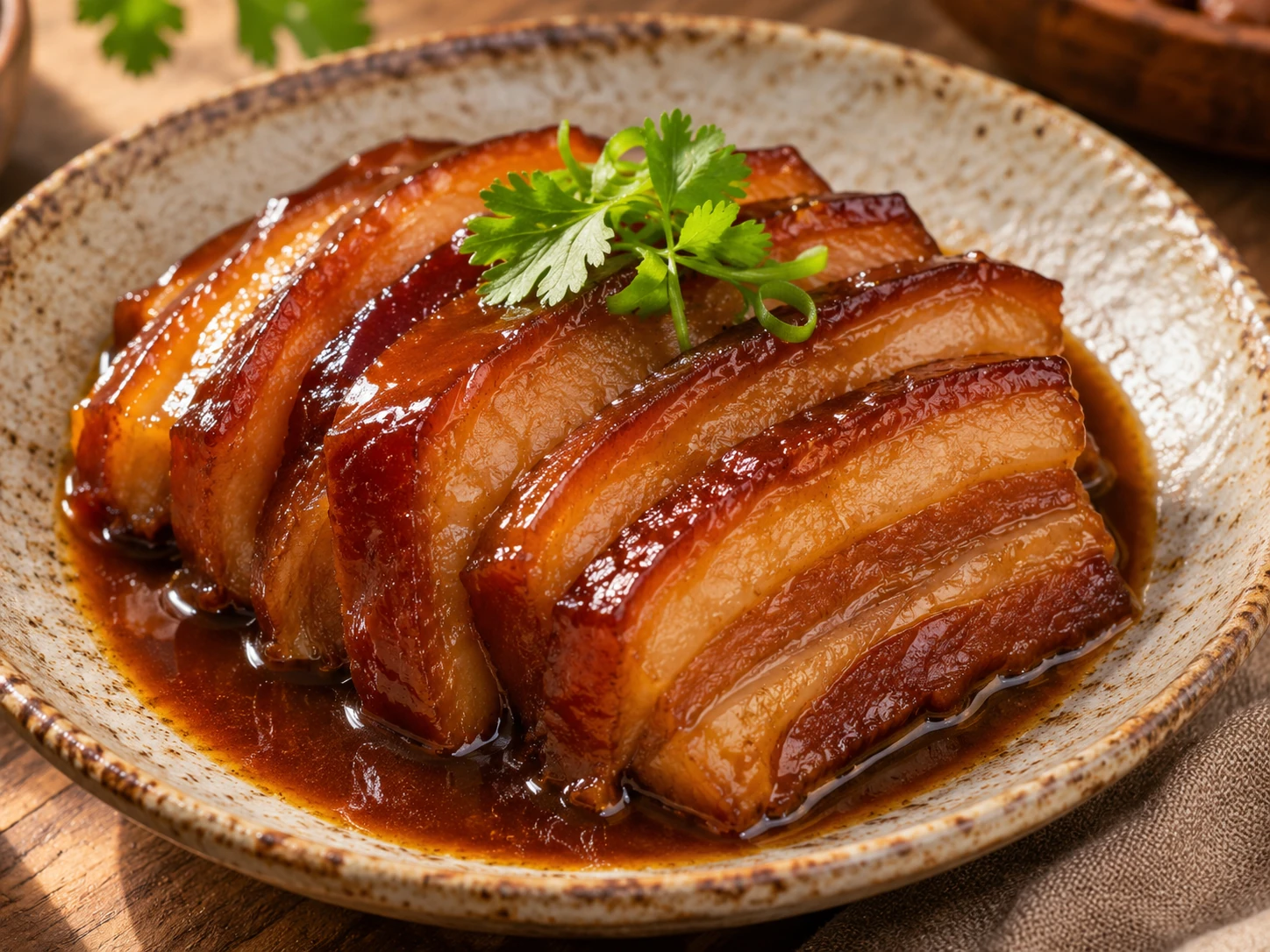
Rich slices of slowly braised pork belly, often served over rice with vegetables, eggs or tofu. A hearty example of everyday Jinan dining.
A good shared lunch after a morning of walking.
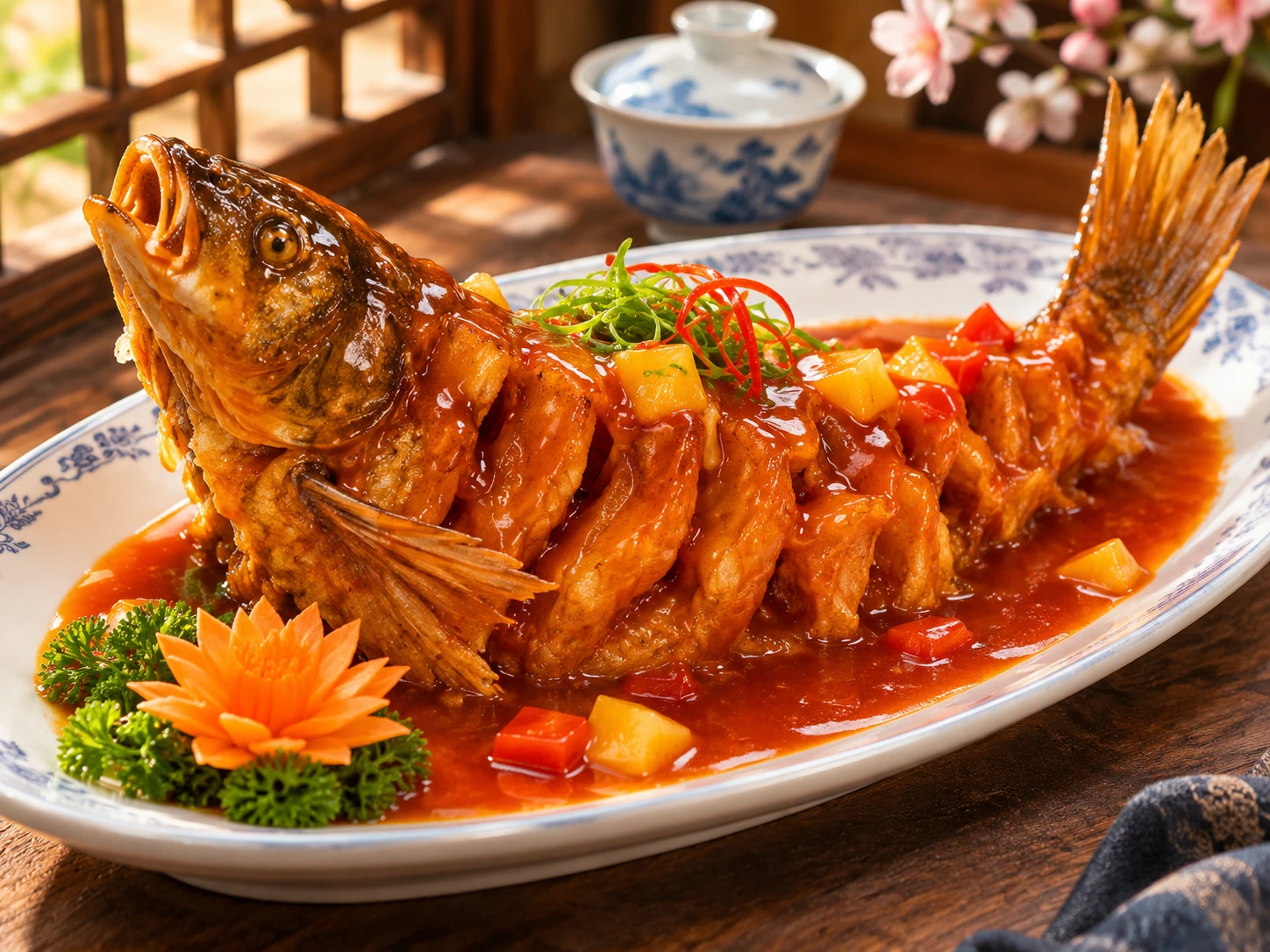
A classic banquet dish of Lu cuisine. The fish is commonly scored, fried and coated with a glossy sweet-and-sour sauce.
Check carefully for bones when serving children.
Each food has its own AI-generated editorial image with no text overlay. All dish names and descriptions appear as readable HTML below the images. Traditional restaurant presentations vary. An additional famous Lu-cuisine dish to know is Nine-Turn Braised Intestines (九转大肠).
This route keeps nearby old-city places together and saves the mountain and museum for their own day.
Baotu Spring (趵突泉) → Five Dragon Pool (五龙潭) → Black Tiger Spring (黑虎泉).
Watch water, sketch patterns, and leave extra time for breaks.
Daming Lake (大明湖) → Qushuiting Street (曲水亭街) → Baihuazhou (百花洲) → Furong Street (芙蓉街).
Morning lake views, afternoon lane wandering, evening snacks.
Thousand Buddha Mountain (千佛山) → Shandong Museum (山东博物馆) if open and convenient.
Choose a relaxed mountain route; check museum entry rules ahead.