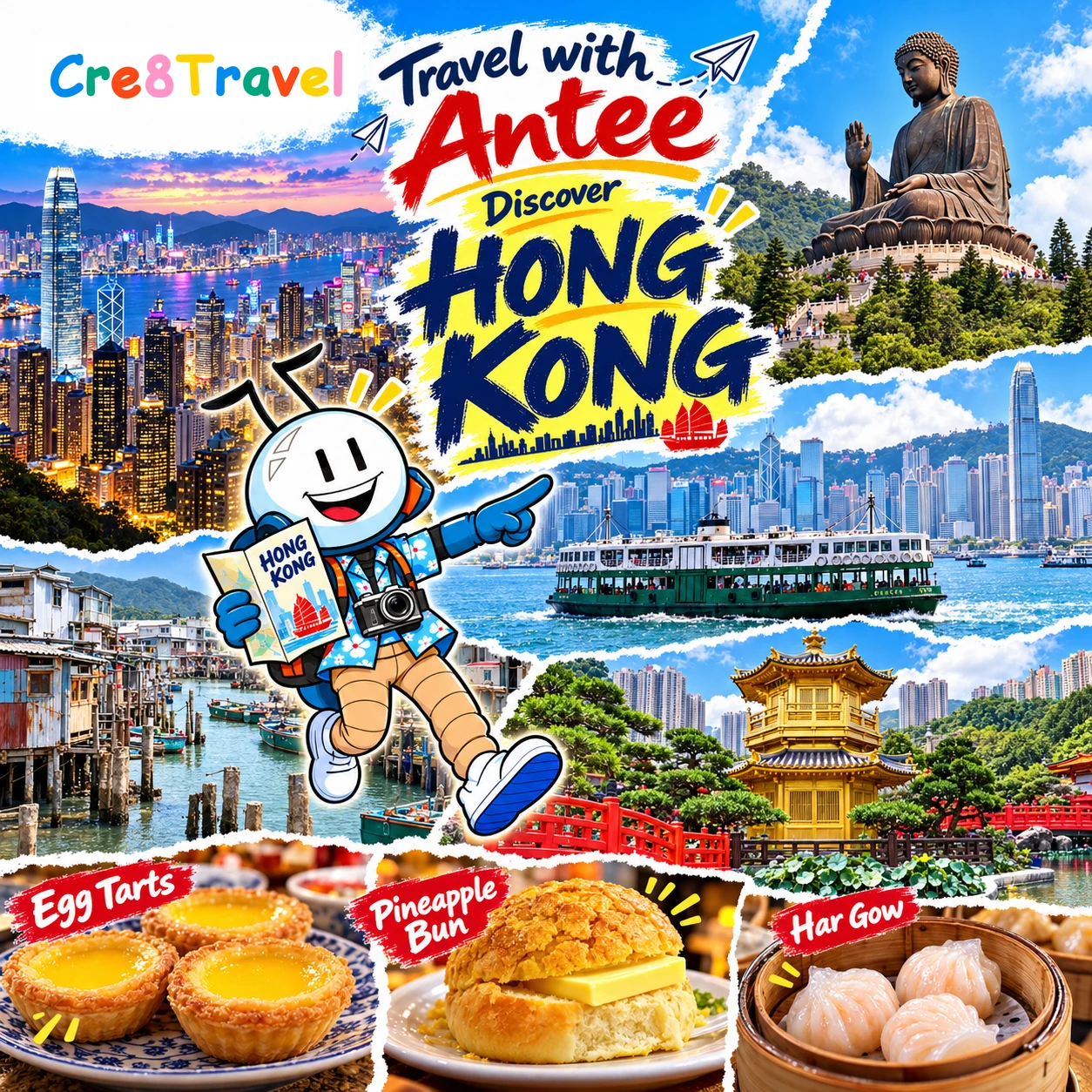
Harbour crossings, hillside views and little bamboo steamers: twelve highlights for a family journey through a city that keeps changing scale.
5 full days; 6 for a gentler pace · Plan outdoor views around visibility and weather; verify venue calendars
Visual edition v3 · All cover, landmark and food images are AI-generated editorial interpretations, not documentary photographs. Original Cre8Travel logo supplied by the user.
Hong Kong is a city you understand by moving through it. From the Peak, towers become a pattern beside the water; from a ferry, the same towers seem to glide. A temple doorway changes the volume of a street. A warm bakery bag can turn an ordinary pavement into the place everyone remembers. The pleasure is in these changes of scale, from a harbour-wide view to the folds of a single dumpling.
Join Antee for an English family feature that pairs celebrated sights with time to notice them. Our twelve highlights are a curated editorial selection, not a live ranking. The route moves between Hong Kong Island, Kowloon and Lantau, and gives each of the two theme parks a full day. Ngong Ping 360 and the Big Buddha are separate experiences within one broader outing; Tai O adds another transfer rather than appearing next door.
Researched on 20 October 2026. This is a five-full-day framework, not a five-night guarantee that every activity will fit every family. Add a sixth day for slower museum visits or a separate Tai O outing. Check current tickets, reservation requirements, access, opening days and transport before departure. All cover, landscape and food pictures in this edition are AI-generated editorial interpretations, not documentary photographs or exact visual records.
The harbour is the opening scene
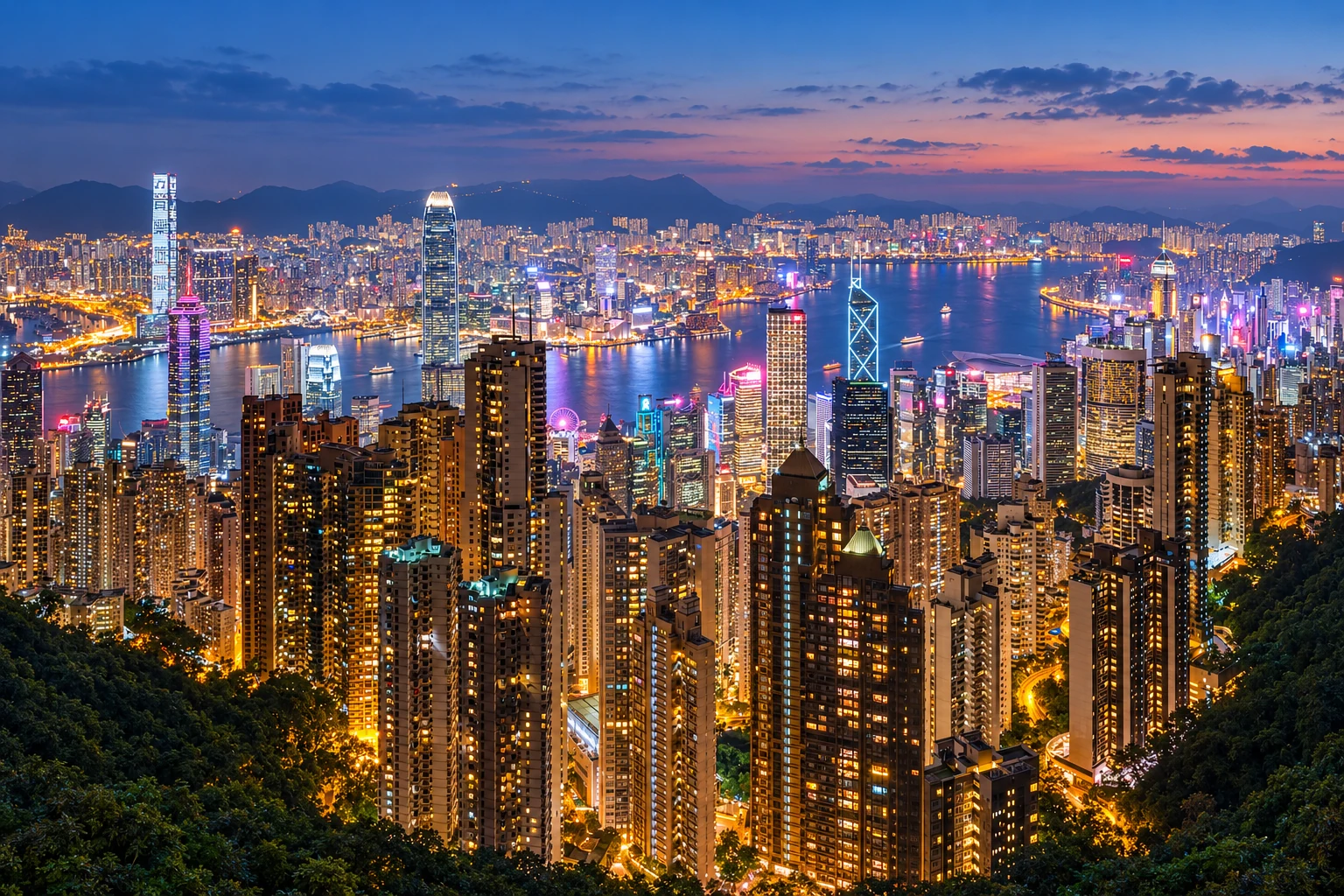
01 · The Peak
Start above the city, where Hong Kong’s geography becomes readable. Green slopes fall toward a dense line of towers; Victoria Harbour separates Hong Kong Island from Kowloon; beyond the buildings, more hills remind you how much of this place is landscape. The Peak is an introduction to the relationship between height, water and movement, rather than simply a photograph to collect.
AI-generated editorial interpretation. A Peak-inspired panorama over Hong Kong Island and Victoria Harbour.
The Peak Tram can make the ascent part of the experience, but check its current arrangements and leave time for queues. At the top, choose an open viewpoint or a manageable section of the walking routes rather than insisting on every attraction. Cloud and haze can transform the view, so avoid promising a perfect sunset. Photographer’s note: let a nearby tree or railing frame the skyline, and keep both shores in the story.
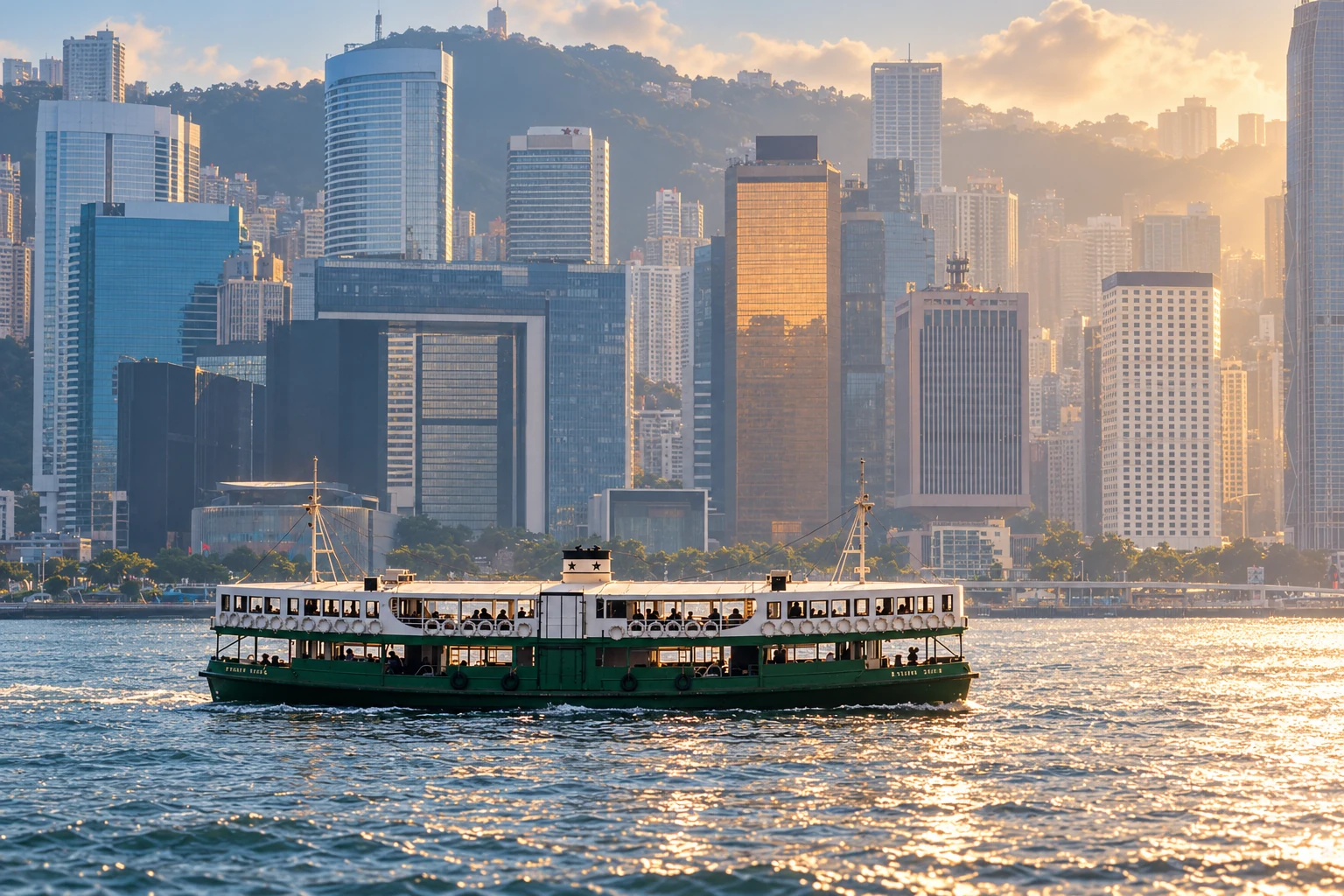
02 · Star Ferry
Return to water level and the scale changes. A Star Ferry crossing brings the skyline close, then lets it pull away at the pace of a working boat. The service links Tsim Sha Tsui with Central and Wan Chai, so this classic Hong Kong experience can also be useful transport. It is a chance to notice the city between destinations instead of treating the journey as lost time.
AI-generated editorial interpretation. A green-and-white Star Ferry on Victoria Harbour; an illustrative view, not a service announcement.
Check the actual route and boarding level before joining a queue, especially with a stroller or wheelchair. Sailings are affected by operating and sea conditions. Once aboard, sit where your family can enjoy the view safely, keep belongings secure and leave room for other passengers. Photographer’s note: choose the ferry’s deck framing or its profile against the city, and avoid leaning beyond railings for a cleaner angle.
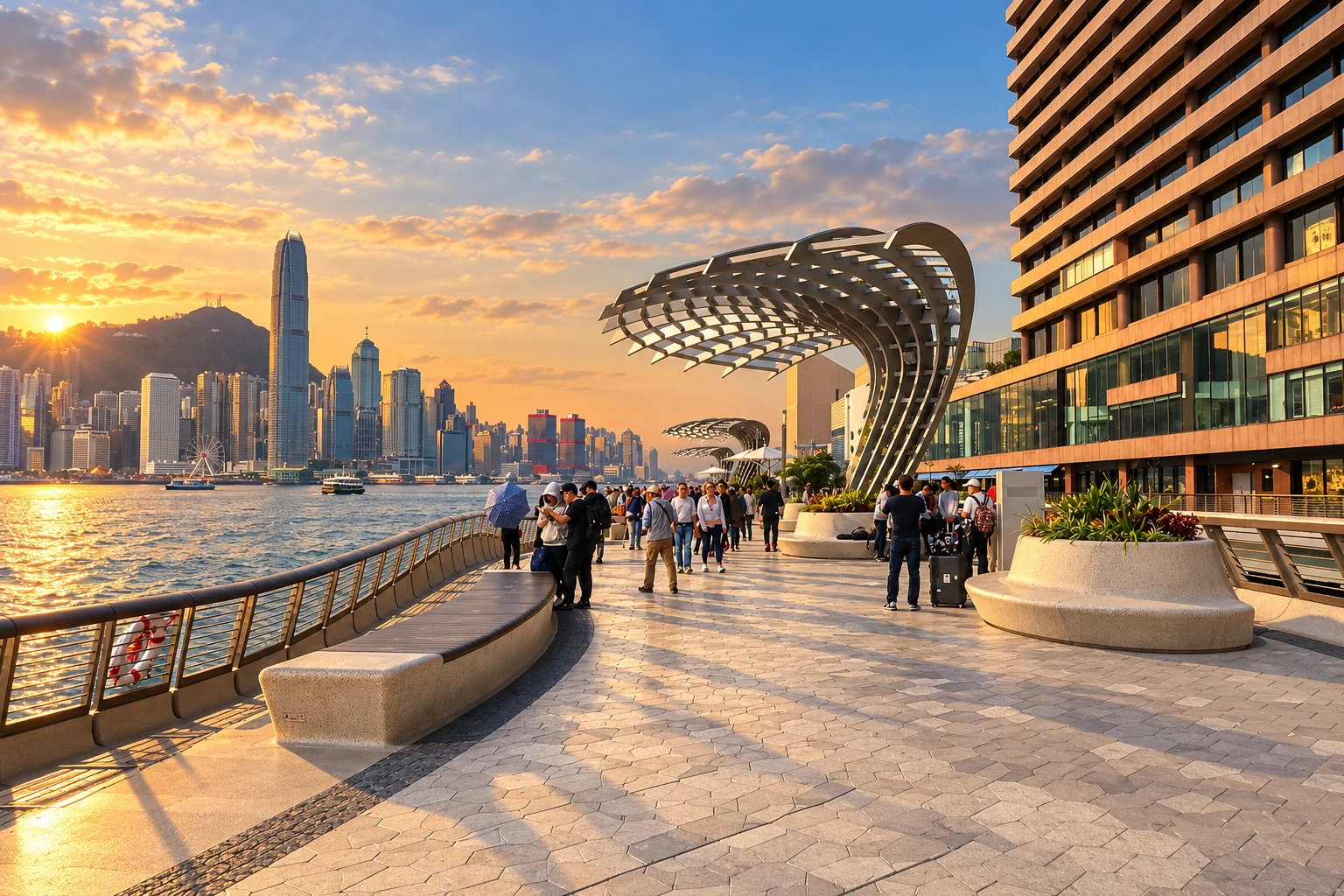
03 · Avenue of Stars
On the Tsim Sha Tsui waterfront, the Avenue of Stars connects the harbour with Hong Kong’s screen culture. Handprints, plaques and sculptures honour the people behind films that travelled far beyond the city. You do not need to recognise every name to enjoy the idea: familiar streets, gestures and voices can become stories shared around the world.
AI-generated editorial interpretation. The Tsim Sha Tsui waterfront, with the Hong Kong Island skyline across the harbour.
Walk a short section at a comfortable pace, leaving time to look across the water as well as along the promenade. A visit near dusk offers changing light without requiring a fixed show schedule. Crowds can make the waterfront feel narrower than the map suggests, so agree on a meeting point. Photographer’s note: use a stretch of railing or promenade as a leading line, while keeping people’s space and privacy in mind.
Central: look behind the glass towers
04 · Man Mo Temple, Sheung Wan
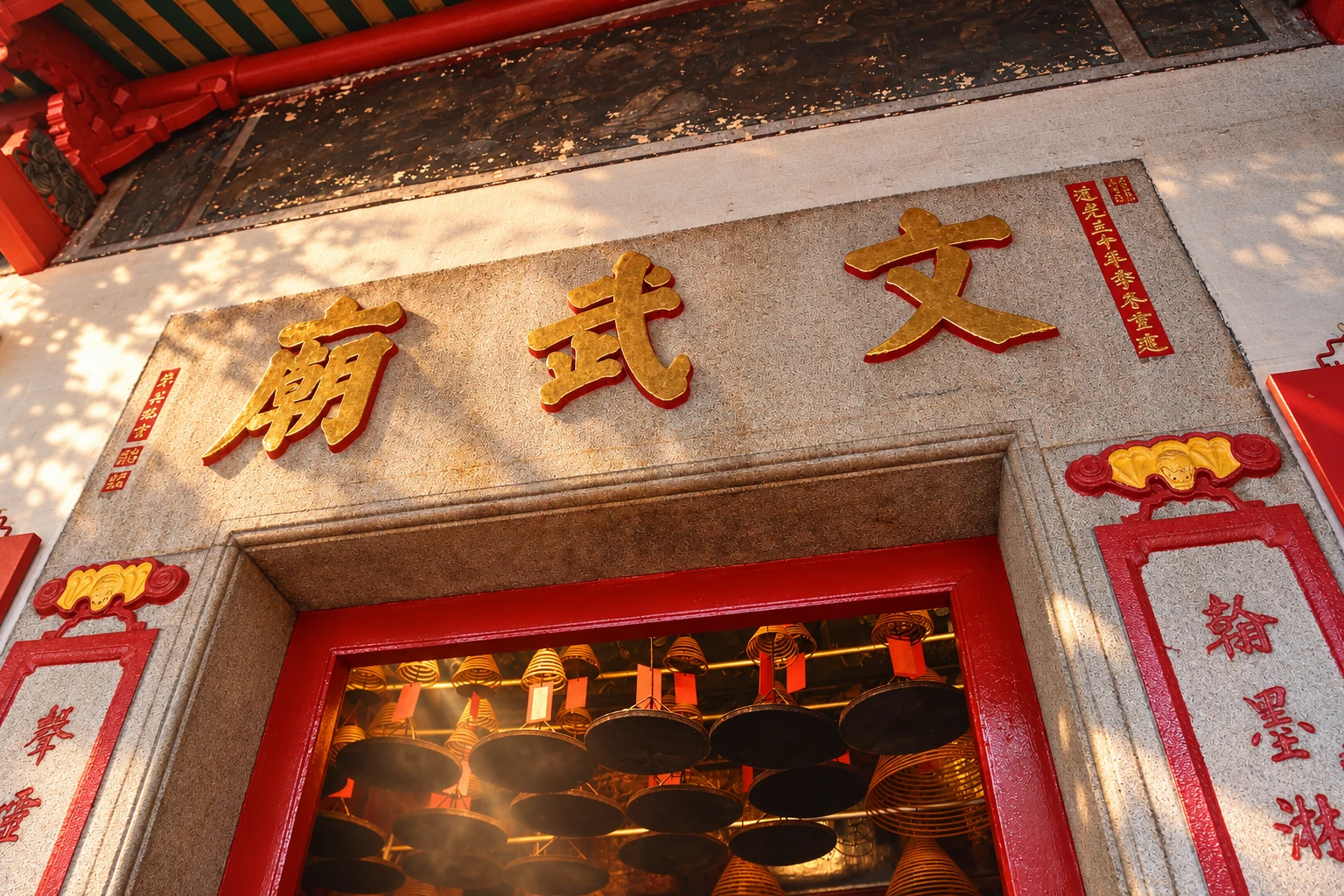
On Hollywood Road, Man Mo Temple asks you to slow your eyes as well as your feet. This is the Sheung Wan temple, rather than another Hong Kong temple with a similar name. Its green roof, carved architectural details and religious purpose offer a different register from Central’s commercial streets. It remains a place of worship, not a stage set for an atmospheric photograph.
AI-generated editorial interpretation. An architectural interpretation of the Sheung Wan Man Mo Temple; worship and access rules take priority.
Observe the rules posted on the day, leave space for worshippers and ask before photographing people. If incense or enclosed spaces do not suit your family, the exterior can still be a meaningful stop. Look for the care involved in timber, stone and roof details rather than trying to turn every interior moment into a picture. Photographer’s note: available light often suits sacred architecture better than flash, which may be prohibited.
05 · Tai Kwun
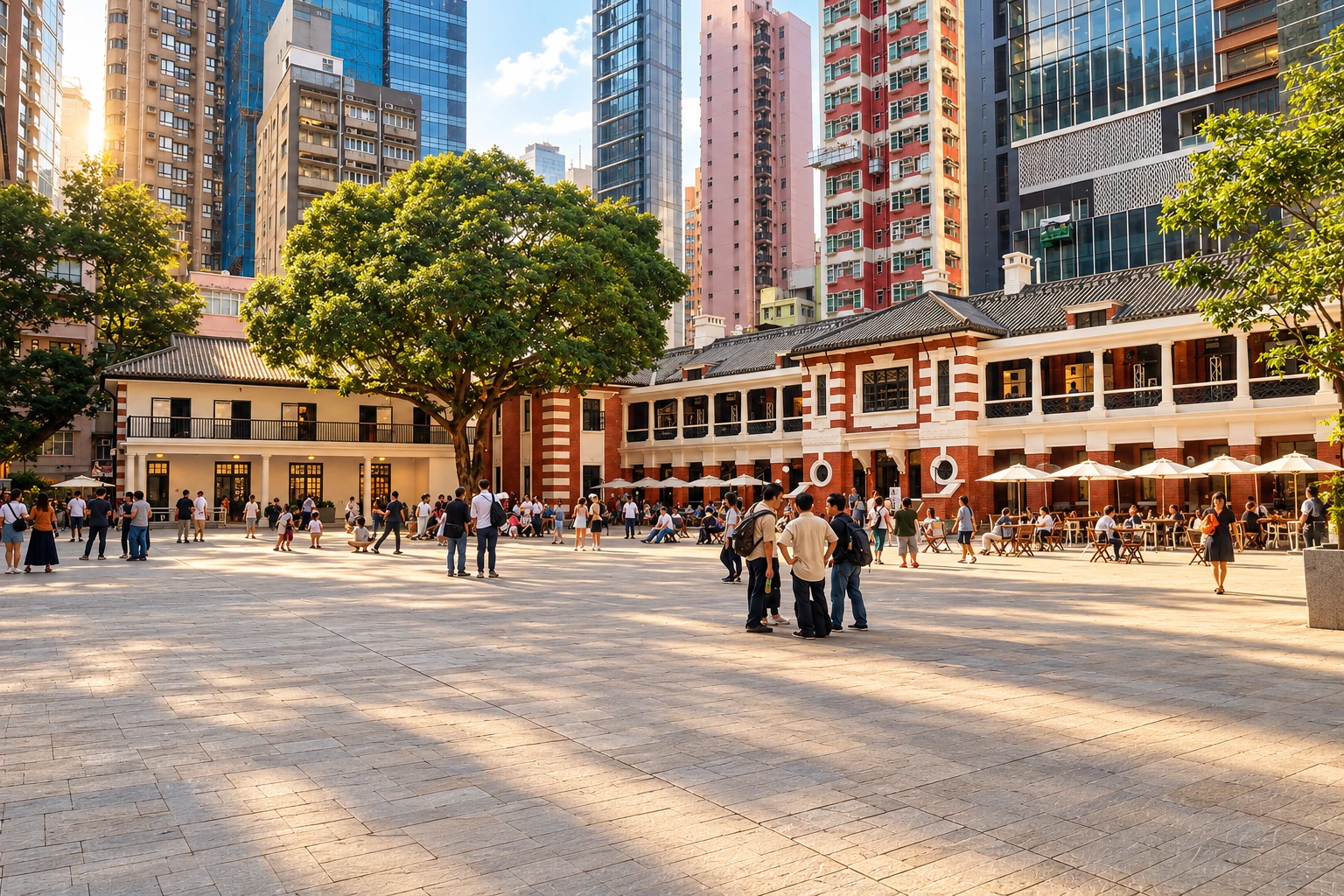
Tai Kwun turns a former police, magistracy and prison compound into a place where heritage and contemporary culture meet. The courtyards and historic buildings make reuse visible: a site with serious institutional history now also holds exhibitions, performance spaces and places to pause. The appeal lies in reading those layers, rather than treating old walls as decoration.
AI-generated editorial interpretation. Tai Kwun’s historic courtyard architecture, interpreted from a real subject reference.
Choose one heritage thread and one contemporary space, then give yourselves a proper courtyard break. Current exhibitions and events vary; the photographs in this guide do not promise a particular installation or performance. For younger visitors, compare the proportions of a doorway and a courtyard; older children may want to ask how institutions shape everyday lives. Photographer’s note: a doorway or arcade can provide a frame without requiring an empty square.
Kowloon: a garden pause and a wider idea of art
06 · M+, West Kowloon
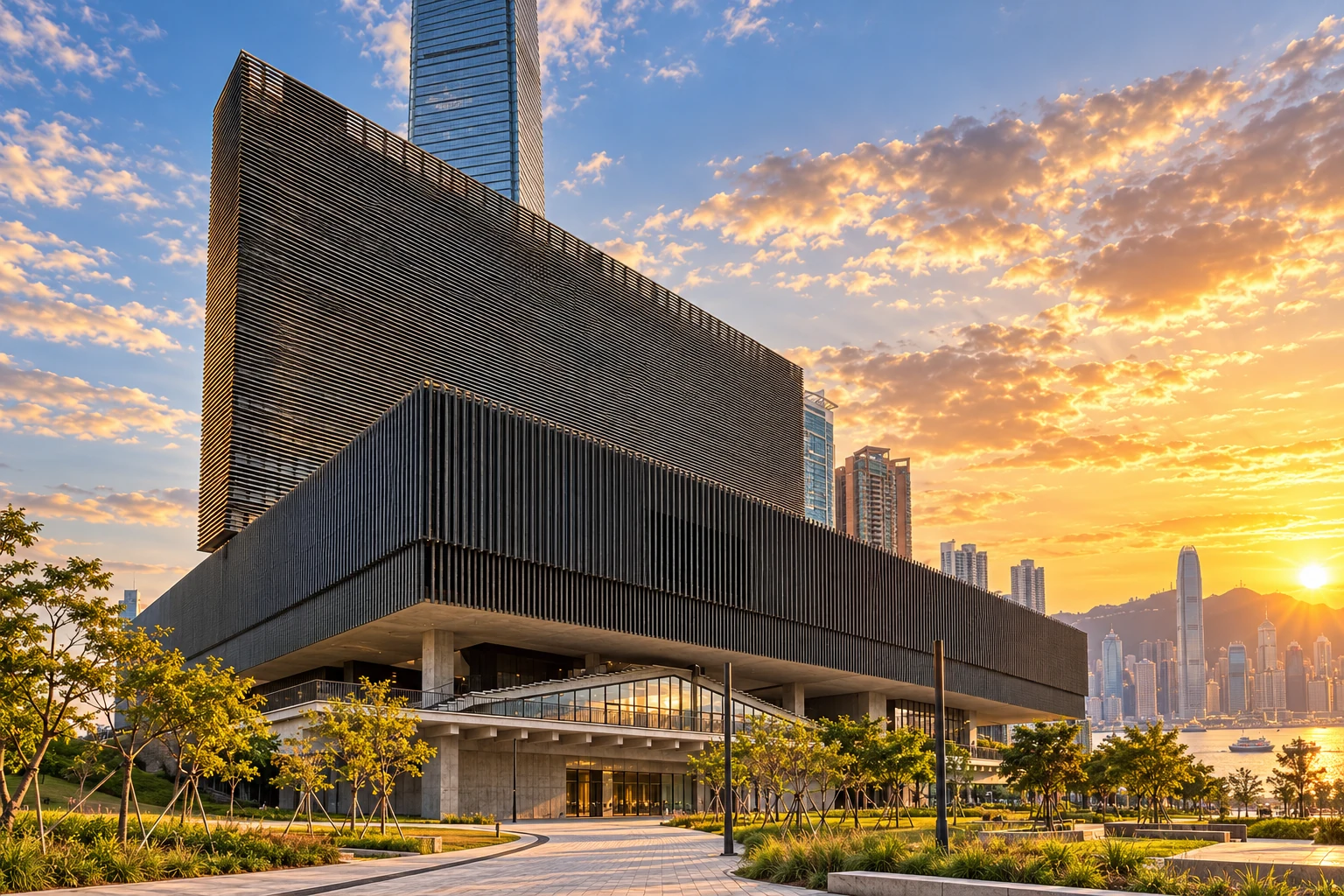
M+ invites a broad understanding of visual culture: art, design, architecture and moving images can all be ways to read the modern world. The museum’s West Kowloon setting adds another layer, placing a major cultural building beside the harbour. Begin by noticing the building itself, then choose a small number of works or displays that give everyone something to discuss.
AI-generated editorial interpretation. The M+ building in West Kowloon; the illustration does not reproduce or promise a current exhibition.
Agree on a manageable visit rather than trying to complete the whole museum. One object, one moving-image encounter and one design question may be enough for a family. Check ticketed versus freely accessible spaces and the current calendar directly. At the research date, the museum lists a special closure on 31 October 2026; exceptions make a fresh check worthwhile. Photographer’s note: follow the rules of each gallery and use the exterior for an architectural wide view.
07 · Nan Lian Garden and Chi Lin Nunnery
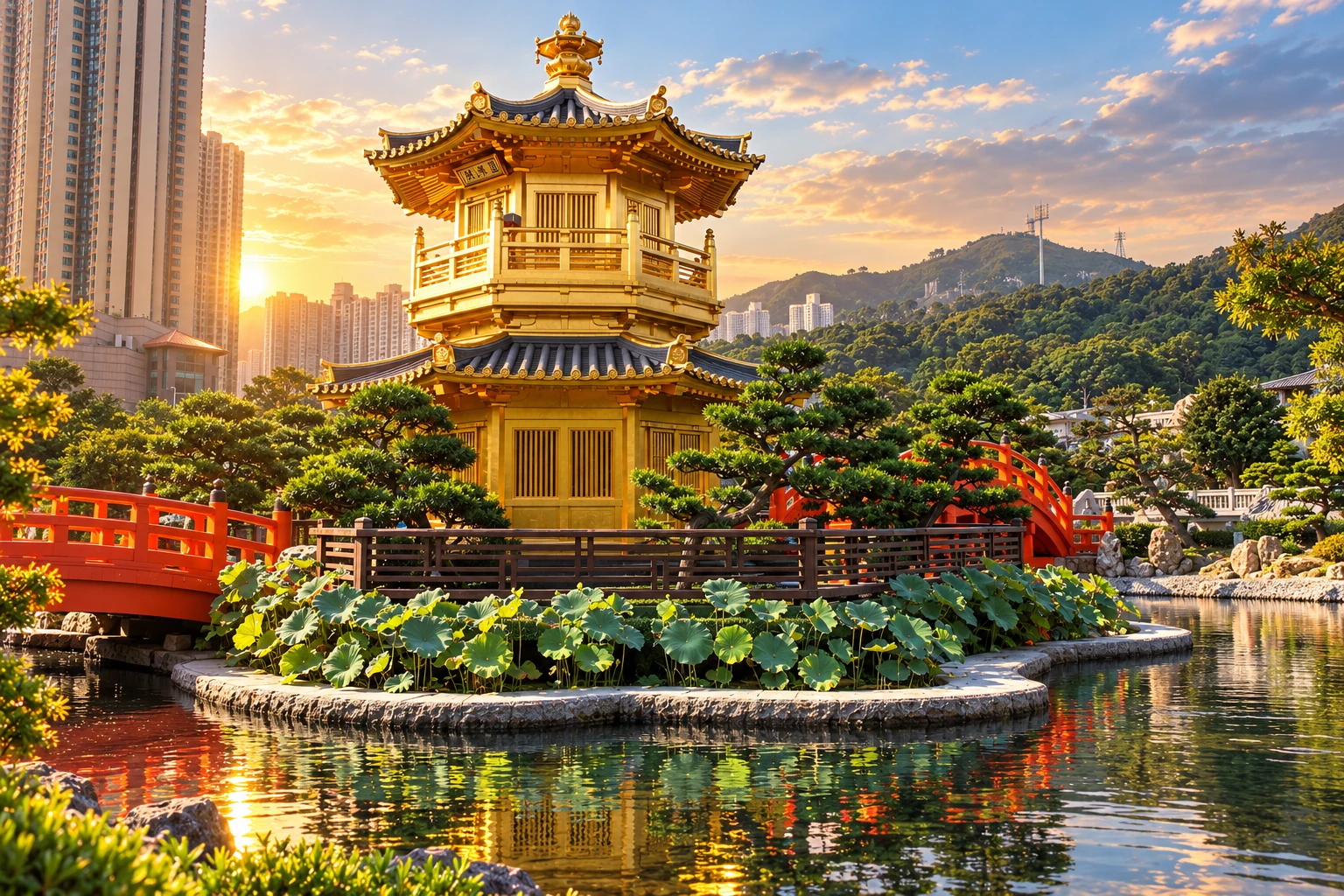
Diamond Hill offers a deliberate change of pace. Nan Lian Garden’s carefully arranged rocks, water and trees lead toward a golden pavilion and red bridge, while nearby Chi Lin Nunnery brings a restrained timber architectural language. These are modern places designed with reference to Tang traditions; their style should not be confused with a claim that the buildings have survived unchanged since the Tang dynasty.
AI-generated editorial interpretation. Nan Lian Garden’s golden pavilion, red bridge and planted landscape in an urban Kowloon setting.
Follow the garden route gently and resist adding a long list of detours. The contrast between a small branch, a rock surface and the surrounding city can be the whole experience. Respect the nunnery’s quiet and restrictions on interior photography. This stop is in a different part of Kowloon from M+, so plan a transfer and a rest between them. Photographer’s note: leave enough of the landscape around the pavilion to show the design, rather than isolating the gold roof alone.
Lantau: the city opens into hills and water
08 · Ngong Ping 360
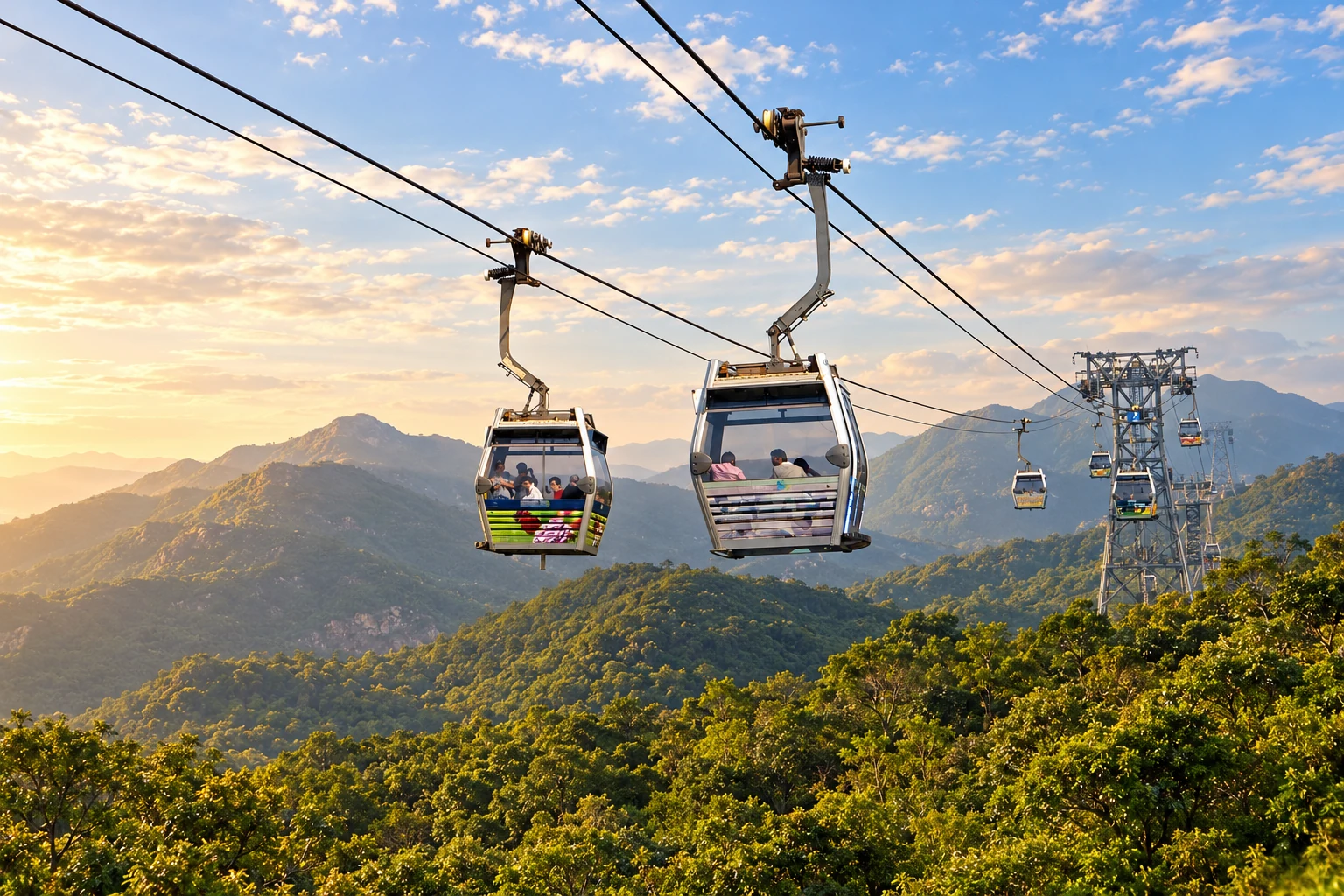
The Ngong Ping cable car makes Lantau’s scale visible: hills, water and the distance from the urban streets become part of the journey. The connection from Tung Chung to Ngong Ping is an attraction in its own right, but it also belongs to the same broader outing as the Big Buddha. Counting them as separate highlights should not disguise that they share a destination day.
AI-generated editorial interpretation. Ngong Ping 360 over Lantau’s green landscape; distinct from Ocean Park’s cable-car system.
Make the day flexible. Cable-car service can change with weather and maintenance, so check the operator before setting out and plan alternative transport if needed. The operator’s notice retrieved for this feature lists scheduled maintenance on 10 November 2026; recheck for updates rather than treating this as a complete closure calendar. Choose the cabin and ticket arrangement that suits your family, not a photograph you feel obliged to recreate.
09 · Tian Tan Buddha and Po Lin Monastery
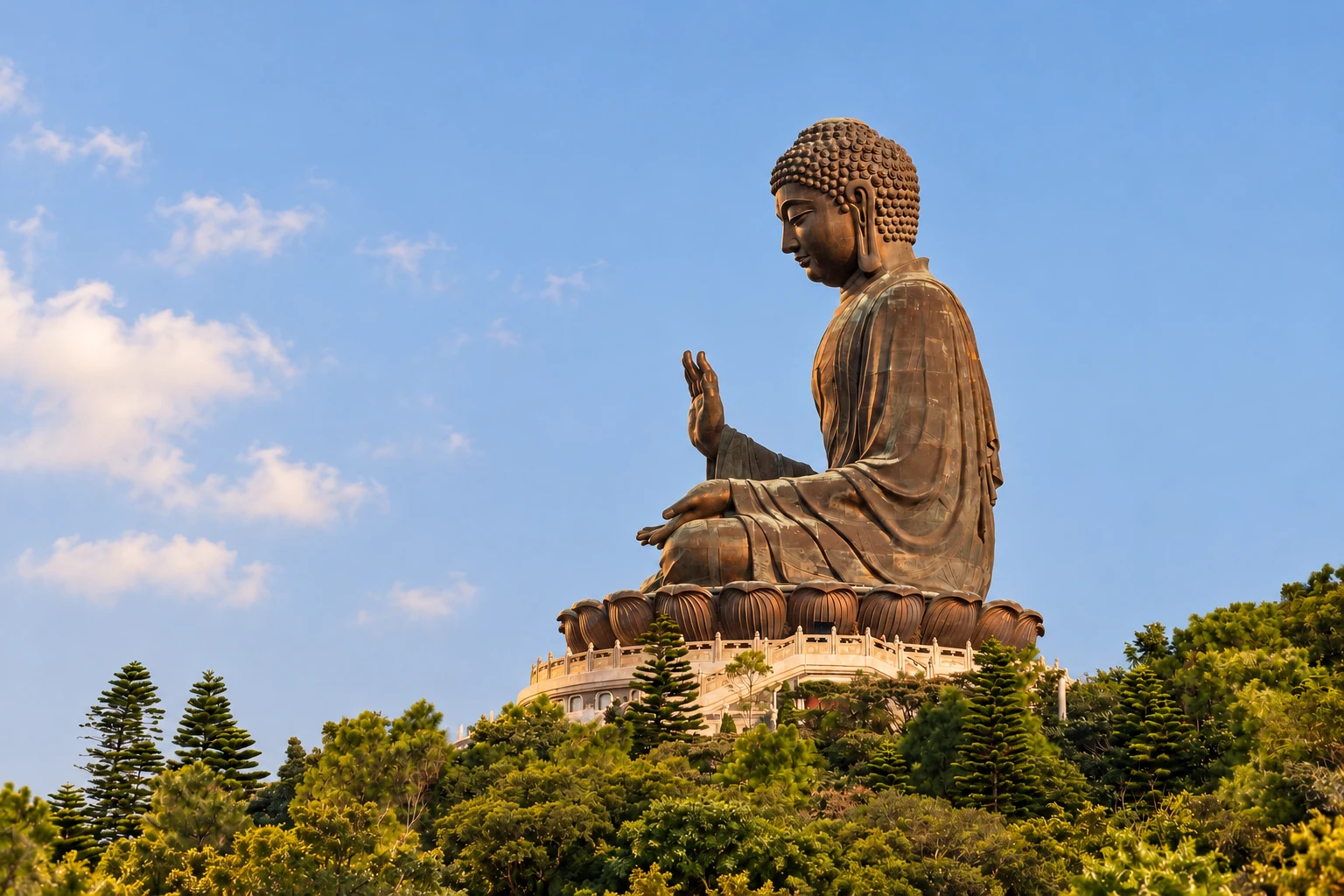
At Ngong Ping, the seated bronze Tian Tan Buddha rises above a long stairway, with Po Lin Monastery nearby. The statue was completed in 1993: monumental scale and a traditional sacred setting do not make it an ancient sculpture. Approach the place as a living religious landscape, allowing time for quiet observation as well as the view.
AI-generated editorial interpretation. Tian Tan Buddha above its approach on Lantau; an AI editorial interpretation of the actual monument.
The stairs are a substantial part of the visit. A lower viewpoint can still convey the relationship between the statue, its base and the hill, so let mobility and energy decide how far to go. Follow monastery instructions on clothing, behaviour and photography. Do not promise a particular interior, meal service or ceremony without checking current access. Photographer’s note: include the base or steps to communicate scale, and leave worshippers out of the frame unless they consent.
10 · Tai O
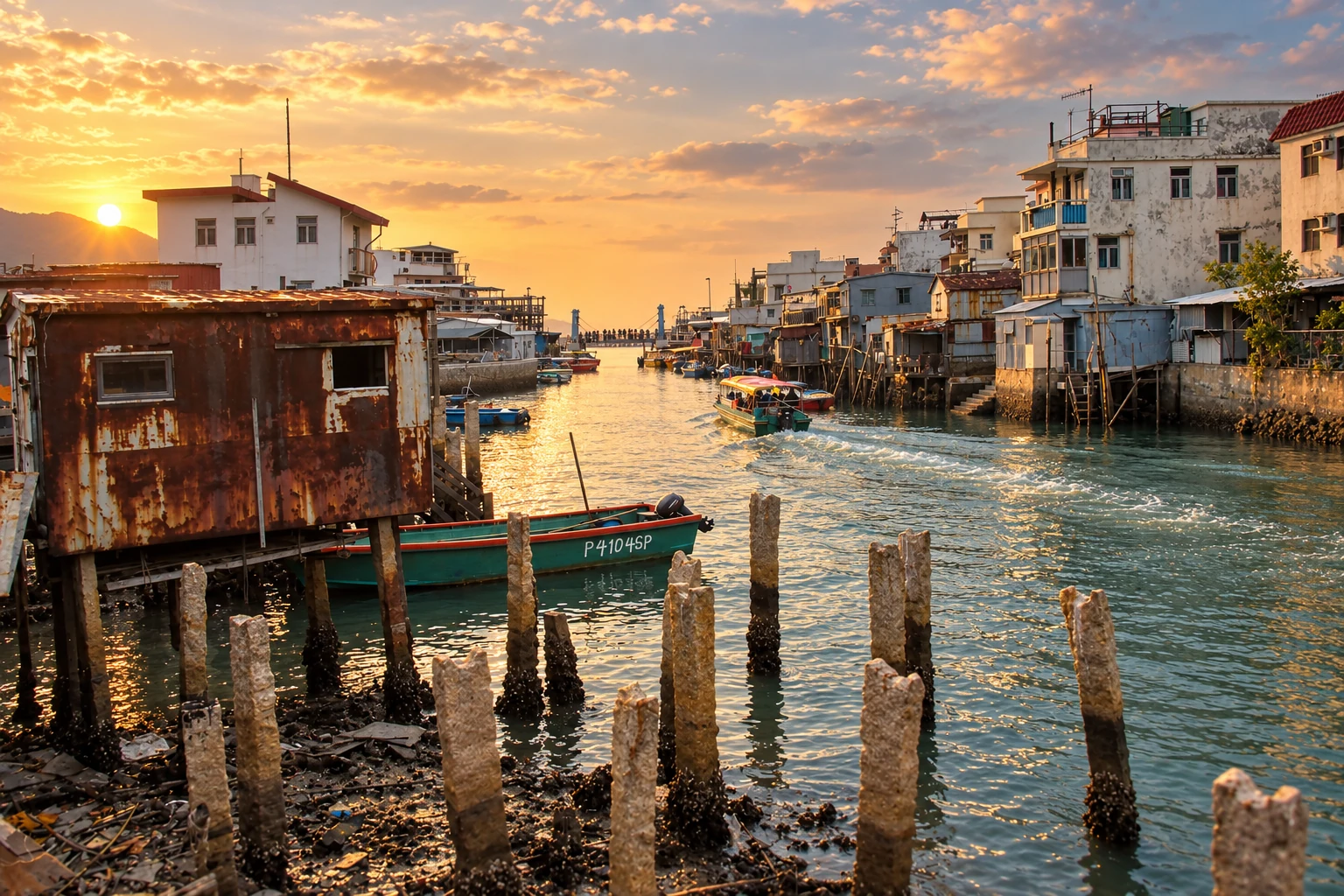
Tai O reveals another Lantau landscape, where houses stand on supports above tidal waterways and daily life is closely connected with the water. Look at how homes, walkways and boats fit together. This is a lived-in village with residents and working spaces, so the most respectful visit begins with attention to boundaries, not the pursuit of a perfectly empty scene.
AI-generated editorial interpretation. Tai O’s stilt-house waterways, interpreted from a real village reference rather than a generic water town.
A short wander, a meal break and one waterside viewpoint can be enough. Do not enter homes or private walkways for a photograph. Tai O adds a transfer and a return-journey decision to the Ngong Ping outing; allow time for both, or give it a separate day if travelling with young children. If considering a boat trip, check the operator and conditions; wildlife sightings should never be assumed. Photographer’s note: let reflections and the structures’ supports explain the place.
Two full days for family adventure
11 · Hong Kong Disneyland
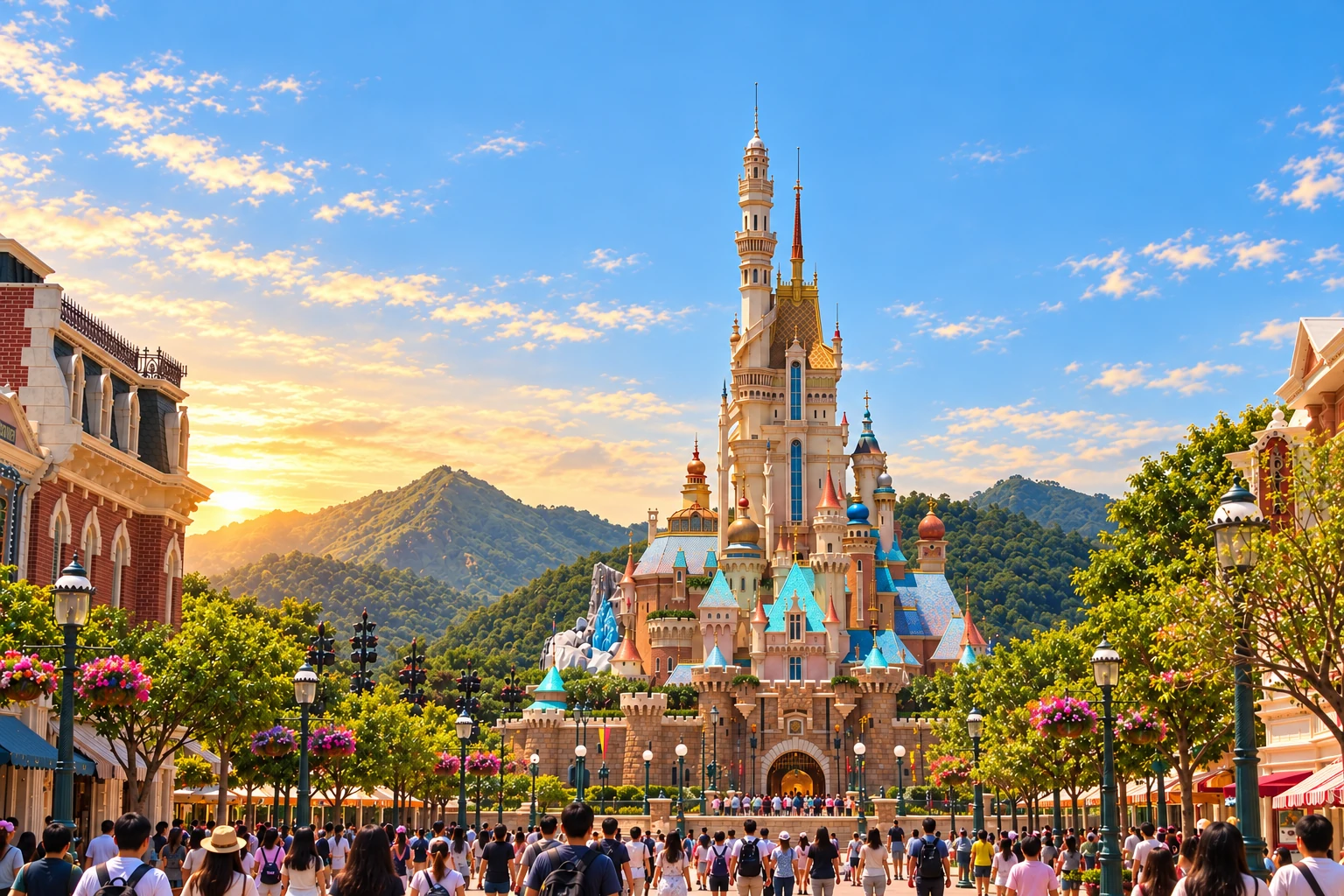
Hong Kong Disneyland deserves a day with its own rhythm. Its Castle of Magical Dreams is the Hong Kong park’s distinctive centrepiece, not a substitute image of another Disney resort. Beyond the castle photograph, the best family day depends on what your group enjoys: gentler experiences, immersive environments or a carefully chosen set of rides.
AI-generated editorial interpretation. An editorial interpretation of Hong Kong Disneyland’s Castle of Magical Dreams; not official Disney imagery.
Agree on a few priorities before arrival and check the park’s current calendar, ticket and reservation requirements, attraction restrictions and entertainment programme. Keep space for meals, shade and a quiet break. A missed attraction need not make the day a failure, and a nighttime show should be treated as a current schedule to verify rather than an automatic promise. Photographer’s note: a clear castle view with foreground breathing room makes a stronger memory than a hurried close crop.
12 · Ocean Park Hong Kong
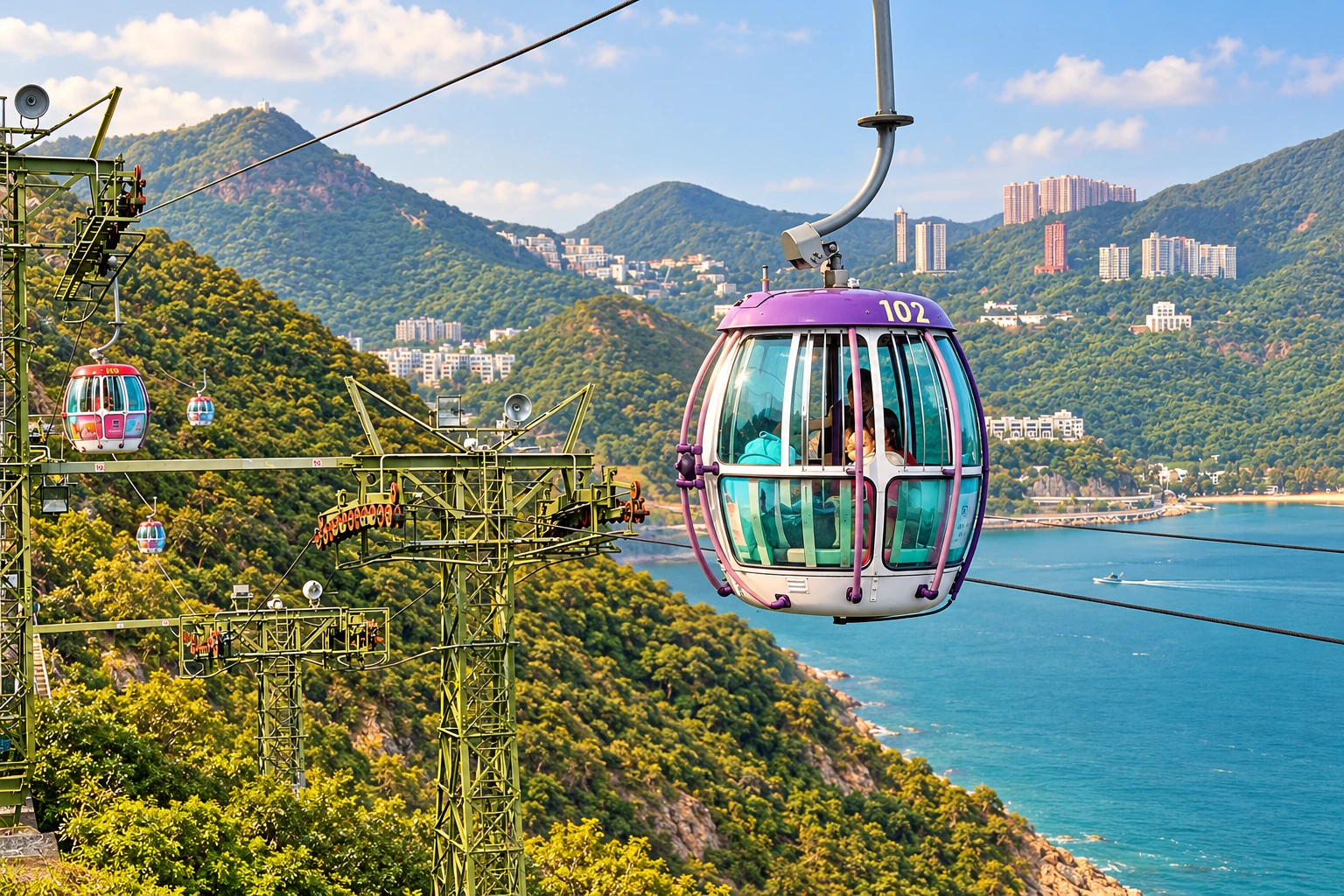
Ocean Park combines animal exhibits, attractions and a dramatic hillside setting on Hong Kong Island’s south side. Its cable car links the Waterfront and Summit areas, with a coastal outlook very different from Ngong Ping’s Lantau route. That distinction matters: two aerial rides do not show the same landscape, and a photograph of one should not illustrate the other.
AI-generated editorial interpretation. Ocean Park’s coastal cable-car setting; a separate location and system from Ngong Ping 360.
Plan the day around one or two interests and use the park map to understand changes in level. Check what is operating, the appropriate internal transport and any ride restrictions before committing to a route. Animal encounters and displays should be approached through the park’s current information, not assumed from an older picture. Photographer’s note: a gondola against the coastal hills can explain the park’s setting, while animal photography calls for patience and respect for exhibit rules.
Taste of Hong Kong
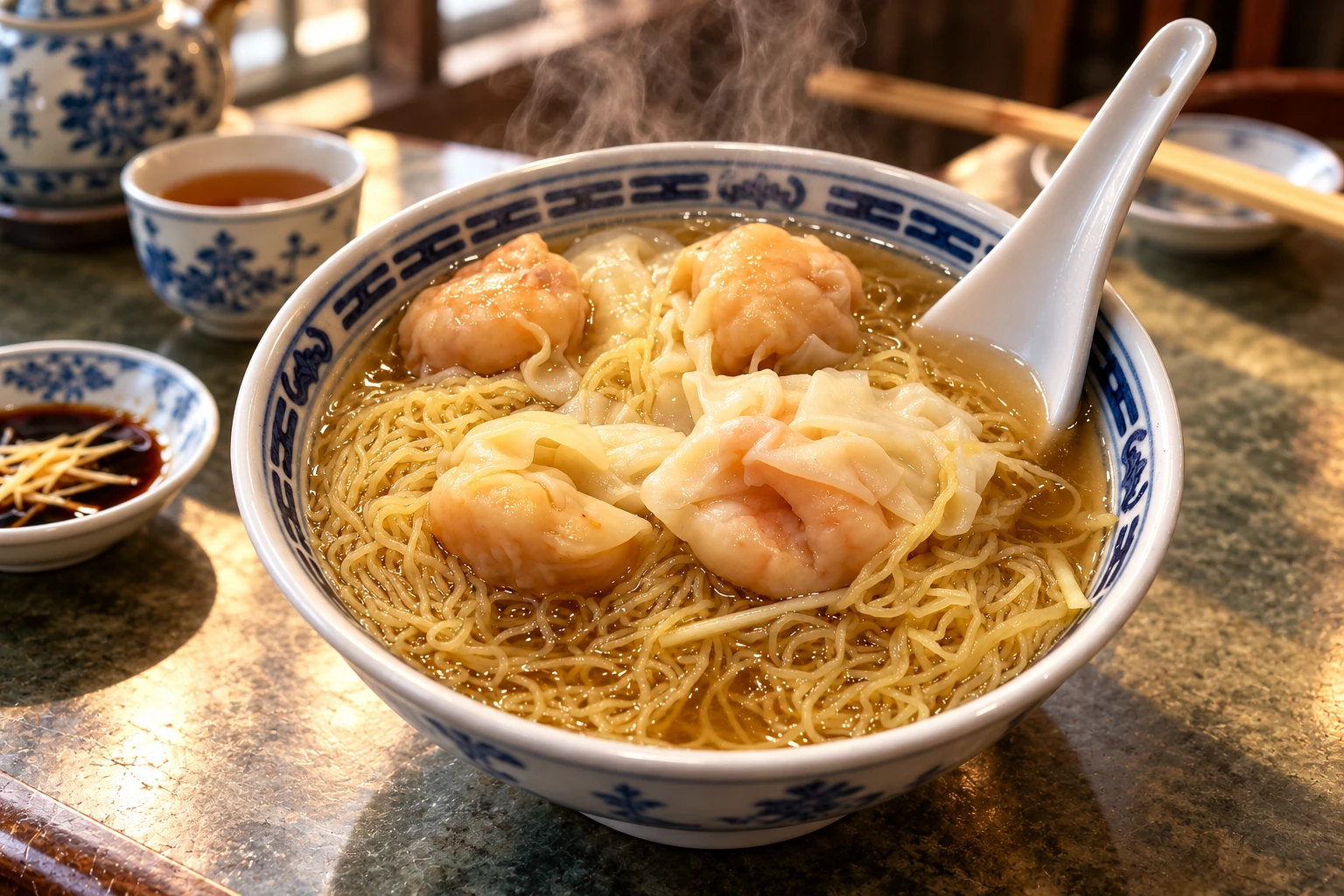
Four independently generated dish images; these are illustrative depictions, not restaurant photographs.
Hong Kong’s food story is easy to begin in small portions: a bakery treat, a cafe bun, a steamer to share and a bowl of noodles. Each of the four dishes below has its own independently generated editorial image. They illustrate the foods rather than a named restaurant or guaranteed serving style. Let curiosity guide the table, and ask about ingredients when you order.
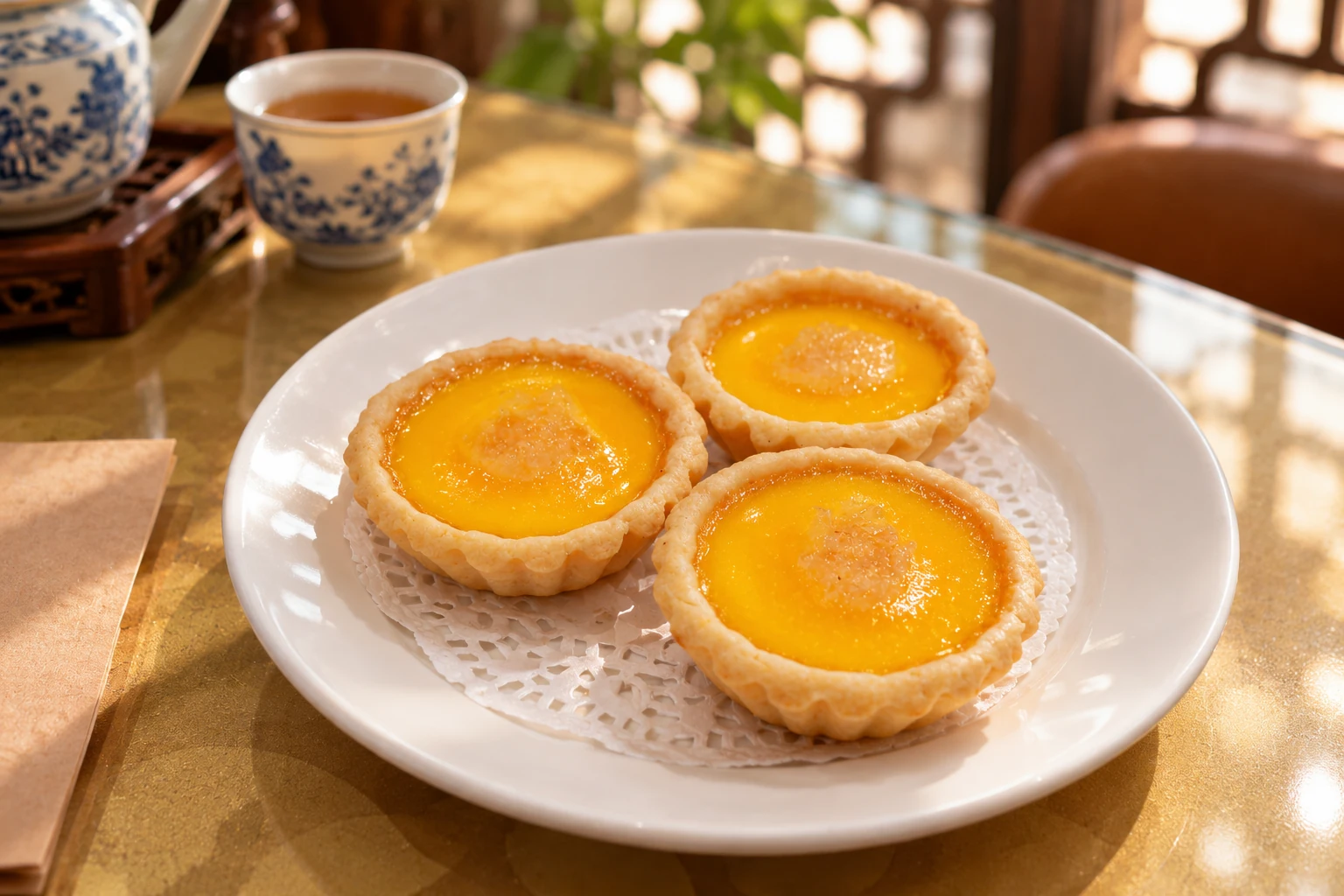
Hong Kong Egg Tart 蛋撻
A golden custard centre sits inside a delicate pastry shell: a small bakery stop with its own careful balance of texture. Hong Kong egg tarts are distinct from the heavily blistered Portuguese-style tart often associated with Macau. Look for the contrast between smooth custard and the crust, and allow a freshly baked one to cool before sharing.
Antee’s mission: Describe the custard and pastry separately before deciding which texture you notice first.
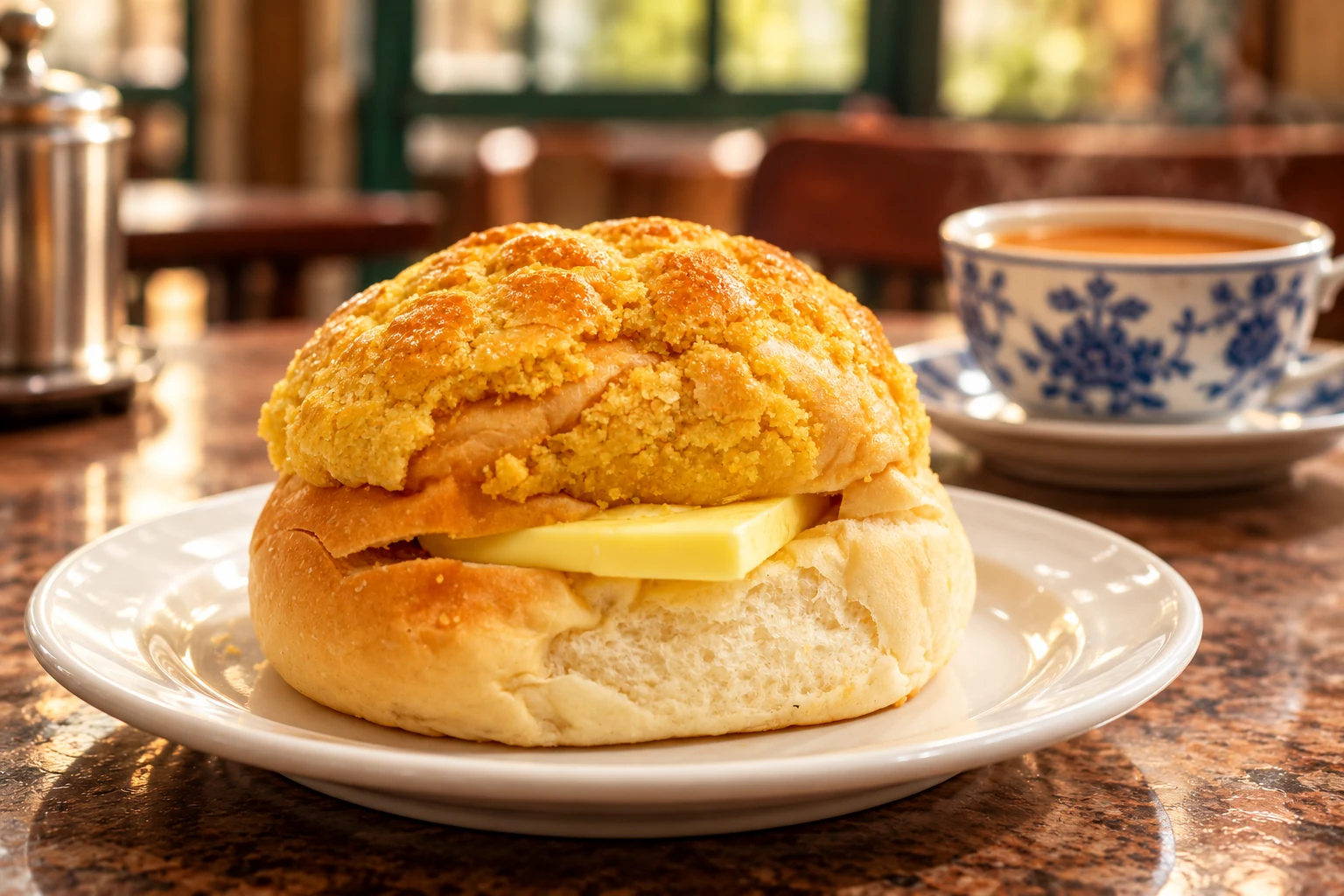
Pineapple Bun with Butter 菠蘿油
The traditional pineapple bun takes its name from its patterned sweet crust, rather than pineapple in the bread. Add a slice of butter and the appeal becomes contrast: crisp topping, soft bun and a cool, rich centre beginning to soften. Share one as a cafe pause; it need not become a meal to be memorable.
Antee’s mission: Find the pattern that explains the name, then compare the crust with the soft bread underneath.
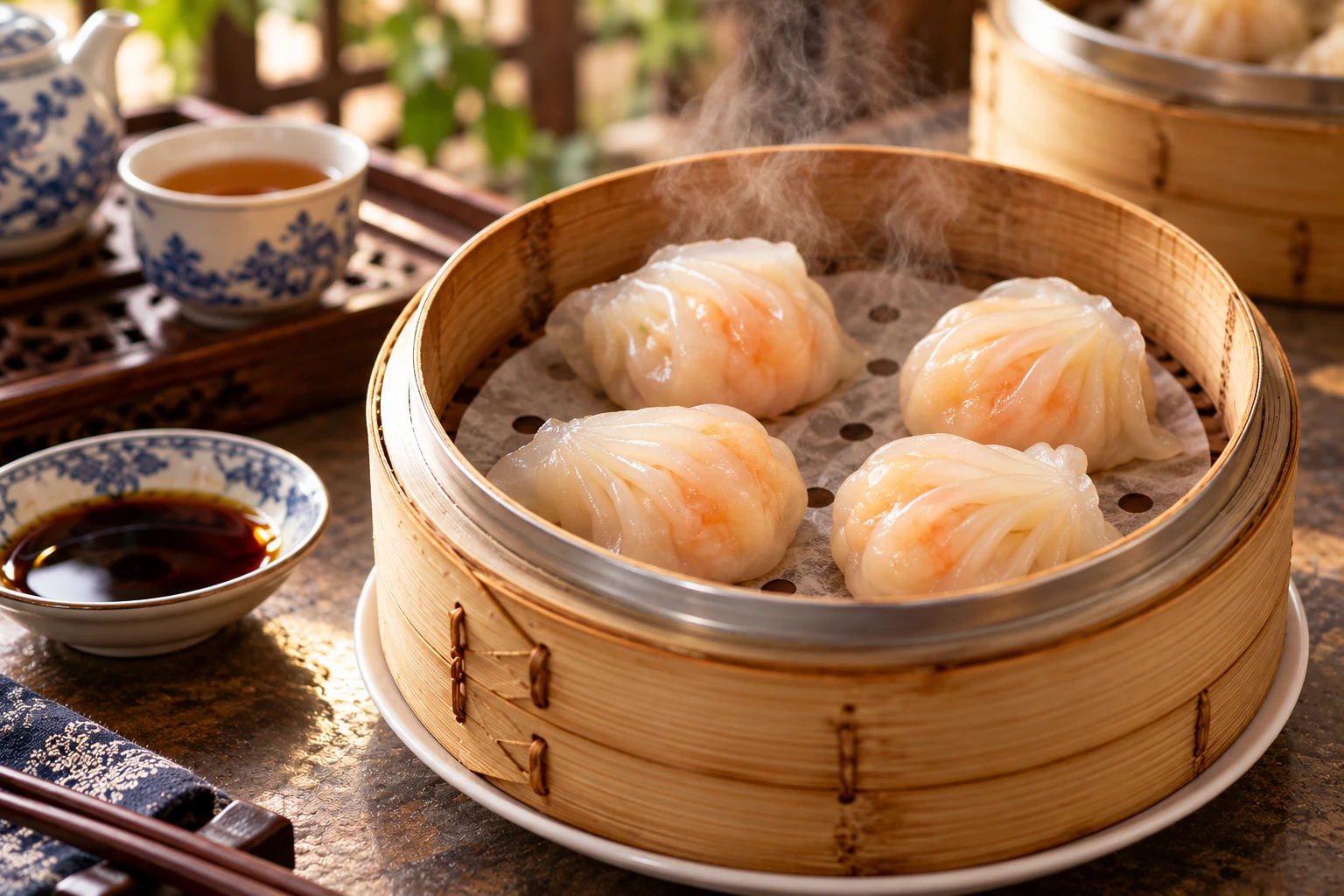
Har Gow / Shrimp Dumplings 蝦餃
Translucent pleated wrappers make the shrimp filling part of the visual pleasure of har gow. These Cantonese dim sum dumplings are delicate rather than doughy, and they are different from round soup buns. Take time over a small steamer and ask about ingredients if anyone has dietary needs; shellfish is central to this dish.
Antee’s mission: Notice how the light passes through the wrapper and how the folds help hold its shape.
Wonton Noodle Soup 雲吞麵
A compact bowl can hold a great deal of craft: fine springy noodles, wontons and a savoury broth. Shrimp and pork are common fillings, but recipes vary, so ask the kitchen rather than making assumptions. Taste a spoonful of broth before adding condiments, then notice how the noodles and wonton wrapper offer different kinds of softness and bite.
Antee’s mission: Identify the broth, noodle and wonton textures in three different words.
Family Itinerary
Day 1: Central’s layers, then the Peak
Begin with Man Mo Temple in Sheung Wan and continue to Tai Kwun, allowing for slopes, a meal and a courtyard break. Use transport as needed. Save the Peak for a clear-weather afternoon if possible; check the tram and viewpoint arrangements rather than fixing the whole day around sunset. Keep the evening meal close to your return route.
Day 2: Kowloon gardens, visual culture and harbour
Visit Nan Lian Garden and, where appropriate, the public areas of Chi Lin Nunnery in the morning. Transfer to M+ after lunch for a selective museum visit, then use transport to reach the Tsim Sha Tsui waterfront for the Avenue of Stars. A Star Ferry crossing to Central can finish the day or serve as your return journey. This is a full day; split it across two days for longer gallery time.
Day 3: Lantau from cable car to fishing village
Check Ngong Ping 360’s operating status before travelling to Tung Chung. Combine the cable-car journey with the Big Buddha and Po Lin area, then decide whether time and energy allow a transfer to Tai O. Plan the onward bus/taxi arrangements and return route before committing. If queues, weather or mobility slow the day, give Tai O a separate sixth day rather than rushing through a lived-in village.
Day 4: Hong Kong Disneyland without a race
Keep a full day for Hong Kong Disneyland. Choose a few priorities, build in meals and shade, and verify the current entertainment calendar. Avoid adding another major city attraction afterward; your family may value a quiet dinner more than a late transfer across Hong Kong.
Day 5: Ocean Park and the south-side setting
Give Ocean Park its own day. Use the current map to group activities by area and understand the Waterfront–Summit connection. Choose animal exhibits and rides that suit your group, with a proper rest between them. Keep the evening flexible and allow a comfortable return rather than planning an airport departure immediately after the park.
Tips for Families
Use the actual venue calendar, not a weekly pattern alone. The M+ page retrieved for this feature lists a special closure on 31 October 2026, and Ngong Ping 360 lists maintenance on 10 November 2026. Recheck both directly for updates.
Group stops by geography. Central, Tsim Sha Tsui/West Kowloon, Diamond Hill and Lantau are distinct areas; apparent closeness across the harbour does not remove transfer time.
Prepare for heat, rain, exposed promenades and stairs. Check current weather and transport notices, carry water and change the outdoor plan if conditions require it.
Ask venues about step-free access and boarding arrangements where needed. The Big Buddha stairs, Central slopes and cable-car transfers deserve individual planning.
Give worshippers and residents space. Follow temple photography rules, avoid private stilt-house walkways and ask before photographing identifiable people.
Food questions matter: shrimp, pork, egg, wheat and dairy occur in this tasting selection. Check ingredients and cooking with the kitchen rather than relying on an image.
Keep theme-park expectations small enough to enjoy. Check current height/access restrictions and build the day around the least energetic traveler as well as the most excited one.
Perhaps your Hong Kong memory will be a skyline, or perhaps it will be the small crack of a pineapple-bun crust. The two belong together: a city of great distances and close attention, where water and hills keep interrupting the towers. Before you leave, choose one journey you would happily make again. Antee’s final challenge is to remember what you noticed on the way, not only what waited at the end.